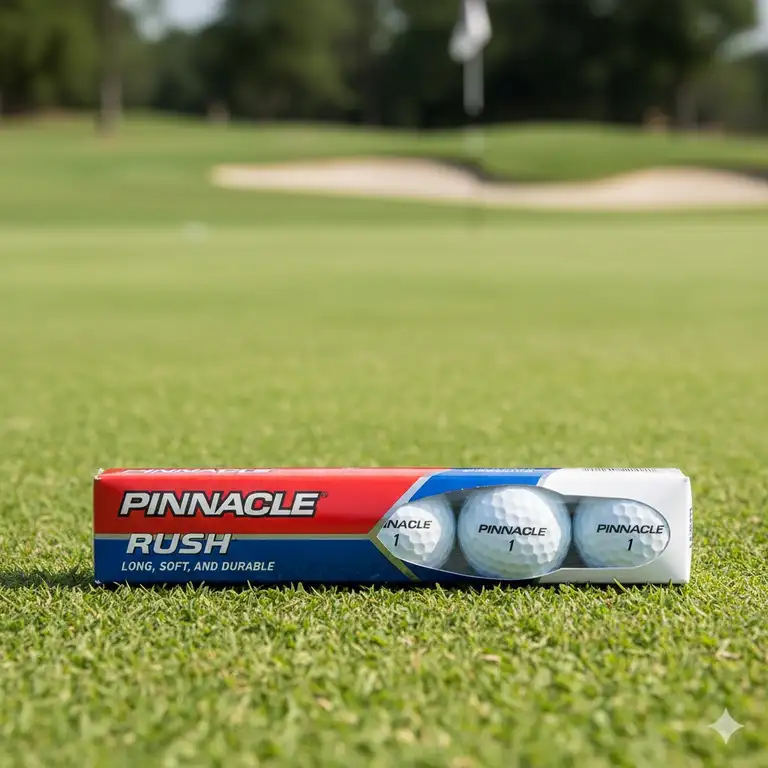
Are low compression golf balls better, or just softer in the hand? For golfers who drive it under about 95 mph, the answer splits by job: these balls win on feel, launch and driver spin, and they lose on wedge spin and, at faster speeds, on ball speed. That split is small enough to measure over a few rounds, so this 2027 guide gives the method first and then four balls to run it with: the Titleist TruFeel, Callaway Supersoft, Srixon Soft Feel and Vice Pro Air.
The findings rest on robot data and lab reports from MyGolfSpy and GolfLink, reviewer write-ups from National Club Golfer, Golf Digest and Today’s Golfer, and forum threads where golfers compare used dozens with new ones; no ball was hit for this article, and where those sources disagree, both readings are given.
What a softer core changes, and what the robot data says it doesn’t
MyGolfSpy’s 2026 robot test settles the speed question more bluntly than most buying guides do. None of the 11 balls below 75 compression beat its Titleist Pro V1 control for driver ball speed at 85 mph, and softer balls gained speed more slowly than the control as the robot swung faster, per the outlet’s own summary. A separate slow-swing comparison of the TaylorMade SpeedSoft (compression 50), Srixon Q-Star Tour (70) and Titleist Pro V1x (102) put all three near 123 mph off the driver, which is why MyGolfSpy argues that compression alone is a poor way to choose a ball when the swing is slow.
What the core does change is flight and feel. Golf Digest’s Hot List notes that low compression helps raise launch and lower spin, and MyGolfSpy’s older 2021 test found that golfers making about 2,800 rpm or more with the driver could let that lower spin offset the speed they gave up. Its 2023 test went further on feel: anyone who wants a truly soft ball has no route except low compression.
Below about 95 mph, BallCaddie frames compression as a feel-and-driver-spin decision rather than a distance one. At 86 mph the softest balls in its summary of the 2026 test were slowest off the driver, yet the gap from fastest to slowest was under 2 mph. Plenty of golfers live near that boundary, since the same page cites roughly 94 mph for a 14.5-handicap male amateur and about 79 mph for a 15-handicap woman.
Even the word “low” is unsettled. Golfers Authority treats 40 to 60 as the range for swings under 85 mph, while MyGolfSpy’s look at the Vice Pro Air notes that 75, once called low, now reads as mid-to-high. That leaves low compression golf balls with three real jobs: soft feel, higher launch and calmer driver spin. Extra yards is not one of them.
How to test a soft ball against your own game
Four steps, in this order, keep the comparison honest.
Measure your driver speed and your usual miss. A launch monitor session gives club speed and spin in minutes. If the miss is a slice, BallCaddie’s rule of thumb points toward ionomer: a golfer losing about two balls a round to slices gains more from low driver spin than from wedge bite.
Choose the cover before the compression number. BallCaddie groups soft ionomer balls at roughly 35 to 70 compression and $20 to $28 a dozen, and soft urethane balls at roughly 70 to 89 and $40 to $58. In 2026 robot testing on a 35-yard pitch, the urethane group added roughly 800 to 1,700 rpm over the soft ionomer group. Its rule: the extra $15 to $30 a dozen pays off for golfers who score inside 100 yards.
Test flight, not labels. In MyGolfSpy’s slow-swing mid-iron data, the TaylorMade Tour Response (74) logged 88.24 mph, 4,260 rpm and a 40.73-degree descent. The PXG Xtreme Tour (94) logged 88.45 mph, 4,589 rpm and 42.84 degrees, and the Titleist Pro V1x (102) logged 87.63 mph, 5,338 rpm and 40.66 degrees. Speed barely moved; spin and descent did, and MyGolfSpy suggests a descent above 42 degrees for holding greens. On the course, play the same nine holes with each candidate and note three things: how often the driver miss stays in play, how far a 7-iron releases, and whether a 30-yard pitch checks or runs.
Price the lost ball, not just the dozen. The next section puts numbers on it.
Lost golf balls and the cost per round
Shot Scope data published by Golf Monthly puts a 15-handicap golfer at 2.8 lost balls per round, a 5-handicap at 0.9 and a 25-handicap at 5.6. Golf Monthly’s breakdown adds that most lost balls come off the tee (1.9 of the 2.8 for the 15-handicap) and that tougher setups with rough and back tees lose more. Using around $25 for a soft ionomer dozen and around $40 for a soft urethane one, a 15-handicap’s lost balls cost roughly $6 versus $9 per round, and a 25-handicap’s roughly $12 versus $19 (my arithmetic from those ranges, counting only the balls that disappear).
That gap is why used dozens come up. Plugged In Golf compared four used grades of Titleist Pro V1 (AAAAA, AAAA, AAA and refinished), bought from LostGolfBalls.com, with new balls, using 50 quality shots per grade. It saw no difference in putting feel, 30-yard pitches, 7-iron shots, or driver ball speed, smash factor and spin, and its author puts the saving at 50 percent or more on tour-quality balls. Members of a Titleist forum thread on used dozens mostly report no difference with mint 5A balls and are cool on repainted ones.
A Sand Trap thread is far less kind. One member reports a batch of “5A” balls with a very noticeable loss of distance, and another says 5A Bridgestone e6 balls from Amazon flew about 15 yards shorter than a new Titleist DT TruSoft. The original poster there found his 5A balls little different from 4A. Those are individual reports, and they cut against the lab-style test above.
For a soft ball the saving shrinks anyway. If a used dozen costs half of new, a $25 dozen saves roughly $12 (my arithmetic), and a new ball removes one variable from your test.
Rules matter if you enter events. The R&A’s Clarification 4.2a(1)/2 lets a player use X-out and refurbished balls unless there is strong evidence they do not conform, but not where the Committee has adopted the List of Conforming Golf Balls as a Local Rule. Balls stamped “practice” remain allowed even then.
Where a soft ball lets you down, and the recovery for each
Fast swings expose the soft core first. National Club Golfer’s review of the Titleist TruFeel lists quick swingers as a poor fit because they may over-compress it, and Golfers Authority puts the ceiling of the Wilson Duo Soft near 90 mph. MyGolfSpy’s Titleist comparison shows the next step up: it calls the 90-compression Titleist Velocity the longest ball at 100 mph driver speed. Recovery means moving one step firmer, not abandoning ionomer.
Roll-out on approaches is the second letdown. The National Club Golfer reviewer’s TruFeel 7-iron spun about 5,600 rpm, which he called relatively low, and GolfLink gave the Srixon Soft Feel 5.3 out of 10 for stopping power. If approaches run past the pin, look for the higher descent angles MyGolfSpy flags, or step up to a urethane soft ball such as the Vice Pro Air.
Consistency can slip too. Ball Lab’s report on the Callaway Supersoft says softer balls are harder to manufacture consistently, and its 13.5-point compression spread shows what that looks like. Compare balls from the same box: one that keeps flying differently from its siblings is worth retiring.
Best low compression golf balls to test, matched to each step
The best low compression golf balls for one swing are wrong for another, so these four cover the main decisions in the method: a Titleist for a first test, the lowest-spinning ionomer, a high-flying budget ball and a urethane option. Compression figures differ by source, so the table further down lays them side by side.
Among Titleist golf balls, the Titleist TruFeel is the softest and least expensive: a two-piece ionomer that National Club Golfer’s review prices at around $25 a dozen. Titleist prints no compression figure. MyGolfSpy’s lab measured 70, and its analysis of the brand’s performance line describes a ball that sits mid-pack off the driver, gains ground as swings slow and finished fourth in total driver distance at 85 mph. MyGolfSpy’s 2025 driver table shows how little the softness costs: ball speed landed within 0.7 mph of the Callaway ERC Soft at fast, mid and slow speeds (my subtraction).
The National Club Golfer reviewer recorded 153 mph of driver ball speed, 271 yards of carry and 290 total, then a 7-iron at about 5,600 rpm that he called relatively low, which meant extra roll-out. His 58-degree wedge spun close to 7,000 rpm, only slightly below a premium tour ball, though he missed the crispness of multi-layer balls on putts and wedges. MyGolfSpy adds that from 35 yards this ball was the highest-spinning of Titleist’s three ionomer models, a group in which the Titleist Tour Soft managed 4,231 rpm, but it gives no rpm figure for the TruFeel itself.
That makes it a sensible first test ball for step two: soft feel from a known brand at a price that holds cost per round down. Greenside bite stays modest next to urethane.
A lab report is the first thing to read about the Callaway Supersoft. MyGolfSpy’s Ball Lab measured the 2026 ball at an average compression of 44, with individual readings running from 40.3 to 53.8, a 13.5-point spread graded C-minus. Three of 36 balls (8.3 percent) were flagged bad, the Quality Score came to 74, and the verdict was Not Recommended, though Ball Lab stresses that softness itself is not the fault.
Flight data is mixed. BallCaddie’s summary of MyGolfSpy’s 2026 robot test credits the ball with the lowest driver spin at 86 mph but the slowest ball speed and shortest carry among 48 balls. Golfers Authority nonetheless names it the pick for most golfers under 85 mph, citing higher launch with less sidespin, and notes that it will not spin on a wedge the way urethane does. Callaway publishes no compression number, and the ball sells for between $25 and $28 a dozen.
Pros:
✅ Lowest driver spin at 86 mph in MyGolfSpy’s 2026 test, per BallCaddie
✅ Higher launch with less sidespin, according to Golfers Authority
Cons:
❌ Ball Lab graded consistency C-minus and flagged 3 of 36 balls as bad
❌ Slowest ball speed and shortest carry among 48 balls in BallCaddie’s summary
Between $24 and $25 a dozen is where the Srixon Soft Feel sits, with GolfLink noting that bulk orders cut it further. BallCaddie’s catalog lists it near 58 compression, and its summary of MyGolfSpy’s 2026 test puts it tenth of 48 for total distance at 86 mph.
GolfLink’s 43-ball test is blunter about the trade-offs. Driver ball speed averaged 135.3 mph, with 218.4 yards of carry and 240.1 total, so roughly 22 yards came from roll (my subtraction). A 50-yard wedge shot produced about 5,894 rpm, yet the ball earned 5.3 out of 10 for stopping power, and its driver misses finished an average of 11.1 yards offline with 250.3 rpm of sidespin. GolfLink says the ball did not score well overall and still calls it a natural fit for beginners and golfers who want a soft feel. For approaches to firm greens, that roll is the thing to test first.
4. Vice Pro Air — urethane spin at moderate speeds
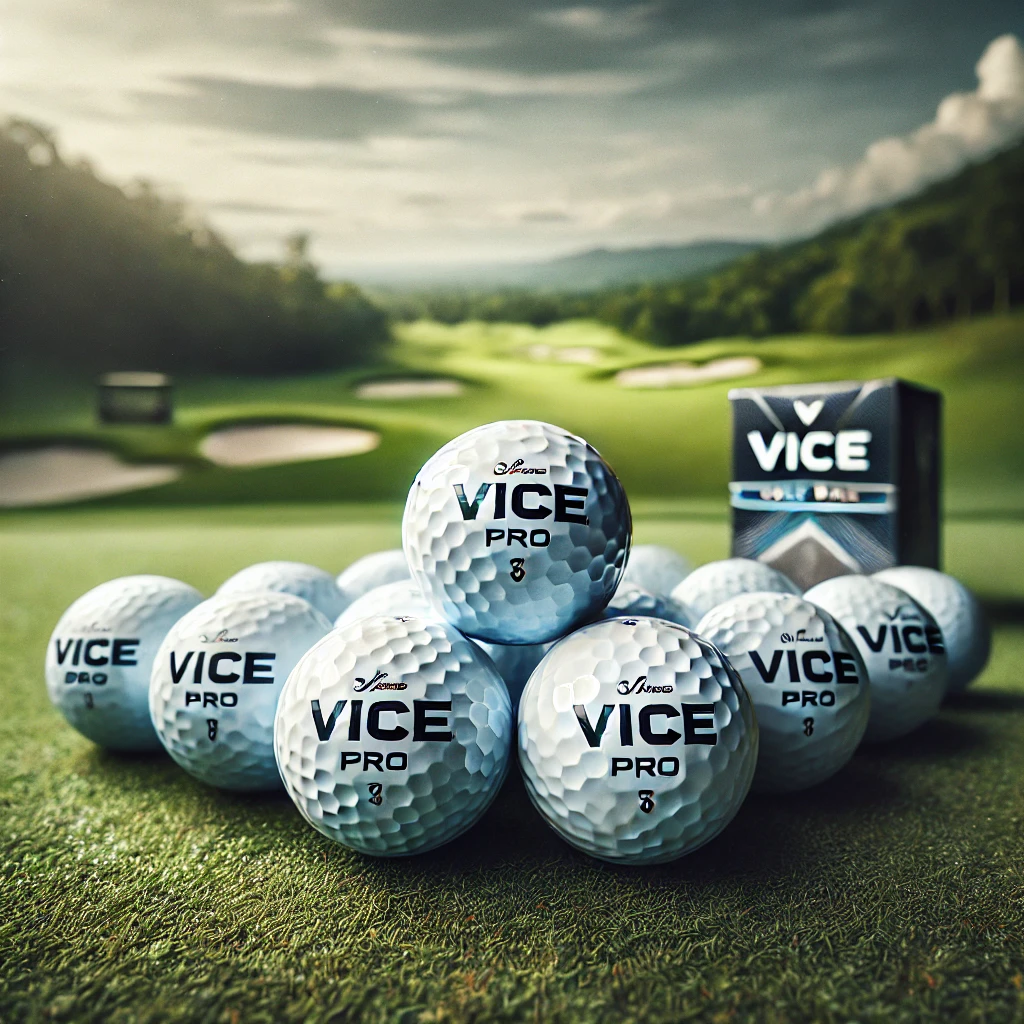
Vice sells direct to golfers, and among Vice golf balls the Vice Pro Air is the soft urethane option: a three-piece ball with a cast urethane cover that Vice rates at about 75 compression, according to MyGolfSpy and National Club Golfer. MyGolfSpy found it the softest-feeling Vice in its test and describes it as taking over where the Pro Soft left off, and BallCaddie reports that Vice has retired the Pro Soft with the Pro Air taking its slot. Pricing runs between $34 and $40 a dozen across GolfLink’s bulk figure and Golf Digest’s listing.
The tests differ on speed. GolfLink, updated in July 2026, measured 136.9 mph of driver ball speed and 241.8 yards of total distance at mid-90s swing speeds and says the gap between the Pro Air and the firmer Vice Pro is smaller than expected. National Club Golfer’s reviewer saw lower ball speed than with other Vice Pro balls and slightly lower peak height, yet called the ball potentially perfect for swings under 90 mph. Golf Digest’s 2026 Hot List gave it Silver with a 4, naming it the softest-compression ball in Vice’s urethane lineup, aimed at moderate swing speeds.
Greenside work is where it earns the extra money over the ionomer picks, since the reviewer praised the control from the urethane cover.
Pros:
✅ Urethane cover at a softer compression than the Vice Pro
✅ Golf Digest 2026 Hot List: Silver, scored 4
Cons:
❌ Lower driver ball speed than other Vice Pro balls for the National Club Golfer reviewer
❌ Published compression runs from 65 to 75 depending on the source
Check current availability on Amazon.com.
Low compression golf balls reviews: where the tests agree and where they split
Start with the labels, because they disagree first.
Ball
Compression readings, by source
Titleist TruFeel
None published; 70 (MyGolfSpy), about 50 (a BallCaddie review), 60 (Stymie)
Callaway Supersoft
None published; 44 average, 40.3 to 53.8 across 36 balls (Ball Lab)
Srixon Soft Feel
About 58 (BallCaddie)
Vice Pro Air
75 (Vice, per MyGolfSpy and National Club Golfer), 72 (BallCaddie), 65 (Stymie)
Wilson Duo Soft
37 (Wilson); 46 on MyGolfSpy’s gauge for the 2023 model and 55 on Today’s Golfer’s gauge, per BallCaddie
No two sources agree on the Titleist TruFeel, and even BallCaddie’s TruFeel review (about 50) and its roundup (about 70) differ. Ball Lab’s spread for the Callaway Supersoft hints at one reason: when 36 balls span 13.5 points, the figure for any single ball depends on which one got measured. Compare balls inside one chart, and weigh flight data above the number on the box.
Across low compression golf balls reviews, the tests agree on the short game. National Club Golfer on the TruFeel, GolfLink on the Srixon Soft Feel and Golfers Authority on the Supersoft all describe more roll and less wedge spin than urethane delivers. The Pro Air is the one cover here expected to check on approaches. Speed is where they split. GolfLink calls the Soft Feel a poor overall scorer, while BallCaddie’s reading of MyGolfSpy’s data puts it tenth of 48 for distance at 86 mph. For the Pro Air, GolfLink’s 136.9 mph, National Club Golfer’s lower ball speed and Today’s Golfer’s 3 out of 5 rating can all be true at once, because different swings and different robots weigh different things.
Straight answers on speed, Titleist and Vice compression, and used dozens
❓ Are low compression golf balls better for slower swings?
✅ Better for feel and launch, not for speed. MyGolfSpy's 2026 robot test found none of the 11 balls below 75 compression beat its control ball for driver ball speed at 85 mph, so choose a soft ball for feel first.
❓ Is the Titleist TruFeel a low compression ball?
✅ Titleist publishes no number, so sources disagree: MyGolfSpy measured 70, another catalog lists 60, and one review page says about 50. Reviewers describe it as the softest of the brand's performance balls, with a thin ionomer cover and modest greenside spin.
❓ Are Vice golf balls low compression?
✅ Only partly. Vice lists its Pro Air, a three-piece urethane ball, at about 75, the lowest among its tour urethane models, though MyGolfSpy notes 75 now reads as mid-to-high. BallCaddie reports the older, softer Pro Soft has been retired.
❓ Are used or lost golf balls a good way to save on soft balls?
✅ Mint grades hold up in one test: Plugged In Golf saw no difference between new and used tour balls across feel, wedge, iron and driver. Forum reports are mixed, though, and soft balls already cost little new, so the saving per dozen is modest.
❓ Can I play refurbished or X-out balls in a tournament?
✅ Often yes. The R&A's Clarification 4.2a(1)/2 allows X-out and refurbished balls unless there is strong evidence they do not conform, but not where the Committee has adopted the List of Conforming Golf Balls. Balls stamped practice are allowed even then.
Which soft ball goes in the bag first
Low compression golf balls earn their place when feel, launch and a calm driver matter more than extra yards, and the robot data says to expect no speed gift at 85 mph or beyond. Let the lost-ball count decide the rest. If a 15-handicap’s 2.8 lost balls a round are the main cost, the Titleist TruFeel (the cheapest of the Titleist golf balls here), Srixon Soft Feel and Callaway Supersoft keep that cost near $6 a round, and the Supersoft’s consistency flag is a reason to inspect your own dozen. If you score inside 100 yards and swing under about 95 mph, the Vice Pro Air is the urethane case to test, at roughly $3 a ball. Run each ball through the same nine holes, watch the 7-iron release and the driver miss, and set the number on the box aside. Check current availability on Amazon.com for the dozen you choose.
Disclaimer: This post contains affiliate links. As an Amazon Associate, I earn from qualifying purchases made through these links, at no additional cost to you.
One dozen and a few rounds will tell you more than any compression chart.
At GolfEquipHub, we bring expert insights, reviews, and guides on the best golf equipment to enhance your game. Our team is dedicated to helping golfers of all skill levels find the perfect clubs, accessories, and gear for peak performance on the course.