As an Amazon Associate I earn from qualifying purchases. Links in this article may be affiliate links. How we choose gear
Golf tempo trainers work by giving you something to feel, hear or read so that your backswing lasts about three times as long as your downswing, and for 2027 the smart choice comes down to which of those three cues your swing is missing. That ratio is the whole idea: Golf.com’s tempo feature cites Tour Tempo research and teacher Tim Cooke in saying most pros take roughly 0.75 seconds going back and 0.25 coming down. The four models below cover a grip-and-weight stick, two flexible-shaft trainers at different price tiers and a clip-on sensor, and the routine in the middle of the page works with any of them. The specs, price ranges and test notes come from maker pages, retailer listings, specialist-press reviews and a long-running forum thread, so every comment about how a trainer feels belongs to a named reviewer, and no club was swung for this guide.
Why the ratio matters more than a slower swing
Tempo is backswing time divided by downswing time, nothing more. A 0.75-second backswing followed by a 0.25-second downswing is 3:1, and Blast Motion’s tempo explainer puts the tour full-swing band at 2.5:1 to 3.1:1, with short-game and bunker shots at 1.7:1 to 2.5:1 and putting at 1.8:1 to 2.2:1.
The figure everyone quotes traces back to John Novosel, who counted frames on 30-frames-per-second video of tour swings and sorted players into four groups: 18/6, 21/7, 24/8 and 27/9 frames from takeaway to the top and from the top to impact. Divide by 30 and a 24/8 swing is 0.8 seconds back and about 0.27 down (my arithmetic). A 2006 Tour Tempo announcement on Golfwire lists Jack Nicklaus and Sam Snead at 24/8 and Bobby Jones at 27/9.
Speed is a separate matter. Two golfers with very different clubhead speeds can share one ratio, and Blast Motion warns against fixing a rushed transition by slowing the downswing, because that drains power. The common fault is a snatch from the top that squeezes the ratio toward 1:1. Cooke describes the opposite problem on Golf.com: a backswing much longer than 3:1 applies less force to the club on the way back, which leaves less speed to release on the way down.
One writer at Golf Workout Program describes drifting to roughly 3:2 because an overlong backswing made the downswing slow, and links that slip to lost distance and accuracy. It is a single account, yet it shows why a measured number beats a hunch.
How do golf tempo trainers work? Feel, sound or numbers
Every device in this category does one of three jobs, and the job decides what you should buy.
Feel. Weighted, flexible-shaft sticks make a jerky transition obvious. The maker of the Orange Whip Trainer says any wobble in your swing signals a tempo, balance or plane problem, and a Golf Monthly reviewer describes the heavy head of a budget stick as something you learn to release at the right moment. Nothing is displayed; the stick simply punishes a snatched downswing.
Sound. Tone-based tools set a beat for the swing. The Tour Tempo app listing says it provides tones for the 18/6, 21/7, 24/8 and 27/9 ratios, and forum members describe a three-beep cycle: the first beep starts the swing, the second starts the downswing and the third marks impact. A plain metronome clicking the takeaway and downswing does a similar job, as one Golf Workout Program drill shows.
Numbers. Sensors report backswing time, downswing time and the ratio after each swing. Garmin’s own manuals for its golf watches describe a tempo-training mode that shows whether backswing and downswing times are too fast, too slow or on target for a chosen timing, which makes a compatible watch a no-cost way to get a baseline.
A few products blend feel with positioning. A golf tempo trainer with grip, such as the SKLZ model covered below, adds a molded hand position to a weighted shaft, so the same swing reinforces both.
How to use a tempo trainer in golf, from first swing to the range
Searches for golf tempo trainer how to use usually want a routine, and the same four moves fit every device here. Anyone typing how to use tempo trainer golf into a search box is really asking what to do first, what to do daily and when to pick up a real club.
Get a baseline before you change anything
Count out loud or film a few swings in slow motion on a phone. A Sand Trap forum member who timed his own video found he was near 33/8, so even 21/7 felt slow, while another measured 22/7 across three lesson swings and decided he already had the fast tempo. A sensor or a Garmin watch does the same job without frame counting.
Pick a beat and swing without a ball
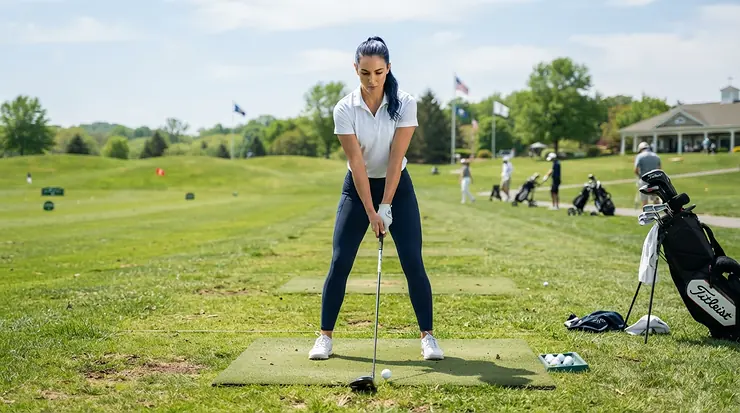
Start with the slowest setting and move faster once it feels natural; forum members and Garmin’s manual give the same advice. With no device, a three-count back and a one-count down works, and a pause of one full second at the top is a common cure for a rushed transition. With a weighted stick, make continuous swings without stopping at the top or bottom, for example two sets of ten, as one coaching blog suggests. A retailer listing for the SKLZ Gold Flex Golf Swing Trainer suggests 10 to 20 swings a day.
Expect an adjustment period. A Golfer Geeks reviewer says the SKLZ Gold Flex Golf Swing Trainer took about fifteen minutes of swinging to feel normal, then recommends a few minutes of daily use.
Move to a real club, then a ball
Take a few swings with a 7-iron right after the stick or the tones, while the rhythm is fresh. A Golficity reviewer says three minutes with a flexible trainer was enough to feel looser and that the flex felt more noticeable afterward in a real driver and 3-wood. Golf Monthly cautions that benefits arrive with regular use, not overnight.
Re-measure and move up
Blast Motion advises fixing the cause and measuring again, and Garmin’s manual says to move to the next timing once the graph stays green. Weekly checks keep a trainer honest.
What the reviews support, and where tempo practice goes wrong
Golf tempo trainers reviews are mostly single-reviewer impressions, not controlled studies, and no source opened for this guide measured score or handicap changes across a group. What the reviews do agree on is narrower: these aids make a rushed transition feel wrong, they work best as a warm-up or short daily drill, and they reward repetition.
Four missteps recur in that evidence.
Chasing speed is the first. Because tempo is a ratio, trying to swing slower usually misses the point, as Blast Motion and HackMotion both stress. The second is treating the Tour Tempo numbers as law. A top-rated poster in the Sand Trap thread points out that Novosel uses one word for two ideas and that 21/7 and 24/8 share a rhythm at different speeds, so the three presets are not the only choices. Members also report that some golfers found the beeps distracting, that players with quick, short backswings found the slowest setting “glacial”, and that anyone already near the target ratio gains little.
Third is the wrong size. The 47-inch Orange Whip Trainer is aimed at men and taller women while the 43-inch version targets seniors, women, teens and beginners, and retailer text for the SKLZ Gold Flex Golf Swing Trainer splits its two sizes at 5 feet 6 inches. A Scheels reviewer prefers the 40-inch SKLZ Gold Flex Golf Swing Trainer because it feels like a 4-iron and most rounds contain two to three times as many irons as drivers.
Last is quitting too early. Golf Monthly’s Champkey review notes that regular use is needed to avoid sliding back into old habits.
Best golf tempo trainers, matched to each step of the routine
The best golf tempo trainers for you depend on the step you need most: measuring the baseline, setting the hands, or grooving the feel. Prices below are ranges from retailer and maker pages, and the Amazon.com price may differ.
| Model | Cue it gives | Fit | Hand | Price range |
|---|---|---|---|---|
| Blast Golf | Numbers: backswing, downswing, ratio | Sleeve on the grip end of any club | Not specified | Around $120 to $150 |
| SKLZ Golf Tempo & Grip Trainer | Feel, plus a fixed hand position | Fixed-length stick, two weights | Right-handed only | Check the current price on Amazon.com |
| Orange Whip Trainer | Feel, from a counterbalanced flexible shaft | 47, 43, 38 or 35.5 inches | Listed as ambidextrous | Around $100 to $120 |
| SKLZ Gold Flex Golf Swing Trainer | Feel, from a flexible shaft and weighted head | 48 or 40 inches | Not specified | Around $50 to $80 |
Only Blast Golf returns numbers, so it is the one that confirms whether the others are working. The two flexible sticks overlap heavily in purpose and differ mostly in price, while the SKLZ Golf Tempo & Grip Trainer is the only one that shapes your hands as well as your rhythm and the only one sold for right-handers alone.
1. Blast Golf — measure the ratio instead of guessing
Numbers settle arguments that feel cannot. The maker’s store page describes a sensor that attaches to the grip of a putter, metalwood, iron or wedge, tracks club speed, tempo, face rotation and putting metrics, and ships with a club attachment and one month of membership, so check what the app costs after that month.
On tempo specifically, Blast Motion lists full-swing goal ranges of about 0.65 to 0.85 seconds for the backswing and 0.23 to 0.32 for the downswing, and its app flags a rushed transition. Golf Monthly’s reviewer found the red, amber and green tempo feedback useful, saying it helped his putting and flagged his chip shots as a touch quick. A GolfLink writer reports a first iron tempo around 2.1:1 that improved quickly, though the same review says the sensor missed more swings than he liked.
The hardware is the weak spot. Golf Monthly says the sensor fits only through a grip attachment that makes the club roughly two inches longer, that it was a struggle on a putter grip, that the app can overwhelm and that beginners may struggle with the data. Blast has sold several sensor generations, so match the exact model before ordering.
2. SKLZ Golf Tempo & Grip Trainer — grip and tempo in one stick
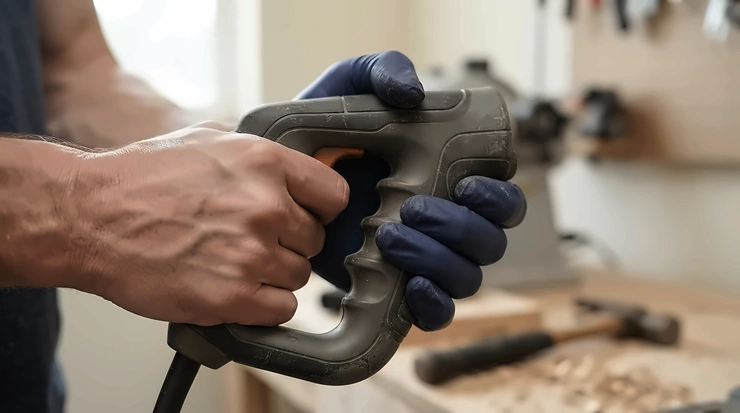
A golf tempo trainer with grip fixes a problem the flexible sticks ignore: where your hands sit. Retailer pages from Dick’s Sporting Goods, Golf Galaxy and Target describe a training grip that shows the right hand position, two removable weights to mimic irons and woods, and indoor or outdoor use, all for right-handed golfers only.
Golf Workout Program credits it with three jobs: encouraging the grip pressure that lets the clubhead release, demanding muscle activation through its weight, and forcing a better plane because the end sits higher than the grip. That is one reviewer’s reading of the design, not measured evidence.
The length is the open question. Listings disagree, with one Australian retailer giving 65 cm and another mirror showing about 30 inches, so treat the label as the arbiter. Buyer comments cluster around the same point: one Amazon reviewer says an average man’s left hand lands on the very end, unlike a real shaft where a half inch or so of space remains, and a Dick’s reviewer expected it to be longer. Another Dick’s reviewer wondered why no left-handed version exists, while a Dick’s buyer values it for loosening up and grooving tempo.
Pros:
- ✅ Hand position and tempo are trained together
- ✅ Removable weights suit irons and woods
- ✅ Described as usable indoors
Cons:
- ❌ Right-handed golfers only
- ❌ Reviewers question the length and feel at the butt end
3. Orange Whip Trainer — the counterbalanced original in four lengths
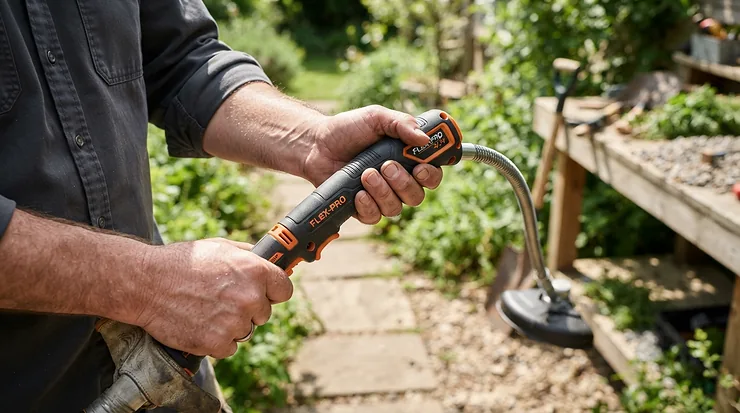
Among flexible sticks, this is the one the others are measured against. Its maker describes a patented counterbalanced, flexible shaft that gives feedback through wobble, handmade in the USA, in 47-inch, 43-inch, 38-inch junior and 35.5-inch compact sizes. Retail pages give the 47-inch model as 1.75 pounds and the 43-inch as 1.71, and Amazon-sourced listings mark it ambidextrous. Retail prices on PlayBetter, Rain or Shine Golf and Walmart fall around $100 to $120.
Warranty details conflict: Rain or Shine Golf says two years, while a mirrored listing of the Amazon page says one year against manufacturer defects, so read the label on the exact size you buy.
A Golfer Geeks reviewer who used a friend’s unit says the extra weight takes time to get used to, and recommends it mainly as a pre-round or pre-practice warm-up. Golf Monthly, comparing prices in pounds, put the Orange Whip Trainer near £100 against about £40 for a budget rival, roughly two and a half times as much (my arithmetic). Whether that premium buys anything beyond brand history is a judgment call that the available reviews leave open.
4. SKLZ Gold Flex Golf Swing Trainer — flex and warm-up at a lower price
Around $50 to $80 buys a flexible fiberglass stick that fits in a golf bag. Retailer text splits it into a 48-inch model for golfers 5 feet 6 inches and taller and a 40-inch model for shorter or stronger-but-smaller players, notes that it cannot be re-gripped and calls it legal to carry on the course.
Weight figures conflict. SKLZ’s sizing text, as reproduced by one retailer, mentions a 2.5-pound head, while Target, Costco UK and Best Buy Canada list whole-unit weights of about 1.2 pounds (0.55 to 0.58 kg), so the head figure deserves caution.
Golfer Geeks calls it the best bargain among tempo trainers, and its reviewer says it took about fifteen minutes to adapt. A Golf Galaxy reviewer found the 40-inch size good for women, juniors and indoor swings and judged it just as good as the Orange Whip Trainer for less money, which is one opinion rather than a comparison test. A buyer on an Amazon listing mirrored by a retailer reports that even the 40-inch was too heavy for a six-year-old.
Two cheaper cousins exist. Golf Monthly’s Champkey review listed the Champkey Golf Swing Trainer at about $35 in 2022, recommended it to mid and high handicappers who lose tempo under pressure and said the instructions could be more detailed. The Rukket Red Head Golf Strength and Tempo Trainer comes in 48 and 40 inches, with a heavy head of almost a pound and a lifetime warranty, at around $50 on a Golficity review.
Pros:
- ✅ Lowest price of the stick-style options here
- ✅ Two lengths, which helps shorter golfers
- ✅ Fits in the bag for pre-round swings
Cons:
- ❌ Cannot be re-gripped
- ❌ Weight specs disagree between sources
Sizing, handedness and room to swing: checks before you order
Length first. Match it to your height using the maker’s split, usually near 5 feet 6 inches for the 48-inch flex sticks and the mid-size Orange Whip Trainer for seniors, women, teens and beginners. If a stick will mostly be swung in a basement or garage, the 40-inch SKLZ Gold Flex Golf Swing Trainer is the easier fit, as the Golf Galaxy reviewer found.
Hand orientation comes next. The SKLZ Golf Tempo & Grip Trainer is right-handed only, the Orange Whip Trainer is listed as ambidextrous, and the listings for the other two do not specify it, so confirm before you click.
Room matters because these sticks are long and the head swings fast. One Dick’s reviewer values that the SKLZ tempo stick works indoors without risking a hole in the ceiling, while a reviewer on a mirrored Amazon page warns that you must check left, right and behind you for clearance and for breakable objects nearby.
Do not confuse tempo gear with a plain grip aid. The SKLZ Golf Grip Trainer attachment costs around $18 on retailer pages, helps with hand placement only, and some buyers report it slipping or cracking after a couple of rounds.
Finally, add up the recurring costs. A sensor may carry app membership after the first month, a flexible stick costs nothing more once you own it, and warranty terms vary by size and seller.
Tempo trainer answers: ratios, rules and results
❓ What is a good tempo ratio for a golf swing?
❓ How long should a tempo trainer session last?
❓ Can you use a golf tempo trainer during a round?
❓ Do tempo trainers come in left-handed versions?
❓ Is a sensor better than a weighted trainer for tempo?
Start with the cheapest cue that gets you counting
Tempo is a ratio you can practice, and the cheapest cue that gets you counting is usually enough to begin. For most golfers, golf tempo trainers fall into a simple rule: choose a flexible stick like the SKLZ Gold Flex Golf Swing Trainer if you need to feel the rhythm, the Orange Whip Trainer if you want the original in a size built for your height, the SKLZ Golf Tempo & Grip Trainer if your hand position needs work too, and Blast Golf once you want proof that the ratio is moving. Whichever you pick, spend a few minutes a day, finish with a real club and re-measure every week. Check current sizes and availability on Amazon.com below before you order.
Recommended for You
- 7 Best golf swing tempo trainer Tools in 2026: Master Your Rhythm
- 7 Best golf swing trainer for home use: Master Your Game in 2026
- Golf swing trainers: 6 Picks by Swing Fault (2027)
Disclaimer: This post contains affiliate links. As an Amazon Associate, I earn from qualifying purchases made through these links, at no additional cost to you.
Ready to start counting your swing? Compare the sizes above and see what is in stock on Amazon.com today.