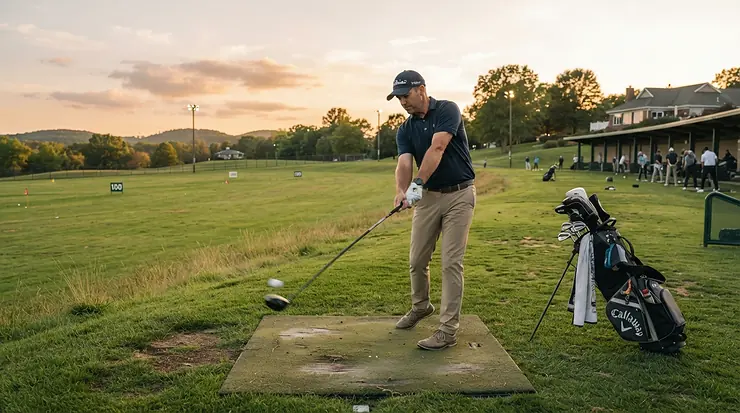
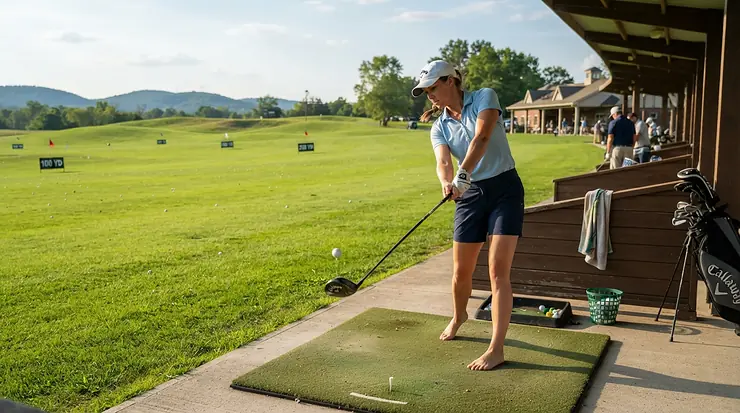
Golf hybrids are not automatically the easier club to hit, and Shot Scope’s data on more than 80 million shots shows where that idea breaks down. In MyGolfSpy’s analysis of that data, 15-handicap golfers mishit hybrids from the rough 30% of the time against 26% for fairway woods, where a mishit means a shot that flies 30% shorter than the golfer’s average. Off the tee the order flips, with 10% for hybrids and 12% for woods. A hybrid earns its bag slot on the shots you actually face, and the six clubs below for 2027 are sorted that way.
The ranking leans on MyGolfSpy’s 2026 Most Wanted hybrid test, Golf Monthly’s launch-monitor roundups, HackMotion’s swing guidance and retailer pages, and no club here was swung for this guide, so every comment on feel or flight belongs to a named tester. Prices are ranges taken from the snapshots those pages carried and may differ from what Amazon.com shows today.
What decides a hybrid: loft, spin and the miss you want to fix
Start with the job. Golf Monthly’s current roundup lists lofts from 17° up to 34° across these lines, so one family can stand in for a 3 iron or for a 7 iron, and the head shrinks as loft rises. A Dick’s Sporting Goods listing for the Callaway line shows 115cc at 26°, 110cc at 29° and 107cc at 32°, which is why a 6-hybrid looks far less like a wood than a 2-hybrid does.
Next, pick a scoring priority. MyGolfSpy weighs accuracy, distance and forgiveness, and it treats accuracy as the most important of the three. That ordering matters because the leaders split: the club with the best accuracy score is not the one with the best distance score, and neither is the one with the best forgiveness score.
Spin and adjustability are the other two levers. MyGolfSpy flags the top accuracy club as one of the highest-spinning hybrids in its test, which suits a low-spin swing and not a high-spin one. Adjustability runs from none (the bonded Tour Edge Exotics Max, which MyGolfSpy rates third overall and first for distance, for around $230) to the 33-setting hosel on the Cobra Optm, and Golf Monthly says more options can confuse some golfers.
Loft ladders, spin and price: how the six hybrids line up
Two readings matter. The Ping G440 and Titleist GT2 scores come from MyGolfSpy’s 2025 test, so they sit on a different field than the 2026 numbers and should be read as a rough guide. And the Cobra Optm pairs the best forgiveness score with a very weak distance score in the 2026 table, a reminder that a single “best” label hides a trade. Its 7.5 is the lowest distance score in the table. Several of these lines also have Max, LST or Pro siblings, so compare the exact model number before buying.
Best golf hybrids, matched to the miss each one fixes
None of the best golf hybrids below wins every category, so each entry names what it gives up.
Landing the ball where you aimed is what this club is built around. MyGolfSpy gave the Mizuno JPX One the top accuracy score, 9.8, and the best overall mark, 9.3, in a field of eight 2026 hybrids. Its distance (8.8) and forgiveness (8.9) were respectable rather than leading, so it wins by tightening the pattern, not by adding yards.
Golf Monthly calls it a highly effective long-iron replacement and credits the Waffle Crown design for an easy launch. The same pages carry the warnings: MyGolfSpy found it among the highest-spinning hybrids tested, which can hurt golfers who already spin the ball a lot, and Golf Monthly notes a glossy crown, a relatively compact head and some performance lost on thin strikes. Lofts run 17°, 20°, 23°, 26° and 30°, and MyGolfSpy’s table lists it at around $280.
Mizuno JPX OneSee current price, sizes and reviews on Amazon.
Golf Monthly’s verdict is that the Callaway Quantum Max OS is exceptionally forgiving, with a high, straight flight and good turf interaction from varied lies. Its reviewer noticed that when he caught the club a bit thin, launch and height did not drop as much as he expected, which he credits to the Speed Wave 2.0 face. National Club Golfer’s reviewer reaches a similar place, calling it one of the easiest hybrids to launch and aiming it at golfers whose misses go right or who struggle to get the ball airborne. Two reviewers agreeing is a pattern, not a proof.
MyGolfSpy scored it 9.2 for accuracy, 9.3 for distance and 8.9 for forgiveness, enough for runner-up overall. Lofts run from 18° to 32°, and the pages checked put it between about $270 and $320.
Pros:
✅ A high, straight flight with strong forgiveness, per Golf Monthly
✅ Balanced scores across all three MyGolfSpy categories
Cons:
❌ Golf Monthly finds the hosel adjustability complicated
❌ MyGolfSpy warns the oversized head may not appeal to everyone
Callaway Quantum Max OSSee current price, sizes and reviews on Amazon.
3. Ping G440 — an all-rounder with six lofts to pick from
Six lofts, from 17° to 34°, give the Ping G440 the longest ladder in this guide, so a bag can run a 3, 4 and 5 hybrid from one family. Golf Monthly made it the top pick in its 2026 roundup, calling it a superb all-rounder with excellent forgiveness that performs from the tee, the fairway and the rough. The only complaint on that page is how little changed cosmetically from the G430.
Forum members lean the same way. GolfWRX’s members’ choice piece for the best hybrid of 2026 put the G440 first, and one member posted that Ping “just knows how to make hybrids.” That is a vote from forum regulars, not a measurement, and the write-up as retrieved gave no sample size. MyGolfSpy tested it a year earlier, in 2025, at 8.7 overall, so its numbers do not slot cleanly beside the 2026 scores. Pricing sits around $270 on Golf Monthly’s page.
Ping G440See current price, sizes and reviews on Amazon.
4. Cobra Optm — the forgiveness score no one else matched
Where the Cobra Optm parts company with the field is the 9.9 forgiveness score MyGolfSpy gave it, the highest in the 2026 test, alongside a distance score of 7.5 that sits well below the leaders. MyGolfSpy also notes it was the 2025 Most Wanted hybrid winner, so the club has held up across two cycles.
Golf Monthly describes it as one of the most adjustable hybrids on the market thanks to the 33-setting FutureFit33 hosel, and says the compact head suits better players. The drawbacks listed there are that the many options may confuse some golfers, that it is somewhat underwhelming from the rough and that the feel is firmer than ideal. Lofts are 17°, 19°, 21°, 24° and 28°, and the two pages show prices from about $250 to $330, a gap that suggests checking the current number.
Pros:
✅ The highest forgiveness score in MyGolfSpy’s 2026 test
✅ A 33-setting hosel for fine gapping
Cons:
❌ Distance scored 7.5, below most of the field
❌ Golf Monthly found it weaker from the rough and firmer in feel
Cobra OptmSee current price, sizes and reviews on Amazon.
Few clubs in the 2026 test split opinion as sharply as the TaylorMade Qi4D. MyGolfSpy scored it 9.4 for distance, runner-up for that award, but only 7.4 for accuracy and 8.2 for forgiveness, and it finished last overall at 8.1. The outlet’s own headline says it was nonetheless the hybrid testers wanted to buy, and it recommends a fitting before you commit.
Golf Monthly’s view is warmer: impressive ball speed and plenty of carry, premium looks, adjustment options for gapping, and a verdict of somewhat underwhelming from the rough. Lofts are 20°, 23°, 26°, 30° and 34°. The sibling TaylorMade Qi4D Max is the one Golf Monthly finds notably easier to hit from the rough with tight dispersion on mishits, at the cost of any adjustability, and MyGolfSpy scored it 8.4 overall. Both sit around $300.
TaylorMade Qi4DSee current price, sizes and reviews on Amazon.
Only three lofts, 19°, 21° and 24°, appear for the Titleist GT2 on Golf Monthly’s page, which limits it to the strong end of a gapping ladder and leaves the 6 and 7 hybrid slots to another club. Within that range the reviewer praises impressive versatility with exceptional feel, an easy launch and powerful flight, and movable weights plus an adjustable hosel, and he places it with mid-to-high handicappers.
MyGolfSpy’s 2025 test gave it 8.5 overall (distance 8.7, forgiveness 8.2), a profile that leans toward carry and away from forgiveness. The only drawback Golf Monthly lists is that the look is unchanged from the previous model. At around $330 it is the highest-priced hybrid in the table.
Pros:
✅ Movable weights and an adjustable hosel
✅ Golf Monthly singles out its feel at impact
Cons:
❌ Three lofts on the page, so it fills one end of the bag
❌ The top of this guide’s price range
Titleist GT2See current price, sizes and reviews on Amazon.
Hybrid cover golf luxury: what leather costs and what it protects
Hybrid heads are smaller than fairway-wood heads, and the covers are cut to match. A hybrid cover golf luxury shopper is mostly paying for leather, lining and stitching, and the entries below price that choice. Titleist’s own Singapore catalog lists its Jet Black hybrid cover at 11 by 4.3 inches against 11.8 by 4.7 for the fairway version, so a fairway-wood cover is a different size, not a spare.
Quintero hybrid golf cover: what a search turns up
A search for a Quintero hybrid golf cover produced no maker page, retailer listing or review that could be verified, so no cover under that name is recommended here. If you saw one on a social post or a marketplace, check the seller’s return policy and the stated head size before paying for it. The same search surfaced established leather makers, and one of them is below.
Titleist’s product page describes 100% leather with quilting detail, a two-panel build and a Tour patch on the front, sold in driver, fairway and hybrid styles at around $105. The page lists no care notes and no review rating. A TGW listing for the driver version shows 4.9 from 7 reviews, a sample too small to prove much.
Alternatives set the range. Vessel’s Lux Embossé is genuine leather with a velour lining, an X-Hybrid size at around $55 and a 4.95 rating from 230 reviews on the maker’s page, though the page also says restocks have no date because of tariff changes. Smathers & Branson’s needlepoint hybrid covers run around $90, and PU-leather hybrid covers at Dick’s run around $20 to $25. No source tests how much better leather protects than synthetic, so the extra money buys looks and longevity claims more than proven protection. Check current availability on Amazon.com.
Titleist Jet Black Leather Hybrid HeadcoverSee current price, sizes and reviews on Amazon.
Golf hybrids reviews: what testers and owners keep reporting
Finding
Source
How solid
Hybrids are not safer from the rough
Shot Scope data via MyGolfSpy
A large dataset, over 80 million shots
Callaway Quantum Max OS launches easily and forgives thin hits
Golf Monthly and National Club Golfer
Two reviewers agree
Ping G440 is a forum favorite
GolfWRX members’ choice piece
A forum vote, no sample size given
TaylorMade Qi4D is long but loose
MyGolfSpy 2026 test, Golf Monthly
Two outlets agree on carry, differ on the rough
Mizuno JPX One spins high
MyGolfSpy 2026 test
One test
Method matters here. Golf Monthly’s hybrid roundup says its reviewers test on the range or an indoor simulator, then play several rounds, and that since 2026 launch data comes from a Foresight GC3 in its Reading lab. MyGolfSpy’s scores come from a separate eight-club test, which is why the two outlets can rank the same club differently, as with the TaylorMade Qi4D.
The pattern across these golf hybrids reviews is consistent: the club that wins on one outlet’s measured test is rarely the one that wins on another’s feel-led verdict. Buy against the miss you recognize in your own game and use the scores to break ties.
Golf hybrids vs woods: where each club earns the slot
Lie
15-handicap woods
15-handicap hybrids
Scratch woods
Scratch hybrids
Tee
12%
10%
4%
3%
Fairway
19%
19%
9%
11%
Rough
26%
30%
16%
18%
Those are Shot Scope mishit rates reported by MyGolfSpy. Hybrids miss less from the tee for both groups, the fairway is a tie for mid-handicappers and a small win for woods among scratch players, and the rough favors woods. MyGolfSpy suggests hybrids are often hit from poor lies, which may inflate their miss rate, and its advice for a bad lie is sometimes a lofted iron or wedge punch-out.
Equipment geometry points the same direction. Golfer Geeks, using PING’s published G440 tables, notes that each hybrid shaft is 1.75 inches shorter than its paired wood: the 3-hybrid is 20° at 40.25 inches while the 5-wood is 19° at 42.5, and PING pairs the 5-wood with the 2-hybrid, not the 3. PXG’s fitters put the choice down to the shot: a 5-wood can be easier off the tee while a 3-hybrid brings more versatility from the fairway or rough. Golfer Geeks tilts toward a wood for a beginner who struggles from the tee and a hybrid for one who loses ground from the rough, which sits in some tension with the tee numbers above. Where sources disagree, go by the shot you miss most.
Golf hybrid how to hit: setup, tempo and one wrist check
Ball position is where the sources disagree. Golf Monthly’s video notes from David Howell say just forward of center with a normal mid-iron swing and a descending blow. GolfLink says just inside the lead heel. HackMotion measures from the body instead, about two balls behind the lead shoulder for a hybrid against one for a fairway wood. Start at center to slightly forward, then let the divot tell you: behind the ball means move up, thin means check your posture.
Hit down. Golf Monthly describes a descending blow rather than a sweeping strike, and Golfer Geeks adds ball first, turf second, with no scooping, because the loft does the lifting. Tee shots are different: Golfer Geeks warns that teeing a hybrid as high as a driver produces skied or under-the-ball strikes, so keep the tee low.
Tempo and wrists complete the picture. HackMotion’s hybrid guide says to keep the tempo closer to your driver than a wedge, counting one-two on the way back and swinging down on three, and to keep the lead wrist flat or slightly flexed at impact, a position it ties to analysis of more than a million swings. It also says to start the downswing with a weight shift and hip rotation instead of pulling with the arms. From the rough, play the ball nearer the center and make a controlled three-quarter swing.
Hybrid lofts, gapping and cover care: straight answers
❓ Is a 3-hybrid the same as a 5-wood?
✅ Not in PING's G440 line. The 5-wood is 19° with a 42.5-inch shaft, the 3-hybrid is 20° with 40.25 inches, and PING pairs the 5-wood with its 2-hybrid. Other makers number their clubs differently, so compare lofts and shaft lengths rather than the numbers stamped on the sole.
❓ Should I hit a hybrid or a fairway wood off the tee?
✅ Shot Scope data reported by MyGolfSpy shows hybrids mishit slightly less from the tee, 10% against 12% for 15-handicappers. The same piece notes woods add distance, so choose the wood when you have room to miss and the hybrid when accuracy matters more.
❓ Can I adjust the loft on a hybrid?
✅ Several can. Golf Monthly describes the Cobra Optm as having a 33-setting hosel, and the Titleist GT2 as having an adjustable hosel with movable weights. Others, such as the Tour Edge Exotics Max, are bonded with no adjustment, so confirm this before ordering.
❓ Will a fairway wood cover fit a hybrid?
✅ Not reliably. Titleist's Singapore catalog lists its hybrid cover at 11 by 4.3 inches and its fairway cover at 11.8 by 4.7, so the sizes differ. Buy the cover made for the club type, and check head size or fit notes on the listing.
❓ Is a luxury leather hybrid cover worth the price?
✅ It depends on what you value. Titleist's leather hybrid cover sells for around $105, while PU-leather hybrid covers run around $20 to $25. No source tested protection between them, so the extra cost buys appearance, material and longevity claims.
Match the hybrid to the shot you miss
The decision rule is short. Choose the Mizuno JPX One if accuracy and a high launch come first, the Callaway Quantum Max OS or Cobra Optm if you need margin for error, the Ping G440 for a six-loft ladder from one family, the TaylorMade Qi4D after a fitting if carry is the priority, and the Titleist GT2 if feel and a stronger-loft gapping slot matter most. If you already own a reliable fairway wood off the tee, spend the slot on the club that rescues your rough and approach shots.
Across golf hybrids for 2027, the differences are smaller than the marketing implies, and the scores quoted here move the answer less than your own miss pattern does. Compare loft, shaft and head size on each listing, and once the club is in the bag, a leather cover such as the Titleist Jet Black Leather Hybrid Headcover keeps the head clean until your next long shot.
Disclaimer: This post contains affiliate links. As an Amazon Associate, I earn from qualifying purchases made through these links, at no additional cost to you.
A hybrid only pays off when its loft fills the gap you really have, so measure that gap before you add one to your cart.