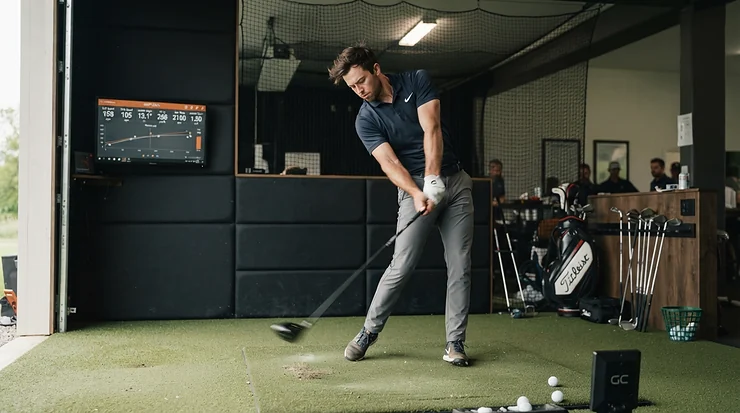
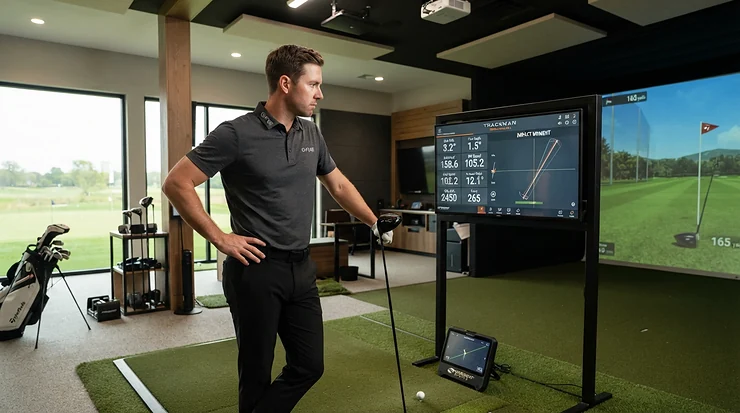
A driving iron that does not match your swing costs more than its price tag. MyGolfSpy’s 2026 test ranks these clubs among the least forgiving it checks and says mishits get punished, and most models in that test sit between $230 and $320. Golf driving irons pay off only when the strike is fast and centered, so the 2027 buying decision starts with your swing, not a logo.
This guide works backward from the problems: picking the right club, dodging the usual misses, and building a mat, net and living-room routine that makes practice safer. The evidence is MyGolfSpy’s launch-monitor data, Golf Monthly and National Club Golfer reviews, and owner threads on GolfWRX and The Sand Trap, so nothing below describes a swing made at this site, and the text flags where those sources disagree.
The short answer: carry one only if your driver speed is high or middling and hybrids have let you down. Otherwise a hybrid or a 5-wood is the safer long club. If you do buy one, test it off the turf as well as a tee, and rehearse on a cushioned mat before it goes in the bag.
Who should carry a driving iron, and who should keep the hybrid
MyGolfSpy’s 2026 driving iron buyer’s guide is blunt about the audience. High swing speed golfers are a good fit, mid speeds can consider one, golfers who struggle with hybrids or want more control off the tee and into greens are candidates, and slow swing speeds should avoid the category. The same guide says a custom fitting is the way to settle it.
The flight explains why. In MyGolfSpy’s driving iron versus hybrid breakdown, a driving iron needs plenty of speed to get airborne, flies lower and flatter with less spin, and is harder to hit from rough or tight lies. Hybrids launch higher, spin more and forgive more. Firm turf and coastal wind favor the iron; raised, well-guarded greens favor the hybrid, because the ball has to carry and stop.
Golf Monthly reaches the same split from the course side. Links layouts reward a low trajectory that cuts through wind, while on parkland courses a higher-launching hybrid or fairway wood is often more effective. Its reviewers also say a driving iron fits golfers who like the look and feel of an iron but need help getting airborne, and that a club which works only off a tee may not be the right one.
Five steps from swing speed to a club you can trust
Get a number for your driver swing speed and your longest reliable carry. A shop launch monitor or a fitter can supply both. MyGolfSpy’s guide gives no mph cutoffs, but Golf Monthly places the Mizuno Pro Fli-Hi with driver speeds of 100 mph or more, which shows how fast these clubs expect you to swing.
Name the job before you shop. A tee club for tight holes, a low runner for firm and windy courses, a long par 3 club, or a gap filler between a 3-wood and your longest iron each point to different heads. Golf Monthly’s one condition for the gap-filler job is that you know your distances.
Match loft and head shape to your misses. Lofts run from the 16-degree 1-iron to the 22-degree 4-iron on the Titleist U505, and from 16.5 to 21.5 degrees on the Mizuno Pro Fli-Hi. Because MyGolfSpy says a driving iron needs plenty of speed to get airborne, a lower loft is not automatic extra carry; the ball has to launch first. A bigger sole helps a slower strike get up, while a compact head suits a golfer who wants to shape shots.
Check shaft and weight. MyGolfSpy says graphite is lighter and can help faster swings, that flex should match swing speed, and that the shaft can change launch and accuracy. Testers in its 2026 evaluation wanted a shaft swap on the Callaway Apex Utility and flagged an off swingweight on the Edel SMS UT, so stock builds are a starting point, not a finish line.
Test it off the turf, not just the tee. A driving iron is harder to hit from the deck, so a club that looks great on a tee can disappoint on the course. Hit it from a fairway lie and a light rough lie in the fitting before you pay.
Best golf driving iron 2027: what seven tested clubs show
MyGolfSpy’s 2026 evaluation put seven driving irons through 40 testing hours and 2,100 shots on a Foresight GC Quad launch monitor, indoors, with Titleist Pro V1 balls. Its score weights accuracy at 50 percent, distance at 35 percent and forgiveness at 15 percent. Here is the table, with raw carry added.
Model
MGS score
Accuracy
Distance
Forgiveness
Carry (yards)
Titleist U505
8.9
9.0
9.1
8.2
219.1
Tour Edge Exotics TI-Utility
8.9
9.1
8.9
8.3
216.1
Callaway Apex Utility
8.6
8.8
8.5
8.1
212.8
PXG 0311 X GEN8
8.5
8.5
8.7
8.1
215.7
Haywood DI.2
8.5
8.3
8.6
8.5
215.0
Mizuno Pro Fli-Hi
8.3
8.3
8.2
8.7
212.0
Edel SMS UT
7.9
7.6
7.6
9.5
206.1
Two things jump out. The Titleist U505 and the Tour Edge Exotics TI-Utility tie at 8.9, and MyGolfSpy calls the Tour Edge Exotics TI-Utility the most accurate while saying it is weak on forgiveness. Then there is the forgiveness trade: the Edel SMS UT scored 9.5 for forgiveness and had the tightest dispersion in the test, about 23 percent smaller shot area than the Titleist U505 by my arithmetic from MyGolfSpy’s figures, but it carried roughly 13 yards less.
Golf driving irons reviews do not agree on a winner. Golf Monthly’s 2026 list leads with the Titleist T250U, calls the TaylorMade P-DHY the most forgiving, and gives the Ping iDi the best-feel nod. National Club Golfer opens its guide with the Mizuno Pro Fli-Hi. Different testers, different swing speeds, different priorities.
As for 2027 models, Srixon announced an updated Srixon ZXiU with lofts of 18, 20 and 23 degrees, and MyGolfSpy says the line was due in stores by October 16. Independent test data on it had not surfaced at the time of writing, so it stays a watch-list name rather than a recommendation.
Where driving iron purchases go wrong, and how owners recover
The first miss is buying for the tee only. The Titleist U505 gets high marks for launch from turf in Golf Monthly’s review, yet the same review found knocking the flight down harder than expected, and Plugged In Golf noted that a golfer who hits it low will struggle to stop the ball quickly on a green. The mistake is assuming one head covers every shot.
The second is assuming forgiveness. A member of The Sand Trap forum reports rarely hitting a 2 driving iron outside the range because of no consistency with it, and plans to replace it. That is one owner’s account, but it fits MyGolfSpy’s warning that mishits are punished. In a GolfWRX thread on driving irons for mid-handicappers, a poster warned that some driving irons are not very forgiving and said to test before buying.
The third is skipping the hybrid test. Members of a long GolfWRX thread on driving irons lean toward the iron for flight reasons: several say its penetrating trajectory is the point, one citing Scottish conditions and another saying hybrids balloon off the tee. In the mid-handicapper thread, one low-80s scorer says his 4-hybrid is less consistent than his 4-iron and not much longer, while a different poster calls a Ping crossover as easy to hit as a hybrid and straighter. Across several posters, the pattern is that results are personal, not that one club wins.
If you already own a driving iron that is not working, the recovery is cheap. Another Sand Trap poster in that thread suggested a hybrid, 5-wood or 7-wood as the replacement, and the GolfWRX posters who like crossovers describe a middle path.
Best golf driving irons and practice tools, matched to the steps
Four tools solve the problems above. The first two address steps 3 to 5, the second two address the practice gap, and none is a ranking. Reading the options by job beats searching for one winner among the best golf driving irons.
1. Titleist U505 — test-leading distance for fast swingers
This is the step 3 answer for golfers with speed to spare. MyGolfSpy named it best overall for the second year running and best for distance, with an 8.9 score, 9.0 for accuracy and a 219.1-yard carry at about 11 degrees of launch. Titleist builds it in 16, 18, 20 and 22 degrees, and the 2025 redesign uses progressive head shapes: the 1- and 2-irons keep a larger sole to get airborne, while the 3- and 4-irons shrink toward the Titleist T250U profile.
Pros:
✅ Strong ball speed and carry, plus easy launch from the turf in Golf Monthly’s testing
✅ Testers praised shaping, trajectory and feel in MyGolfSpy’s evaluation
Cons:
❌ Forgiveness ranks near the bottom of MyGolfSpy’s seven (8.2)
❌ The exposed back edge at address is the main visual drawback, most visible on the lowest lofts
Pricing runs between $280 and $400 depending on the shaft, per Golf Monthly. See whether a current Amazon.com listing carries the loft and shaft you want.
Where the Titleist U505 gives up forgiveness, this club buys it back. MyGolfSpy rates it the forgiveness runner-up at 8.7, says testers found it the easiest to square up, and reports an 11.8-degree launch with a 212-yard carry. National Club Golfer measured a 42 to 43 degree descent angle and credits a 23-gram tungsten sole weight for the launch and forgiveness. A ball that lands that steeply holds a green better, which makes this the sturdier choice by that data for a golfer who needs a long club to stop.
The cost is accuracy and distance, which both trail the leaders, and Golf Monthly notes a cast build that lacks forged feel and a black finish that some golfers will not like. Its recommendation is for driver speeds of 100 mph or more, so this is a friendlier club for fast swings, not a rescue for slow ones. Prices cluster between $250 and $270. Compare the exact model number and loft before buying, since the three lofts behave differently.
Step 5 says to test off turf, and a mat is how you rehearse that at home. SI Golf’s tester picked this one as best overall, describing a dense five-eighths-inch fiber that yields slightly under the club, looks realistic and returns feedback without hammering the wrists. It comes in a 1 by 2 foot size and a 3.5 by 5 foot size with a rubber tee and carry handle, and works with real balls. The price runs between $45 and $185 depending on size.
One reasoning note: a soft mat forgives fat shots, and driving irons are unforgiving off the deck, so a cushioned mat can make a club feel easier than the course will. Treat the mat as a way to rehearse the swing, not as proof of a lie-ready strike. The larger size is the one that adds the rubber tee, so match it to the room before you order.
Golf Monthly lists the 6-foot version as a full-swing and chipping net that assembles in about 90 seconds, with a removable, height-adjustable target. A reviewer at Independent Golf Reviews used the 6 by 6 foot size at about 10 feet for most clubs, found it up in about a minute after a month of use, and suggested the 8 by 8 foot version for less accurate golfers or several players. That is one reviewer’s report, and it ties the basement or garage setup to having the ceiling height to swing, which is the part to measure first.
Golf Monthly also warns that makeshift setups put neighbors at risk and recommends purpose-built nets, and it does not specifically recommend full-swing shots indoors. That makes this the tool for a garage or spare room that passes a clearance check, not a promise that any living room works. Check the current size and price on Amazon.com before ordering.
Golf driving mats and nets: what turf-like feel and joint relief can mean
Shoppers search for a golf driving mat that stops impact injuries and turf like feel, and the sources split that wish into two separate questions: how the club moves through the surface, and how much shock reaches your hands.
On feel, MyGolfSpy’s hitting mat guide names SwingTurf and the Safeplay Golf Monster Mat as the most realistic, and Wittek Quattro and SwingTurf as the most durable. It adds that the Wittek Quattro is firmer and lets the club bounce through on heavy hits, though less than a real fairway would.
On shock, MyGolfSpy’s answer is that firmer mats can cause wrist and elbow injuries and that most modern mats have shock absorbers, with denser fiber giving more. It says the SIGPRO Softy absorbs impact on heavy, perfect and thin shots. No source promises zero risk, so the safer reading is less shock, not none, and persistent soreness belongs with a clinician.
Real-use notes matter here. MyGolfSpy’s guide reports that the Rukket Twin Turf moves a lot when you hit into the grain, while the larger Rukket XL Tri Turf slides less. The same guide adds that SwingTurf can let your feet slide until it is broken in. On the budget end, SI Golf’s tester concedes the Champkey is not the kind of mat found at upscale practice facilities, and says the Cosportic may last only three or four months with daily use. Those are single-source notes, but they point the same way: bigger, heavier mats stay put, and the budget picks come with durability caveats.
Practicing golf driving technique in a living room: tools that fit and tools to skip
A living room has a ceiling, furniture and a family, so the question is which tools build the swing without a ball flying. Golf Monthly lists chipping nets, putting mats, mirrors and training aids as indoor-suitable, and says putting on carpet serves a purpose but is far from ideal. Its home setup guide gives no ceiling height or room size, so measure yours with the club raised before swinging.
MyGolfSpy’s seven mat-and-net drills include several that translate to a ball-free session:
Alignment stick gate: two sticks or clubs on your target line, about six inches in front of the ball and just wider than the clubhead, swung through without touching either. MyGolfSpy suggests three sets of 10, three times a week.
Impact bag punch: a heavy duffel stuffed with towels works as an impact bag. Punch into it with your hands leading, hold the impact position for three seconds, and do 20 reps. A commercial Golf Impact Bag is the shop-bought version.
Feet-together balance and one-handed swings: short, slow swings that train balance and clubhead control without any speed.
Tempo counting and the towel drill: count through the swing, or keep a hand towel tucked under your lead armpit.
The mat sits in the middle: it gives your stance a turf-like surface for slow rehearsals, but a ball hit indoors needs a purpose-built net and the ceiling clearance to match. Skip full-speed driving iron swings in a living room unless that clearance is confirmed.
Swing speed, distance, mats and living rooms: the short answers
❓ What swing speed do golf driving irons need?
✅ MyGolfSpy says driving irons suit high swing speeds, mid speeds can consider them, and slow swingers should avoid them. Golf Monthly places one model with driver speeds of 100 mph or more. Neither source sets a firm minimum, so confirm on a launch monitor.
❓ Is a driving iron easier to hit than a hybrid?
✅ Usually not. MyGolfSpy ranks driving irons among the least forgiving clubs it tests, and notes they are harder to hit from rough or tight lies, while hybrids launch higher and cope better with mishits. The trade is a lower, flatter flight with less spin.
❓ How far do golf driving irons carry?
✅ In MyGolfSpy's 2026 indoor test of seven models, carry ranged from about 206 to 219 yards at ball speeds near 135 to 140 mph. Your numbers depend on loft and swing speed, so treat those figures as a ceiling for fast swingers, not a promise.
❓ Can you swing a driving iron in a living room?
✅ Slow rehearsal swings without a ball can work if you have clearance overhead and around you, but Golf Monthly does not recommend full-swing shots indoors. Indoor-suitable tools it lists include chipping nets, putting mats, mirrors and training aids. Measure clearance with the club first.
❓ Do hitting mats cause wrist or elbow injuries?
✅ MyGolfSpy says firmer mats can cause wrist and elbow injuries through shock, while most modern mats have shock absorbers and denser fibers give more. The sources describe less shock rather than zero risk, so stop if pain appears and ask a clinician about persistent soreness.
Which driving iron setup to start with
Start with the number, not the club. If your driver speed is high and hybrids have let you down, the Titleist U505 has the strongest test data, and the Mizuno Pro Fli-Hi is the friendlier route when forgiveness matters more than carry. If your speed is slow or mid and you keep missing the center, a hybrid or a 5-wood will probably help your scores more than any of the golf driving irons tested. Pair whichever you choose with the BirdieBall Premium Turf Hitting Mat and the SKLZ Quickster Practice Net only after you have measured the space, and use the alignment-stick and impact-bag drills for the days a ball is off limits.
Compare lofts, shafts and mat sizes on the listings before you order, because that is where driving iron purchases tend to go wrong.
Disclaimer: This post contains affiliate links. As an Amazon Associate, I earn from qualifying purchases made through these links, at no additional cost to you.
Write down your carry numbers first, then ask which club in your bag a driving iron would actually replace.
At GolfEquipHub, we bring expert insights, reviews, and guides on the best golf equipment to enhance your game. Our team is dedicated to helping golfers of all skill levels find the perfect clubs, accessories, and gear for peak performance on the course.