Introduction: Why the Best Golf Clubs for You Aren’t Always the Newest Ones
Walk into any golf shop heading into 2027 and you’ll hear the same promises on every hang tag: more speed, more forgiveness, more distance. Some of that is real engineering progress. Some of it is marketing. The trick to finding the best golf clubs isn’t chasing whatever launched last month — it’s matching the club to your swing speed, your skill level, and how often you actually play.
That’s what this guide is built to do. Instead of rehashing product listings, we compared seven real options available to US shoppers — four complete golf club sets and three individual clubs — using manufacturer spec sheets, independent test results, and the recurring themes in real customer reviews. You’ll find who each pick suits, where it falls short, and what it’s likely to cost you over several seasons, not just at checkout.
What Are the Best Golf Clubs?
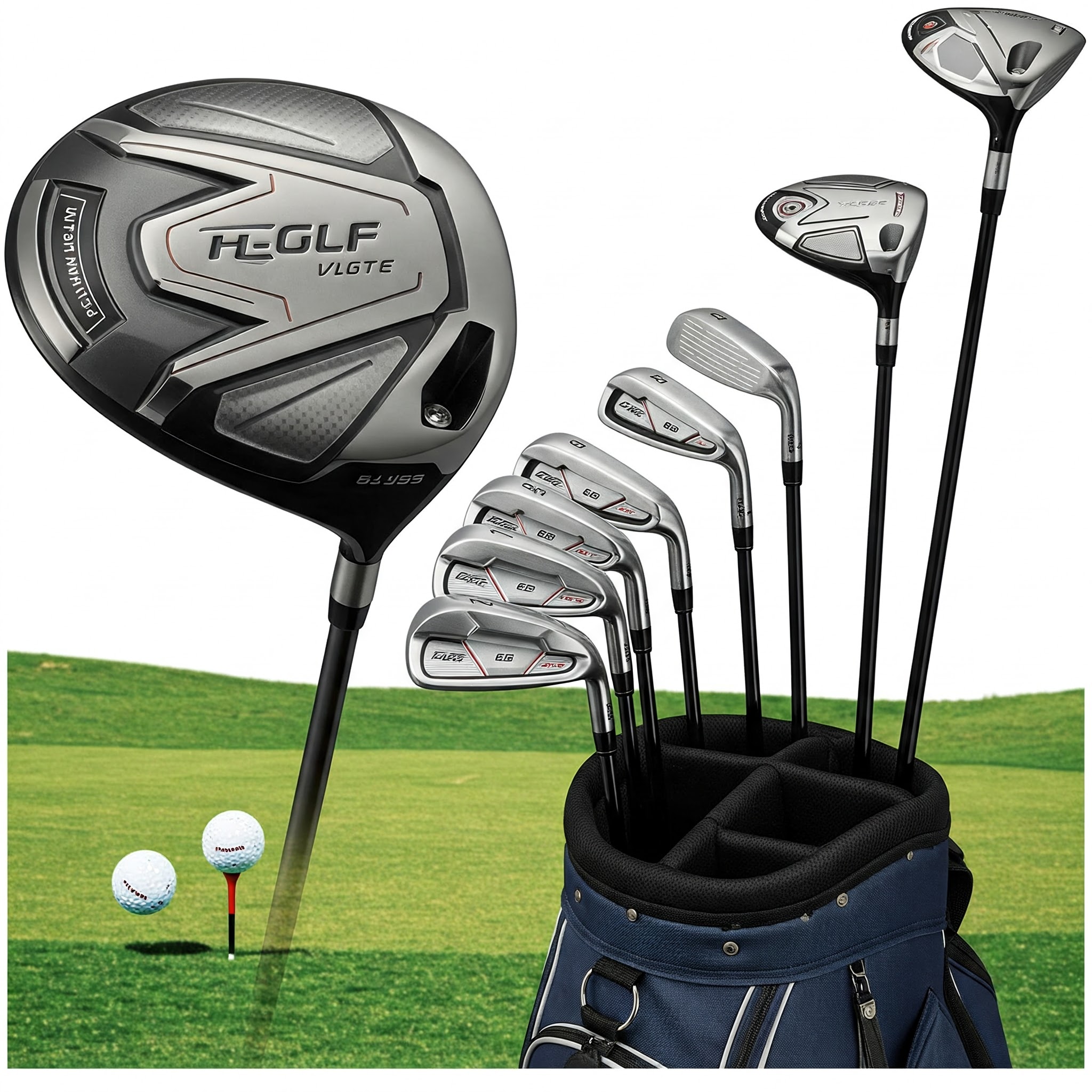
The best golf clubs are the clubs that make your typical swing produce higher, straighter, more consistent shots — usually forgiving designs with large sweet spots, the right shaft flex for your swing speed, and lofts that leave no big distance gaps. For most amateurs, that means game improvement irons, hybrids instead of long irons, and a high-MOI driver.
If you want a refresher on how woods, irons, hybrids, wedges, and putters differ in design and purpose, the Wikipedia overview of golf clubs is a solid primer. Below, we’ll focus on what those differences mean when real money is on the line.
Quick note: this post contains affiliate links. If you buy through them, we may earn a commission at no extra cost to you — and it never changes which products we recommend.
Quick Comparison: The Best Golf Clubs at a Glance
Here’s the fast version for anyone who wants the short list before the deep dive.
| Product | Type | Approx. Price Range | Ideal Player | Best for |
|---|---|---|---|---|
| Callaway Strata 12-Piece | Complete set | $350–$500 | New golfers | Callaway Strata 12-Piece: best all-around starter set |
| Precise M5 Men’s Set | Complete set | $250–$350 | Budget beginners | Precise M5 Men’s Set: most clubs per dollar |
| Wilson Profile SGI | Complete set | $400–$450 | Beginners of any height | Wilson Profile SGI: size-matched fit |
| Callaway XR 13-Piece (2026) | Complete set | Around $1,500 | Improving players | Callaway XR 13-Piece (2026): premium bag-in-a-box |
| TaylorMade Qi4D Driver | Driver | Around $650 | Mid to low handicaps | TaylorMade Qi4D Driver: maximum adjustability |
| Callaway Quantum Max Driver | Driver | Around $650 | Most handicaps | Callaway Quantum Max Driver: speed plus forgiveness |
| TaylorMade Qi Max Irons | Iron set (7 pcs) | $1,100–$1,200 | Mid to high handicaps | TaylorMade Qi Max Irons: straight distance |
Reading the table, the clear split is between “get me on the course” packages under $500 and “upgrade my bag” clubs that cost as much on their own as an entire starter set. If you’re brand-new, any of the first three gets you playing for a fraction of what a single premium driver costs. If you already own a set and keep hitting the same misses, a targeted upgrade — a modern driver or a set of game improvement irons — will usually do more for your scores than replacing everything at once.
💬 One click helps other shoppers make an informed choice too! 😊
Top 7 Best Golf Clubs: Expert Analysis
Each pick below includes what the specs actually mean on the course, who it fits, what reviewers consistently report, and an honest value verdict. Prices are approximate ranges at the time of writing — check the current price before you buy, as golf equipment pricing shifts often, especially around new-model launches.
1. Callaway Strata 12-Piece Complete Set — best all-around starter set
The Callaway Strata 12-Piece Complete Set has been the default recommendation for first-time golfers for years, and the reason is simple: it removes the hard clubs from the bag.
The set includes a 460cc forged driver (10.5°), a 15.5° 3-wood, a 26° 5-hybrid, 6–9 irons, a pitching wedge, a putter, a stand bag, and two headcovers. In practice, that 5-hybrid replacing the 4- and 5-irons matters most — long irons are the clubs beginners struggle with most, and a hybrid’s wider sole and lower center of gravity get the ball airborne far more easily. The 460cc driver is the maximum size allowed under the rules, which means the largest possible hitting area.
Based on the specs, this is a set for someone who plays a handful of times a month and wants nothing to think about. Its limitation is the short-game coverage: there’s no sand wedge, so bunker shots with a pitching wedge are harder than they need to be. Budget for one dedicated wedge early on.
Reviews consistently praise how easy the clubs are to launch and the value of a recognized brand at this price; the most common complaints involve occasional quality-control issues and the bag wearing faster than the clubs.
Pros:
- ✅ Hybrid replaces hard-to-hit long irons
- ✅ Maximum-size 460cc driver for forgiveness
- ✅ Trusted brand with accessible warranty support
Cons:
- ❌ No sand wedge included in the set
- ❌ Design is older than newer premium sets
Typically $350 to $500 depending on shaft and retailer — strong value for a true beginner who wants a name brand.
2. Precise M5 Men’s Complete Set — most clubs for the money
The Precise M5 Men’s Complete Set is the budget pick that still gives you a genuinely full bag, with more clubs than sets costing far more.
You get a 460cc titanium driver, a 3-wood, a 21° hybrid, 5-iron through pitching wedge, a putter, a deluxe stand bag, and three headcovers. It’s offered in Regular, Short (-1″), and Tall (+1″) lengths, in left-handed versions, and in an all-graphite A-flex senior build. That size range is the hidden strength here: a club that’s the wrong length forces you to change your posture, and that causes more bad shots than any clubhead technology fixes.
Our honest take: this is the right buy for a golfer who isn’t sure the hobby will stick, a left-handed beginner who’s frustrated by limited options, or a taller player who needs longer shafts on a budget. Keep expectations realistic — the driver won’t match a premium model on feel or ball speed, and the 5-iron will be hard for most beginners to hit well.
Customer feedback generally describes the M5 as a good starter set for the price, while some buyers mention mixed experiences with third-party sellers’ shipping and service, so check who fulfills the order.
Pros:
- ✅ Very low cost per club in the bag
- ✅ Regular, short, tall, and left-handed options
- ✅ All-graphite senior version for slower swings
Cons:
- ❌ 5-iron is tough for true beginners
- ❌ Seller experience varies across listings
Usually between $250 and $350 — the best golf clubs for the money if budget is your first filter.
3. Wilson Profile SGI Complete Set — best size-matched fit
The Wilson Profile SGI Complete Set approaches the starter-set problem differently: instead of one size for everybody, Wilson builds versions by height and player type.
There are men’s standard (roughly 5’5″–6’1″) and tall versions, three women’s fits (petite, standard, tall), plus senior and teen builds. The men’s standard set includes a 10.5° driver, a 5-wood, a 5-hybrid, 6–9 irons, a pitching wedge, a sand wedge, a putter, a bag, and three headcovers. Notice the choices: a 5-wood instead of a 3-wood (higher loft, easier off the fairway) and a real sand wedge. Those two details make this set friendlier around the course than many rivals.
Based on comparing the configurations, this is the best golf club set for households buying for players of different sizes, and for women who are tired of shortened men’s clubs. Wilson’s women’s standard version even uses a 13° driver with all-graphite shafts, which helps slower swing speeds get the ball in the air.
Reviews consistently highlight the forgiveness and the value of matched sizing; a recurring criticism is that the driver feels and sounds less powerful than premium models, and at least some petite buyers reported the length difference was smaller than expected.
Pros:
- ✅ Height-based fits for men, women, teens
- ✅ Includes a sand wedge and 5-wood
- ✅ Easy-launching women’s 13° driver
Cons:
- ❌ Driver feedback feels muted versus premium models
- ❌ Petite sizing may not suit very short players
Around $400 to $450 — excellent value when correct sizing matters more than brand prestige.
4. Callaway XR 13-Piece Complete Set (2026) — premium bag-in-a-box
The Callaway XR 13-Piece Complete Set (2026) is what happens when a complete set is built for golfers who’ve already caught the bug.
It includes a 460cc titanium driver, a 3-wood, 4- and 5-hybrids, 6–9 irons, a pitching wedge, an approach wedge, a sand wedge, an Odyssey DFX putter, and a stand bag. That three-wedge setup is the standout: an approach wedge fills the awkward distance gap between pitching and sand wedges that most starter sets ignore, so you’re not forced into half-swings from 90 yards. Two hybrids also mean no long irons at all.
Our analysis: the Callaway XR 13-Piece (2026) suits a player who has broken 100, plans to play weekly, and wants a cohesive, game-improvement bag without paying for a custom fitting. A brand-new golfer can absolutely use it, but they won’t extract the extra value over the Callaway Strata 12-Piece until their swing is more repeatable.
Review volume is lower than on long-running budget sets because this version is newer; early retailer reviews are positive about build quality and completeness, and comparison sites note the trade-off between proven value sets and this newer, higher-ceiling package.
Pros:
- ✅ Three wedges close short-game distance gaps
- ✅ Two hybrids eliminate difficult long irons
- ✅ Odyssey putter is a genuine upgrade
Cons:
- ❌ Costs roughly three times a starter set
- ❌ Overkill for occasional or first-season golfers
Around $1,500 at the time of writing — fair value for committed improvers, poor value for casual players.
5. TaylorMade Qi4D Driver — most adjustable driver in its class
The TaylorMade Qi4D Driver is one of the headline releases of the 2026 season and the most tunable driver on this list.
It uses four movable weights (two 9g, two 4g) plus a 4° adjustable loft sleeve for loft, lie, and face angle, with lofts of 8° (right-hand only), 9°, 10.5°, and 12° in a 460cc head. What this means in practice: moving the heavy weights forward lowers spin for players who balloon their drives, moving them back raises forgiveness, and shifting them heel or toe nudges you toward a draw or fade. That’s a lot of control — if you use it.
Here’s what to weigh: independent reviewers point out that if you leave the weights where they came from the factory, you’re paying for adjustability you’ll never use. This driver rewards a fitting session or a golfer willing to experiment on a launch monitor. Players who just want “set it and forget it” forgiveness may be better served by the higher-MOI Max version in the same family.
Retailer reviews for the Qi4D family are overwhelmingly positive, with frequent praise for improved looks, sound, and distance compared with the previous Qi35 generation.
Pros:
- ✅ Four weights fine-tune spin and shape
- ✅ Wide loft range, including 12°
- ✅ Strong sound, looks, and ball speed
Cons:
- ❌ Adjustability is wasted without fitting
- ❌ Premium price for a single club
Around $650 — great value for tinkerers and fitted players, less so for anyone who won’t touch the weights.
6. Callaway Quantum Max Driver — fast, forgiving all-rounder
The Callaway Quantum Max Driver is the core model of Callaway’s 2026 Quantum family and arguably the easiest premium driver here to recommend to most golfers.
Its headline technology is the Tri-Force face, which layers titanium, a polymer mesh, and carbon fiber to keep ball speed high across more of the face, plus adjustable perimeter weighting and Callaway’s adjustable hosel. On the course, ball speed retention on off-center hits is what matters: most amateurs miss the center, and a face that loses less speed on those misses produces more consistent carry distance.
In independent testing, MyGolfSpy ranked the Quantum Max highly in its 2026 driver evaluations — see the Callaway Quantum Max test results for the data. Based on that and the spec sheet, this is the driver for a mid-handicapper who wants distance and accuracy without fussing with weights. Slicers should look at the draw-biased Max D variant; slower swingers at the lighter Max Fast.
Reviewers broadly like the speed and adjustable hosel; the main reservations are that it can launch slightly higher than ideal for some players and that the improvement over the previous Elyte generation is incremental, not dramatic.
Pros:
- ✅ Tri-Force face protects speed on mishits
- ✅ Simple, effective adjustable hosel
- ✅ Family includes draw and lightweight versions
Cons:
- ❌ May launch too high for some swings
- ❌ Modest upgrade over last-generation Elyte
Around $650 — strong value as a one-and-done upgrade for most players.
7. TaylorMade Qi Max Irons — straight distance for mid-to-high handicaps
The TaylorMade Qi Max Irons are TaylorMade’s 2026 game improvement irons, built around the brand’s “straight distance” idea — limiting the weak right miss that plagues most amateurs.
The standard set runs from a 4-iron (18.5°) to a 58° lob wedge, sold primarily as seven-piece sets in steel or graphite, while the Qi Max HL version uses lofts about 3° weaker for higher launch. TaylorMade’s Speed Slot returns for ball speed low on the face, and expanded ECHO dampening improves sound and feel. Translation: thin shots — the most common iron mishit for higher handicaps — lose less distance, and impact feels less harsh.
Our take: these suit golfers around 12 handicap and up who already own a starter set and want a meaningful iron upgrade. If you swing slower or struggle to get irons airborne, choose the HL version. Independent reviewers noted that the slimmer profile compared with older game improvement models makes them look less bulky at address.
Reviews report a clear improvement in sound over the previous Qi irons; the most cited drawback is that the wide, oversized soles can feel clumsy from thick rough.
Pros:
- ✅ Forgiving on thin, low-face strikes
- ✅ Much improved sound and feel
- ✅ HL version eases launch for slower swings
Cons:
- ❌ Wide soles can snag in thick rough
- ❌ Costs as much as a premium complete set
Roughly $1,100 to $1,200 for seven irons — good value if irons are your weakest club category.
✨ Don’t miss these top-rated picks!
🔍 Take your golf game to the next level with this carefully curated lineup. Click a highlighted club or set to check current pricing and availability on Amazon. Whether you’re buying your first bag or replacing one problem club, these picks will help you hit more greens and enjoy every round a little more! ⛳
How to Choose the Best Golf Clubs (7 Steps)
Choosing the best golf clubs comes down to seven questions, in this order:
- Be honest about your level. If you’ve never broken 100, prioritize forgiveness over everything; game improvement irons and complete golf club sets exist for exactly this reason.
- Estimate your swing speed. Most amateur men swing a driver somewhere in the 80s–90s mph; slower swings need more loft and lighter, softer shafts to launch the ball.
- Pick the right shaft flex. Too stiff and the ball flies low and right; too soft and shots balloon or hook. Senior (A) and regular flex fit most recreational players.
- Get the length right. Height and wrist-to-floor measurement matter, which is why sized sets like the Wilson Profile SGI and length options on the Precise M5 Men’s Set matter more than they look.
- Replace long irons with hybrids. Few amateurs hit a 4-iron consistently; a hybrid at the same loft is easier from almost every lie.
- Check your gapping. Look for even loft steps (roughly 4°–5°) between clubs, especially wedges, so you’re not stuck between distances.
- Buy for the next two years, not the next twenty. Your swing will change as you improve, so overspending on tour-level clubs early rarely pays off.
The common thread: the best golf clubs fit you, not the player on TV. A modest set at the right length and flex will outperform a premium club that’s wrong for your swing every single time.
Complete Golf Club Sets vs Building Your Bag Club by Club
This is the first real fork in the road, and it deserves more than a table.
Complete golf club sets bundle a driver, fairway wood, hybrid, irons, wedge(s), putter, and bag into one purchase. Their advantage is coherence: lofts are designed to step evenly, shafts are matched, and you avoid the classic beginner mistake of owning a great driver and a random collection of hand-me-down irons. They’re also dramatically cheaper. The Callaway Strata 12-Piece costs less than either premium driver on our list.
Building a bag club by club — or upgrading in stages — makes sense once you know your swing. At that point, a fitter can match each shaft and loft to you, and you can spend where it matters most. Many golfers find the driver and irons deliver the biggest returns, while a mid-priced putter is plenty.
| Approach | Upfront Cost | Fit to Your Swing | Best for |
|---|---|---|---|
| Starter complete set | $250–$500 | Generic, sized by height at best | Beginners: Callaway Strata 12-Piece, Wilson Profile SGI |
| Premium complete set | Around $1,500 | Better gapping, still off-the-rack | Improvers: Callaway XR 13-Piece (2026) |
| Piece-by-piece upgrades | $650+ per club; $1,100+ per iron set | Custom when fitted | Established players: TaylorMade Qi4D Driver, TaylorMade Qi Max Irons |
The numbers make the strategy obvious: start with a set, then upgrade the weakest category first. A beginner who spends $1,800 on a fitted driver and irons before their swing stabilizes will likely need different specs within two seasons. A golfer who plays for a year with the Callaway Strata 12-Piece, then adds the Callaway Quantum Max Driver, gets most of the benefit for far less money.
Golf Clubs for Beginners: Three Real-World Buyer Profiles
Specs only matter in context, so here’s how we’d match golf clubs for beginners and improving players to three common situations.
Profile 1: The weekend newcomer (budget around $400)
You’re 35, picked up golf through work outings, and play nine holes twice a month plus a range session. You don’t need technology — you need clubs that launch easily and a full set so you’re not borrowing. The Callaway Strata 12-Piece is the pick: brand-name build, a hybrid instead of long irons, and a stand bag for walking. Add a 56° sand wedge for roughly $40–$100 and you’re covered. If you’re under 5’5″ or over 6’1″, consider the Wilson Profile SGI instead for its sizing.
Profile 2: The retired golfer with a slower swing (budget around $350)
You’re 66, playing three times a week, and your old steel-shafted set feels heavy by the back nine. Lighter graphite shafts reduce fatigue and help a slower swing launch the ball. The all-graphite senior version of the Precise M5 Men’s Set fits the budget, while the women’s or senior builds of the Wilson Profile SGI are worth comparing if you want more loft in the woods.
Profile 3: The improving mid-handicapper (budget around $1,800)
You’re shooting in the high 80s, play weekly, and your misses are big slices off the tee and thin iron shots. Don’t buy another complete set. Put the money where your misses are: the Callaway Quantum Max Driver (or its draw-biased Max D variant if you slice) plus the TaylorMade Qi Max Irons. Keep your existing wedges and putter. That combination addresses both weaknesses for roughly what a premium set costs, and it’s tuned to the problems you actually have.
The pattern across all three: match the purchase to frequency of play and to your specific miss, not to the size of the price tag.
Your First 30 Days: Setup, Practice, and Care
New clubs only help if you set them up and use them well. Here’s a practical plan for the first month.
Week 1: Learn your distances
Take your new set to a range with yardage markers (or a simulator) and hit 10 balls with each club. Ignore the best and worst shots; write down the typical carry. Most beginners discover their 7-iron and 6-iron go nearly the same distance — a sign to lean on the hybrid instead of the longer iron.
Week 2: Check the driver settings
If you bought an adjustable driver like the TaylorMade Qi4D Driver or Callaway Quantum Max Driver, start in the standard setting. Change only one variable at a time — loft first — and give each setting at least one full range session before judging it.
Weeks 3–4: Spend half your practice on the short game
The fastest way to lower scores isn’t distance; it’s chipping and putting. Split range time roughly 50/50 between full swings and shots inside 50 yards.
Simple maintenance routine
- 🧽 Clean grooves after every round with a soft brush and warm, soapy water — clean grooves produce more consistent spin.
- 🧤 Wipe grips monthly with a damp cloth; replace them about once a year if you play weekly, or when they feel slick.
- 🎒 Keep headcovers on woods and hybrids in the bag to prevent chips and paint damage.
- ☀️ Don’t store clubs in a hot car trunk for weeks — extreme heat can weaken grip and shaft adhesives over time.
Common first-month mistakes: changing driver settings after every bad shot, practicing only with the driver, and ignoring the putter. Avoid those three and your new clubs will feel better faster.
Problem → Solution: Fixing Common Equipment Headaches
Plenty of “swing problems” are really equipment problems. Here are five common ones and how to address them.
1. Problem: A big slice off the tee. Solution: Choose a draw-biased driver, such as the Max D version in the Callaway Quantum Max Driver family, or set an adjustable driver to a more upright lie and higher loft. Higher loft reduces sidespin’s effect, which straightens shots.
2. Problem: Long irons won’t get airborne. Solution: Replace them with hybrids. Every set on our list already does this to some degree; the Callaway XR 13-Piece (2026) removes long irons entirely with its 4- and 5-hybrids.
3. Problem: Thin iron shots that come up short. Solution: Game improvement irons with low-face speed technology, such as the TaylorMade Qi Max Irons, preserve more distance on those strikes. If your thin shots fly low too, try the higher-launching HL version.
4. Problem: Awkward “in-between” distances near the green. Solution: Check wedge gapping. If your pitching wedge is around 44°–46° and your sand wedge is 56°, a 50°–52° gap or approach wedge fills that hole — the reason the three-wedge Callaway XR 13-Piece (2026) stands out.
5. Problem: Fatigue and lost distance late in the round. Solution: Lighter graphite shafts in irons and woods, like the senior build of the Precise M5 Men’s Set, reduce the effort per swing so your last few holes look more like your first few.
Best Golf Drivers for 2027: Qi4D vs Quantum Max
The driver is the club most golfers upgrade first, so it’s worth comparing the two best golf drivers on our list head-to-head.
Both the TaylorMade Qi4D Driver and the Callaway Quantum Max Driver sell for about the same price, both are 460cc, and both offer adjustable hosels. The difference is philosophy. The TaylorMade Qi4D Driver gives you four movable weights to shape spin and flight; it’s a tool for golfers who’ll get fitted or test settings on a launch monitor. The Callaway Quantum Max Driver puts its effort into the face — keeping ball speed high on mishits — and asks less of you.
On paper, that means:
- ⚡ If you hit the center fairly often and want to dial in spin, the TaylorMade Qi4D Driver offers more control.
- 🎯 If your strike pattern is scattered across the face, the Callaway Quantum Max Driver‘s speed retention probably matters more than weight settings.
- 🔁 If you slice, look at either brand’s draw-biased or max-forgiveness sibling rather than the standard head.
Our neutral read is that both sit among the best golf drivers of the 2026 model year, and heading into 2027 they remain current models. A fitting session is the only way to know which head and shaft combination produces your best numbers. If you can’t get fitted, the Callaway Quantum Max Driver is the safer off-the-rack choice; if you can, the TaylorMade Qi4D Driver has a higher ceiling.
Game Improvement Irons vs Traditional Blades
Game improvement irons and traditional blades look similar from a distance but behave very differently, and choosing the wrong type is one of the costliest mistakes amateur golfers make.
| Feature | Game improvement irons | Traditional blades / players’ irons | Best for |
|---|---|---|---|
| Sweet spot | Large, perimeter-weighted | Small, concentrated | Game improvement: TaylorMade Qi Max Irons |
| Launch | Higher, easier | Lower, more penetrating | High handicaps: game improvement |
| Mishit distance loss | Smaller | Larger | Inconsistent strikers: game improvement |
| Workability | Limited | High | Low handicaps: blades |
| Sole width | Wide | Thin | Game improvement from fairways; blades from tight lies |
The analysis is straightforward: blades reward precise ball-strikers with control and feedback, but punish the off-center hits most amateurs produce on a large share of their swings. Game improvement irons trade some workability for forgiveness and launch, which is the right trade for nearly anyone above a single-digit handicap. If you’d like independent rankings, the Golf Digest Hot List guide to game-improvement irons is a useful second opinion.
Even within game improvement irons, there are tiers. “Super game improvement” or high-launch models — like the HL version of the TaylorMade Qi Max Irons — use weaker lofts and wider soles for golfers who struggle to get the ball up. Standard game improvement models suit mid-handicappers who already launch the ball reasonably well. If you’re torn between two tiers, pick the more forgiving one; very few amateurs are held back by too much forgiveness.
Features That Actually Matter (and Ones That Don’t)
Golf marketing is full of proprietary names. Here’s how to separate signal from noise when comparing the best golf clubs.
Features that matter:
- 🎯 MOI (moment of inertia). Higher MOI means the clubhead twists less on off-center hits. For most golfers, this beats raw ball speed claims.
- 🪶 Shaft weight and flex. The shaft influences launch and feel more than most buyers expect. A wrong shaft can undo a great head.
- 📐 Loft and loft gapping. Even steps between clubs matter more than any single club’s technology.
- 📏 Length and lie. These control how the club sits at address; a lie that’s off by a few degrees can push shots consistently left or right.
- 🔧 Adjustable hosels — useful because they let you tune loft and face angle as your swing changes, but only if you use them.
Features that matter less than advertised:
- 🏷️ Brand-new model years. Driver improvements year over year are often incremental, as reviewers noted about the Callaway Quantum Max Driver versus the previous Elyte.
- 🔩 Extra adjustable weights if you’ll never move them. Reviewers made this exact point about the TaylorMade Qi4D Driver.
- 🎒 Fancy bags in starter sets. A bag is replaceable for well under $150; clubs that fit are not.
The takeaway: pay for forgiveness, fit, and gapping first. Pay for adjustability only if you’ll use it.
Long-Term Cost and Value: What You’ll Really Spend
Sticker price is only part of the story. Here’s a realistic look at what each option costs over roughly three seasons for a golfer playing weekly.
| Product | Approx. Upfront | Likely Add-Ons (3 yrs) | Approx. 3-Year Total | Best for |
|---|---|---|---|---|
| Precise M5 Men’s Set | $250–$350 | Sand wedge, regrips, possible bag | $400–$550 | Precise M5 Men’s Set: lowest total cost |
| Callaway Strata 12-Piece | $350–$500 | Sand wedge, regrips | $500–$700 | Callaway Strata 12-Piece: best overall value |
| Wilson Profile SGI | $400–$450 | Regrips | $480–$600 | Wilson Profile SGI: fewest add-ons needed |
| Callaway XR 13-Piece (2026) | Around $1,500 | Regrips | $1,600–$1,700 | Callaway XR 13-Piece (2026): complete for years |
Estimates assume one regrip set during the period and typical add-on prices; actual costs vary.
The interesting finding is how close the three starter sets end up once you add what’s missing. The Wilson Profile SGI costs a bit more upfront than the Callaway Strata 12-Piece, but it already includes a sand wedge, narrowing the gap. Meanwhile, the Callaway XR 13-Piece (2026) has the highest cost but the fewest compromises — its three wedges and two hybrids mean you’re unlikely to need extra clubs for years.
Resale value matters too. Name-brand clubs like Callaway and TaylorMade typically hold more trade-in value than lesser-known brands, which softens the true cost of upgrading later. Factor that in if you expect to move from a starter set to individual upgrades within a few seasons.
Common Mistakes to Avoid When Buying Golf Clubs
Even careful shoppers fall into these traps:
- Buying clubs for the golfer you hope to be. Low-spin drivers and blade irons are designed for skilled ball-strikers. Buy for your current swing.
- Choosing a shaft that’s too stiff. It’s a common ego purchase. Stiff shafts at slow swing speeds cost distance and push shots right.
- Ignoring length and height. A 6’4″ golfer with standard-length clubs will hunch over the ball. That’s why sized options from the Wilson Profile SGI and the Precise M5 Men’s Set are such a big deal.
- Overlooking the short game. A set without a sand wedge forces difficult bunker shots. Check wedge coverage before you buy.
- Upgrading everything at once. Identify your worst club category and upgrade that first.
- Skipping a fitting for premium purchases. For a $650 driver or an $1,100 iron set, a fitting session is a small cost relative to the price, and it often pays for itself.
- Assuming a lower price means a bad club. For beginners, a well-designed budget set often plays better than a premium club with the wrong specs.
Rules, Standards, and What’s Changing Heading Into 2027
Equipment rules aren’t something most weekend golfers think about, but they matter if you play in club events, handicap rounds, or tournaments.
The 14-club limit. Under the Rules of Golf, you may not start a round with more than 14 clubs. Every set on our list sits comfortably under that, leaving room to add a wedge or hybrid.
Conforming clubs. Drivers and other clubs must conform to the Equipment Rules set by the USGA and The R&A. Major-brand drivers like the TaylorMade Qi4D Driver and Callaway Quantum Max Driver are submitted for conformance testing, and some competitions require that your driver head appear on the official list. You can check models on the USGA’s conforming club and ball lists before an event.
The golf ball rollback (announced). The USGA and The R&A announced a change to golf ball testing that will make newly conforming balls fly shorter, with the effect largest for very fast swingers and estimated at about five yards or less for most recreational golfers. The original plan applied it to elite play from January 2028 and to all golfers from January 2030, though the governing bodies have since sought feedback on moving to a single 2030 date — check the latest USGA guidance. Either way, it doesn’t change which clubs you should buy in 2027, but it’s another reason to prioritize forgiveness and accuracy over chasing a few extra yards.
Practical safety. Inspect shafts for cracks and make sure heads are firmly attached, especially on older or secondhand clubs. A loose clubhead is both non-conforming and a genuine safety hazard on a crowded range.
FAQ: Best Golf Clubs
❓ How much should a beginner spend on golf clubs?
✅ Most beginners do well spending roughly $250 to $500 on a complete set. That range covers trusted options like the Callaway Strata 12-Piece and Wilson Profile SGI, leaving money for lessons, which usually improve scores faster than pricier equipment…
❓ Are complete golf club sets good enough to play long-term?
✅ Yes, for many recreational golfers. A quality complete set can last several seasons. Most players eventually upgrade the driver or irons first, then keep the remaining clubs from the set until their swing clearly outgrows them…
❓ Is it worth buying a new driver every year?
✅ Usually not. Year-over-year driver gains are often incremental. Upgrading every three to five years, or after a fitting shows clear gains, gives most golfers better value than chasing each new release…
❓ Should I buy golf clubs online or get fitted in a store?
✅ For starter sets, buying online is fine if you choose the right length and flex. For premium drivers or iron sets, a fitting first helps you order the exact loft, shaft, and lie online afterward…
❓ What golf clubs do I actually need to play my first round?
✅ At minimum: a driver or fairway wood, a hybrid, a few mid and short irons, a wedge, and a putter. A complete set covers this automatically, so you're not stuck borrowing clubs on the course…
Conclusion: Picking the Best Golf Clubs for Your Game in 2027
The best golf clubs aren’t defined by price or launch date — they’re defined by fit. For most new players, a complete set is the smartest first purchase: the Callaway Strata 12-Piece is the dependable all-rounder, the Precise M5 Men’s Set stretches a tight budget furthest, and the Wilson Profile SGI solves sizing problems that generic sets ignore. If you’re already committed and want everything in one box, the Callaway XR 13-Piece (2026) delivers premium gapping without a fitting appointment.
For established golfers, targeted upgrades beat wholesale replacement. Choose the Callaway Quantum Max Driver if you want forgiving speed with minimal fuss, the TaylorMade Qi4D Driver if you’ll take advantage of fitting and adjustability, and the TaylorMade Qi Max Irons if thin, short iron shots are costing you strokes.
Whatever you choose, start from three questions: How often do you play? What’s your most common miss? And do the clubs fit your height and swing speed? Answer those honestly and the best golf clubs for your game in 2027 become obvious — and your scores will reflect it.
🏌️ Ready to upgrade your game?
👉 Click any highlighted club or set above to check today’s pricing and availability. Pick the option that fits your swing, not the hype, and you’ll be hitting straighter, more confident shots by your next round! ⛳✨
https://youtube.com/shorts/LnpIIT3DPrQ?feature=share
Recommended for You:
- 10 Incredible Top Flite Golf Clubs That Will Transform Your Game in 2025
- 27 Best Golf Gifts for Men That Will Improve Their Game in 2025
- 12 Best Golf Balls for High Handicappers: Game-Changing Options for 2025
Disclaimer: This article contains affiliate links. If you purchase products through these links, we may earn a small commission at no additional cost to you.
✨Found this helpful? Share it with your friends!