As an Amazon Associate I earn from qualifying purchases. Links in this article may be affiliate links. How we choose gear
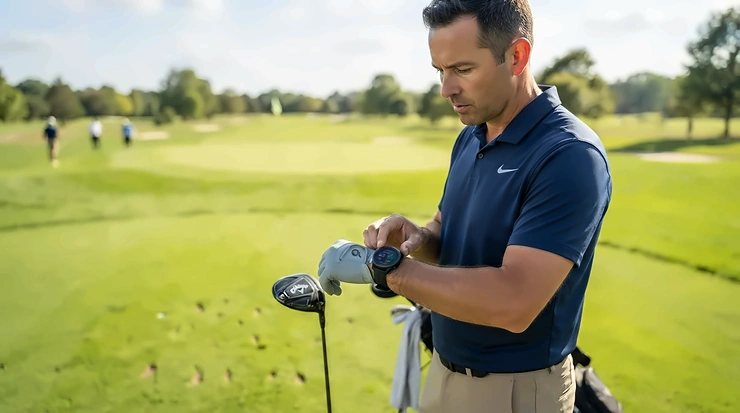
Two Garmin units sit about 280 grams apart (my arithmetic): the Garmin Approach G12 weighs 25.1 g, while the Garmin Approach G82 weighs 10.9 oz, or roughly 309 g. That gap sums up what a handheld golf gps can be in 2027, from a clip-on you forget is in your pocket to a 5-inch screen that doubles as a radar launch monitor. Between them sit the Bushnell Phantom 3 Slope, the Shot Scope H50 and the SkyCaddie PRO 5X, which trade size for screen, fees for features and speed for detail.
MyGolfSpy’s 2026 test of 12 golf GPS devices named the Garmin Approach G82 its best handheld, the Shot Scope H50 the runner-up and the Bushnell Phantom 3 Slope the value pick, and it found the best devices within a yard either way while the worst missed by nearly a full club. A ranking cannot say whether you carry a bag or ride a cart, so this guide sorts the five by how you move around the course. The findings rest on that roundup, single-reviewer write-ups from GolfLink, Golf Monthly, Golfers Authority, Today’s Golfer and Plugged In Golf, and owner comments under those reviews; none of the five was handled for this article, and current Amazon.com prices may differ from the ranges quoted.
The short answer: golfers who dislike carrying anything get the Garmin Approach G12, the cheapest route to slope readings is the Bushnell Phantom 3 Slope, cart riders who want a big color map without a fee get the Shot Scope H50, map purists who accept a renewal fee get the SkyCaddie PRO 5X, and anyone who also wants swing numbers pays for the Garmin Approach G82.
Who a handheld suits, and what decided the shortlist
MyGolfSpy’s testers describe handhelds as more visually engaging than watches, with larger screens and extras such as launch monitoring, and they add that some golfers will not want a big screen in front of them all the time. That trade-off drives the whole category: you gain map detail and give up the always-there convenience of a wrist.
Five models made the shortlist because each is covered by at least two independent reviewers and each solves a different problem: pocket weight, price, screen size, map accuracy or swing data.
Weight, screen and fees: what really separates these five
Pocket, belt or cart: weight sets the habit
Golfers Authority gives the Garmin Approach G12 as 25.1 g, PlayBetter lists the Bushnell Phantom 3 Slope at 78 g, SkyCaddie’s listings put the SkyCaddie PRO 5X at 8 oz (236 g), GolfLink and Golf Monthly both give the Shot Scope H50 as 270 g, and the Garmin Approach G82 is 10.9 oz. The Shot Scope H50 therefore weighs about 3.5 times the Bushnell Phantom 3 Slope (my arithmetic).
Weight decides where each one lives. GolfLink’s reviewer found the Shot Scope H50 impractical to carry in a pocket while walking and says it works best on a cart or push cart, whereas Plugged In Golf’s reviewer slid the Bushnell Phantom 3 Slope into a pocket on cart-path-only holes. Small has its own cost: Today’s Golfer’s reviewer says the Garmin Approach G12 fell out of his pocket several times and he once had to backtrack to find it.
AMOLED, LCD or monochrome
The Shot Scope H50 has a 4.3-inch AMOLED touchscreen, the SkyCaddie PRO 5X a 5.5-inch LCD at 720 x 1440, and the Garmin Approach G82 a 5-inch transflective color touchscreen at 480 x 800. The Bushnell Phantom 3 Slope has a black-and-white touchscreen, according to MyGolfSpy, and the Garmin Approach G12 a 0.9-inch monochrome display with a big-numbers mode.
Every reviewer who commented on sunlight found a screen readable: Golfers Authority’s reviewer used the SkyCaddie PRO 5X at a noon round in 105°F Arizona heat and read the Garmin Approach G82 in sun and overcast, and GolfLink’s reviewer found the Shot Scope H50 readable in harsh sun. The trade-off in these sources is size and cost, not visibility.
Fees after the purchase
Most of the five cost nothing beyond the purchase. Golfers Authority says the Garmin Approach G12 needs no subscription, with an optional Garmin Golf membership for extras that it names as aerial imagery and Today’s Golfer names as green contouring. MyGolfSpy’s testers praised the Shot Scope H50 for its free app, PlayBetter says the Bushnell Phantom 3 Slope has no subscriptions, and Golfers Authority lists none for the Garmin Approach G82.
The SkyCaddie PRO 5X is the exception. It includes a first year of membership, and sources disagree on what comes next (see its entry below). Three seasons on the top renewal tier adds about $200 after year one (my arithmetic), which is worth adding to the sticker before comparing it with the fee-free units.
Five handhelds in one table: weight, battery, screen and fees
| Model | Screen | Weight | GPS battery | Ongoing fee | Price range |
|---|---|---|---|---|---|
| Garmin Approach G12 | 0.9 in monochrome | 25.1 g | Up to 30 hours | None for core yardages; optional Garmin Golf membership for extras | Between $130 and $150 |
| Bushnell Phantom 3 Slope | Black-and-white touchscreen | 78 g | About 18 hours | None | Between $150 and $170 |
| Shot Scope H50 | 4.3 in AMOLED touchscreen | 270 g | 15+ hours claimed | None | Around $200 |
| SkyCaddie PRO 5X | 5.5 in LCD touchscreen | 236 g | Up to 18 hours claimed; about 16 measured | First year included, then renewal | Between $350 and $400 |
| Garmin Approach G82 | 5 in color touchscreen | 10.9 oz (about 309 g) | Up to 25 hours (8 in radar mode) | None listed | Around $600 |
Battery is the column that separates these units least: even the shortest claim, 15-plus hours for the Shot Scope H50, covers a full round with room to spare. Price is the widest gap, with the Garmin Approach G82 costing about four times the cheapest unit (my arithmetic). Screen size and weight rise together, because the three biggest screens belong to the three heaviest units.
Spotted one you like? Take a closer look on Amazon.com.
Best handheld golf gps 2027, matched to five ways of getting around the course
Each entry starts from how the golfer moves and what they want on screen. The buyers are hypothetical, built from what the reviews say each unit does well.
1. Garmin Approach G12 — a clip-on that vanishes in a pocket
Golfers who dislike carrying gadgets are the buyers this one is built around. The Garmin Approach G12 has a 0.9-inch monochrome screen, a lanyard loop and a clip for a pocket, belt or bag, and Golfers Authority rates it IPX7 and up to 30 hours on GPS. That reviewer reports satellite lock in 5 to 30 seconds, and Today’s Golfer’s reviewer was taking yardages within three minutes of unboxing and preferred its buttons to a touchscreen.
Simplicity is the price. The screen shows front, middle and back numbers, such as 108, 122 and 137 yards on one approach in Golfers Authority’s round, but there is no slope, no color map and no touchscreen. Moving the pin takes a few taps, and the new position is saved only for that round. Today’s Golfer’s reviewer missed the PlaysLike distance from his Garmin watch. Expect to pay between $130 and $150, with the Garmin Golf membership optional.
Pros:
- ✅ 25.1 g and up to 30 hours of GPS battery
- ✅ 42,000-plus preloaded courses and no subscription for core yardages
- ✅ Buttons that Today’s Golfer’s reviewer preferred to a touchscreen
Cons:
- ❌ Tiny monochrome screen with no slope or color hole map
- ❌ Moved pin positions last only for the current round
- ❌ Fell out of one reviewer’s pocket several times
2. Bushnell Phantom 3 Slope — slope yardages on a small budget
Between $150 and $170 buys slope-adjusted distances in a 78 g unit, which is why MyGolfSpy named the Bushnell Phantom 3 Slope its best-value handheld with a score of 8.9. The same roundup ranked its accuracy among the top three of 12 devices, just behind the leading Garmin watch, and put its battery at about 18 hours, or roughly nine rounds for a nine-hole player. PlayBetter adds a BITE magnetic cart mount, up to six hazards per hole and automatic hole recognition. Plugged In Golf’s reviewer found distances mostly within a yard or two of his Garmin watch and a laser.
Start-up is slow. Plugged In Golf’s reviewer waited a minute or two for the first satellite search, and PlayBetter’s reviewer saw course data load in closer to a minute than the 15 seconds he gets on other devices.
Owner comments under Plugged In Golf’s review are the more cautionary part, and they are individual reports, not a measured pattern. One owner reports the front-of-green number dropping to dashes about 30 meters out, two others describe the unit jumping between holes in a pocket, showing 999 late in a round or recording scores from another course, and several say it pops out of the belt clip. One commenter says Bushnell’s sale of its golf business has left repairs and support unclear. PlayBetter’s reviewer predicts owners will eventually forget it on the cart because the magnet holds so firmly, and notes it has no shot-tracking tags, unlike a similarly priced Shot Scope unit.
3. Shot Scope H50 — a big AMOLED screen, no yearly fee
Size is the first thing GolfLink’s reviewer flags: 270 grams, bigger than most smartphones, with a pocket carry that was impractical while walking. The Shot Scope H50 is happiest on a cart or push cart, where its built-in magnet and bag clip do the work. In return it has a 4.3-inch AMOLED touchscreen that GolfLink and Plugged In Golf both found readable in bright light, preloaded maps for 42,000-plus courses, IPX7 waterproofing and no subscription at around $200. GolfLink’s reviewer found its distances consistently within a yard of a cart GPS, with a rangefinder corroborating them.
Green-contour maps get mixed marks. Golf Monthly’s reviewer found many arrows that did not match the real slope and some holes at his home course with none, and GolfLink’s reviewer says the maps help approach planning but cannot replace a physical green book. Shot tracking is manual, which Plugged In Golf’s reviewer calls not much fun. Battery figures differ by source: Shot Scope claims 15-plus hours, Golf Monthly’s reviewer got at least two rounds on a charge, and MyGolfSpy says three-plus rounds. A two-year warranty comes with it, per Plugged In Golf.
MyGolfSpy scored it 9.0, the runner-up handheld behind the Garmin Approach G82.
4. SkyCaddie PRO 5X — ground-verified maps with a renewal fee
A year of membership comes in the box with the SkyCaddie PRO 5X, and what follows is where the sources disagree. Golfers Authority says the basic PAR plan stays free but limited, full renewal starts at $29 a year, and the BIRDIE, EAGLE and DOUBLE EAGLE tiers run about $99.95 a year for statewide, nationwide U.S. and worldwide courses. Independent Golf Reviews instead cites a $60 yearly fee after year one. Check the current terms on SkyCaddie’s site before ordering, since the cost over several seasons depends on the tier.
The hardware is the draw. A 5.5-inch touchscreen at 720 x 1440, 236 g, 35,000-plus courses mapped on the ground, and Dynamic HoleVue, which reorients the hole as you move, according to PlayBetter. Golfers Authority’s reviewer kept distances within one to two yards of a Bushnell rangefinder over a full round and got about 16 hours across two rounds against SkyCaddie’s claim of 18. Setup took about 20 minutes of course downloads over Wi-Fi, and the first GPS lock can take 30 to 60 seconds. Budget between $350 and $400.
Pros:
- ✅ Distances within one to two yards of a rangefinder in Golfers Authority’s test
- ✅ A 5.5-inch screen that stayed readable in 105°F noon sun
- ✅ Dynamic HoleVue turns the hole as you advance
Cons:
- ❌ Bulky at 236 g, with some lag and extra taps for score entry
- ❌ Renewal fees after year one, with sources giving different amounts
- ❌ About 20 minutes of setup to download local courses
5. Garmin Approach G82 — GPS plus a radar launch monitor
At around $600, the Garmin Approach G82 costs about four times the cheapest unit here (my arithmetic), and MyGolfSpy still made it the best handheld of 2026 with a score of 9.3, saying its display rivaled most award-winning tablets and that it offers more value than buying a GPS and a launch monitor separately. The same page concedes that its size is not for everyone and that golfers who want a simple GPS do not need the launch monitor.
On the course it carries a 5-inch transflective color touchscreen, 43,000-plus CourseView maps, hazard and layup views, slope-adjusted yardages, wind speed and direction, automatic shot distance tracking, a magnetic cart mount and IPX7 water resistance. Garmin rates the battery at up to 25 hours of GPS and 8 in radar mode, and Golfers Authority’s reviewer played 18 holes with occasional range checks and still had over 60% left. He says it fits in a back pocket; Plugged In Golf’s reviewer says it stretches what counts as a handheld.
The radar side reads ball speed, clubhead speed, smash factor, tempo and estimated carry, plus putting stroke length and tempo. There is no spin, launch angle or club path. Garmin states accuracy of plus or minus 2 mph on ball speed and 5 yards on carry, and Golfers Authority’s reviewer compared it with a Rapsodo launch monitor over three range sessions, finding ball speeds within a couple of mph and carry within 3 to 7 yards. Plugged In Golf’s reviewer got mixed results against a FlightScope launch monitor and notes it does not capture side-to-side dispersion. Golfers Authority concludes that data-focused golfers need a dedicated launch monitor.
Wi-Fi is needed only for scorecard uploads and software or map updates, per Golfers Authority.
Slope and plays-like distance: what the USGA says you may look at
Three of the five show distances adjusted for elevation: the Bushnell Phantom 3 Slope, the Garmin Approach G82 and, per Golf Monthly and PlayBetter, the Shot Scope H50. The Garmin Approach G12 has no slope function, according to Golfers Authority.
Under Rule 4.3a, the USGA’s distance-measuring device guide says a handheld GPS is allowed, but the player cannot look at slope-based or plays-like distance displays during the round. A device may carry such functions as long as the player does not access them, and a Committee or course can ban distance-measuring devices entirely by Local Rule. PlayBetter says the Bushnell Phantom 3 Slope lets you turn slope off for tournament play, and Golf Monthly’s reviewer says the Shot Scope H50 has a tournament mode that disables features that are not competition-legal. For casual rounds the rule rarely matters; for club events, check the local rule and the unit’s tournament setting first.
What handheld golf gps reviews agree on, and where they split
Lists of the best handheld golf gps agree on one thing above all: accuracy is close to a laser on the better units. GolfLink’s reviewer saw the Shot Scope H50 within a yard of a cart GPS, Golfers Authority’s reviewer kept the SkyCaddie PRO 5X within one to two yards of a rangefinder, Plugged In Golf’s reviewer found the Bushnell Phantom 3 Slope mostly within a yard or two of his watch and a laser, and MyGolfSpy found its best devices within a yard. That is a consensus across several independent reports, though each used a different device.
They split on four points. Battery on the Shot Scope H50 runs from two rounds to three-plus depending on the reviewer. SkyCaddie renewal fees range from $29 to about $100 a year. The Bushnell Phantom 3 Slope sits between $150 and $170, and MyGolfSpy notes a recent increase that puts its figure about $20 above what Plugged In Golf and PlayBetter quoted earlier (my arithmetic). And the Garmin Approach G82 launch monitor lands within a couple of mph of a Rapsodo unit in one test and gets mixed results against a FlightScope unit in another.
Three purchases are worth avoiding. Paying for radar you will not use is the first, since MyGolfSpy says simple-GPS golfers do not need it. Ignoring renewal fees is the second. Carrying a 270 g unit on foot is the third: GolfLink’s Shot Scope H50 review says golfers who walk most rounds, play the same courses or want point-and-shoot precision to one target do better with a rangefinder, and MyGolfSpy recommends pairing any GPS with one.
Handheld, golf gps watch or laser: a quick way to sort it
Golf gps devices come in three bodies, and each answers a different annoyance. A laser gives one distance to one target; GolfLink says a handheld shows the whole hole, including hazards, doglegs, layup numbers and green shape. A golf gps watch keeps numbers on the wrist, while a handheld waits on the cart or in a pocket until you need it.
MyGolfSpy advises trying a watch on before buying, since some golfers find wrist devices distracting during the swing, and Golfers Authority recommends the Garmin clip-on to golfers who dislike wearing a watch to swing.
Fees, accuracy, battery and fit: short answers on golf gps devices
❓ Do handheld golf GPS units charge a yearly fee?
❓ How accurate are golf gps devices compared with a laser?
❓ How long does a handheld golf GPS battery last?
❓ Is a handheld golf GPS better than a golf gps watch?
❓ Can I use slope on a handheld golf GPS in a tournament?
Choosing by how you travel the course
Start with how the unit will travel. Walkers who want almost nothing on them should look at the Garmin Approach G12, and anyone adding slope on a small budget gets the Bushnell Phantom 3 Slope, accepting the scattered owner complaints about it. Cart riders who want a large color map without a fee have the Shot Scope H50, while the SkyCaddie PRO 5X suits golfers who value ground-verified maps enough to budget for renewals. The Garmin Approach G82 earns its price only if you will use the radar on the range.
My pick for most cart or push-cart players shopping for a handheld golf gps is the Shot Scope H50, on the strength of no yearly fee and distances within a yard of a cart GPS in GolfLink’s test. Spotted one you like? Take a closer look at current availability on Amazon.com.
Recommended for You
- Golf gps watches — Which Watch Fits Which Golfer
- Soft feel golf balls — A Pick for Each Kind of Golfer
- How long does a round of golf take? 7 Best Pro Ways to Speed Up!
Disclaimer: This post contains affiliate links. As an Amazon Associate, I earn from qualifying purchases made through these links, at no additional cost to you.
Pick the screen you will actually carry, then let the renewal fees break any tie.