
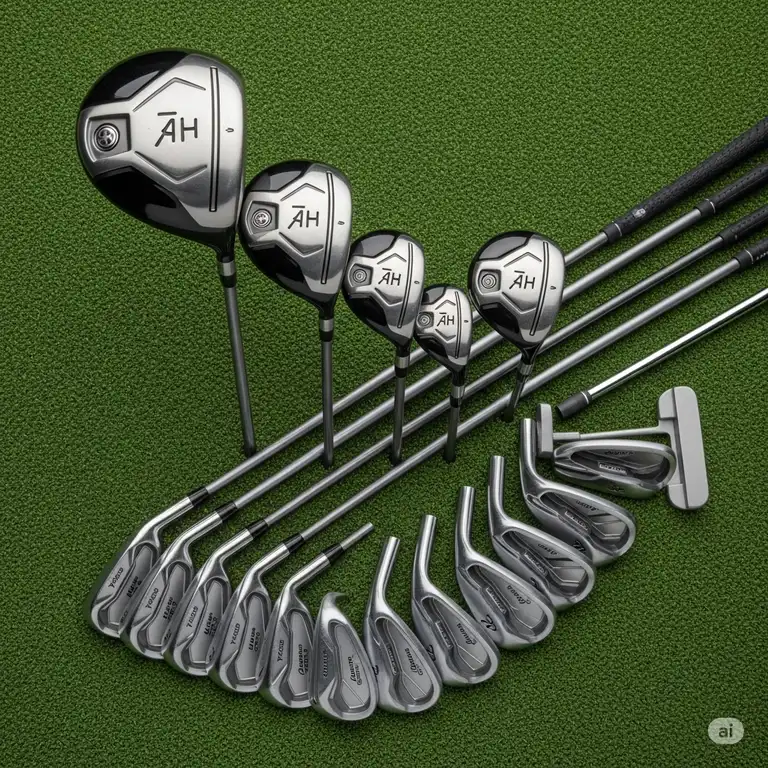
Most golfers should buy fairway woods they can launch from a tight lie, not the longest head in a laboratory test. That one filter explains why the 2027 shopping season feels messy: three major outlets crowned three different models, and a club that tops one distance chart can sit near the bottom of another’s accuracy table. Shopping for fairway woods therefore starts with your problem, not with the brand.
A 3-wood that never leaves the bag needs a different fix (loft, length, shaft, setup) than a 5-wood that balloons into the wind. This guide takes those fixes in order, then matches four tested heads to them. The findings rest on published launch-monitor tests, instructor columns and fitter references, with forum threads added where owners report what a test cannot, and MyGolfSpy’s 2026 fairway wood test alone covered 20 heads and roughly 6,000 shots hit off the deck indoors.
Prices below are ranges drawn from the pages cited, so confirm the current price on Amazon.com before you order.
Choose the loft before the brand
Start with the loft you can launch
Buying the lowest loft because it flies farthest is the most common error. GolfWRX’s club-fitting reference tells fitters never to put a golfer into a fairway wood loft they cannot get airborne consistently, and it defines the second-longest wood as the lowest loft the player can hit reliably from normal fairway lies. For some golfers that club is a 3-wood; for others it is a 5 or even a 7.
A Golf.com tip collection makes the same point from the lesson tee: 3-woods can be hard to hit, so one instructor likes students to work up to them. Retailer spec sheets for the Mizuno JPX One show how the ladder is built: 15, 18, 21 and 24 degrees, with shafts of 43.25, 42.75, 42.25 and 41.75 inches. Every step up in loft gives you a shorter, easier club to control.
Check the length against your driver
The same GolfWRX reference sets two ceilings. The second-longest wood should never exceed 43 inches for men or 42 for women, and it should sit one inch shorter than the driver when the driver is under 44 inches. For a golfer above a 15 handicap it should sit 1.5 inches shorter. Gaps between woods should be at least one inch, because smaller steps squeeze the distance spacing.
Golf Channel’s Frank Thomas, answering a reader’s question, put the right length for a 3-wood at about 43 inches. Keep that number in mind for the extension question further down.
Fairway woods, how to hit them: setup, lie, and low point
Hitting these clubs well is mostly a matter of arriving at the ball on a shallow path. Golf.com asked five of its Top 100 Teachers for their best fixes, and the five tips fit together as a sequence.
Ball position and distance from the ball
Brady Riggs says golfers who top the ball usually stand too far from it; he suggests moving closer by an inch or two and aiming to take a divot. Carol Preisinger places the ball at least halfway between the center of the stance and the lead toe, because the long shaft flattens the backswing and sets up the sweeping downswing these clubs need.
Sweep the turf instead of digging
Andrew Park describes the target as a near-zero attack angle, not the steep strike you would use with an iron. Cheryl Anderson adds a check you can do at home: your practice swing should graze the turf by your lead shoe, lined up with where the ball will sit.
Pick the lie before you pick the club
Dale Abraham’s rule is blunt: hit a fairway wood only from a lie that allows solid contact, and otherwise take a more lofted club. A separate Golf.com column by instructor Heather Angell describes the same mistake from the opposite side, golfers pulling the longest club from a sunken lie because they cannot reach the green otherwise.
Move from a low tee to the grass
Park’s progression is to start on a low tee to build trust in the loft, then graduate to slightly longer grass, and only then to a tight fairway lie. It is slow advice, and it is the advice that stops a new 5-wood from becoming the club you never trust.
Can you extend a fairway wood by two inches?
Legally, yes. The USGA’s Equipment Rules say that apart from putters no club may exceed 48 inches, so a 43.25-inch 3-wood stretched by two inches would measure 45.25 and stay inside the limit. Some elite events adopt a 46-inch local rule, which that same head would still pass.
Whether it is wise is a separate question, and the evidence leans cautious.
- Swing weight climbs. In a long-running thread on The Sand Trap, members agree that added length raises swing weight, though the numbers they quote disagree and none were verified: one example showed roughly a point per added inch on an iron, another repeated a rule of thumb of about three points per half inch. Thomas’s own estimate, that trimming two inches from a 45-inch 3-wood drops swing weight by about 10 to 12 points, sits close to the second figure.
- Accuracy usually drops. Thomas told a reader whose used 3-wood had a 45-inch shaft that the longer a club gets, the less accurate it becomes, The reader had found the extra two inches made the swing weight too heavy to swing comfortably.
- The lie needs rechecking. Posters in that same Sand Trap thread note that lie angle must be re-adjusted after lengthening, especially in woods.
- Two inches is the outer edge. One member of that forum says extender makers advise against going past two inches, and a 6-foot-5 poster planned to stop near 1.5. Another points out that extensions can be reversed, which makes a one-club trial cheap.
Put those pieces together and the sums are unflattering. Most of these clubs ship near 42 to 43.25 inches, and GolfWRX’s ceiling for the second-longest wood is 43. A full two-inch extension therefore lands a 3-wood well beyond what a fitter would normally recommend. Thomas’s suggestion is a safer preview: choke down about two inches on the range and see whether the feel works before anyone cuts or glues anything.
The best Graphite Design fairway wood shaft depends on your launch problem
No single Tour AD model wins in every head. One Golfers Authority review lists four Graphite Design wood shafts it considers suitable for fairway metals and sorts them by what they fix:
- Tour AD IZ: high launch with spin kept under control, and the reviewer’s starting point for most golfers who are unsure.
- Tour AD HD: a firm, mid-launch shaft for hard swingers who want stability. The same reviewer calls it the wrong choice for someone trying to cure a slice.
- Tour AD XC: a soft handle with a stiff middle and tip, meant for faster swingers who spin the ball too much. Golfers without the speed can lose carry to low launch.
- Tour AD TP: a 2016 model with mid-to-high launch and low spin that is still sold, but one the reviewer notes has dropped out of a 2026 fitting guide.
Cost deserves its own paragraph. The review prices these shafts at roughly $300 to $380, depending on the model and whether it comes assembled, and says that figure excludes the adapter, the grip and installation by a club builder; it also reports that improper installation can void the warranty and suggests trimming about half an inch for a 3-wood and about an inch for a 5-wood or higher. Its author’s own fitting gains with the Tour AD TP, about 2.8 mph more clubhead speed and 540 to 550 rpm less spin, came from a full driver rebuild rather than the shaft alone, and he warns that buying a Graphite Design wood shaft because a tour player uses one is how golfers end up with an expensive shaft that makes them worse.
If you are re-shafting, head design matters. Plugged In Golf’s reviewer describes the Tour Edge Exotics Max as having a traditional bonded hosel, so changing its shaft means a builder pulling the old one. Golf Monthly’s tester notes adjustable hosels on the Cobra Optm X, TaylorMade Qi4D Max and Mizuno JPX One heads in its roundup.
Where fairway woods go wrong: lies, wind, and chasing the longest head
Buying the longest head. MyGolfSpy’s results show how far a distance crown can mislead. The TaylorMade Qi4D Tour was its longest club, yet its accuracy score was 8.1 against 9.2 for the Mizuno JPX One, and the page recommends a fitting before buying it. The widest shot pattern in the test, 4,377 square yards from the Callaway Quantum Triple Diamond, was almost double the tightest, 2,322 from the Tour Edge Exotics Max.
Ignoring wind. Golf Monthly’s tester found that the Mizuno JPX One flight can be knocked around by wind, said the Cobra Optm X may not suit windy conditions, and described the TaylorMade Qi4D Max as floaty despite its easy launch. High launch is a feature until the breeze arrives.
Chasing the green from a bad lie. Two Golf.com instructors cited above make the lie, not the yardage, the deciding factor for club choice.
Trusting a single outlet. Fairway woods reviews do not agree, as the next section shows, and each outlet weights distance, accuracy and forgiveness differently.
Best fairway woods for 2027: what the reviews disagree on, and four to try
What the 2027 calendar means for buyers
TaylorMade has announced a move to a two-year metalwood cycle, and MyGolfSpy reports that the 2027 flagship will be the same TaylorMade Qi4D already on shelves. Zire Golf adds that Callaway and Cobra are currently the only major brands still planning annual driver releases. Forum members on GolfWRX speculate about new Ping woods in 2027, but that remains talk, not an announcement. In short, the best fairway woods for most of next season are the current generation listed below.
How the fairway woods reviews split
MyGolfSpy scored the Mizuno JPX One and Callaway Quantum Max D as a tie at 8.9, with the TaylorMade Qi4D at 8.8; its weighting gave 40% to accuracy, 40% to distance and 20% to forgiveness. Today’s Golfer, testing at Foresight’s European headquarters, named the TaylorMade Qi4D its overall winner and the TaylorMade Qi4D Max its runner-up. Golf Monthly picked the Cobra Optm X as its top pick and the Mizuno as best off the deck. Three weightings, three different winners, and the differences are real, not editorial whim.
| Model | MyGolfSpy score | Carry (yd) | Total (yd) | Shot area (yd²) |
|---|---|---|---|---|
| Mizuno JPX One | 8.9 | 202.58 | 214.14 | 2,746 |
| Tour Edge Exotics Max | 8.6 | 197.15 | 208.02 | 2,322 |
| Cobra Optm X | 8.6 | 205.73 | 217.68 | 3,617 |
| TaylorMade Qi4D | 8.8 | 207.66 | 219.90 | 3,671 |
The TaylorMade Qi4D carries about 10 yards farther than the Tour Edge Exotics Max, but its shot pattern is roughly 58% larger. Against the Mizuno JPX One, the TaylorMade Qi4D gains about 5 yards of carry and opens up a pattern about a third larger. These are indoor numbers from one test, so read them as the shape of the trade-off rather than the yardage you will see on the course.
Check current availability and the exact loft and shaft options on each listing below.
1. Mizuno JPX One Fairway Wood — easy launch, tight patterns
For golfers who struggle to get a 3-wood airborne from the turf, this is the cleanest starting point in the field. MyGolfSpy scored it 9.2 for accuracy and 9.4 for forgiveness, and it led the overall ranking in a tie, and its testers summarized the flight as “Too spinny, but very consistent.” Golf Monthly’s tester agrees on the turf side, naming it best off the deck, while noting lower ball speed and a flight that wind can push around.
Retailer spec sheets list heads from 15 to 24 degrees, and Golf Monthly’s roundup shows an adjustable loft range of 13 to 26 degrees. Expect to pay somewhere between $300 and $350 depending on the retailer and the shaft you choose. It is the quietest recommendation here: average distance, strong fundamentals.
2. Tour Edge Exotics Max Fairway Wood — forgiveness at about $250
The price tier is the headline. Plugged In Golf’s reviewer calls the roughly $250 price a throwback and says the club competes with heads that cost twice as much, and MyGolfSpy gave it the highest forgiveness score in its test, 9.7, with the tightest dispersion.
Pros:
- ✅ Driver-like ball speed on center strikes, holding up reasonably on misses
- ✅ Five heads from 15 to 24 degrees and three Fujikura Ventus shaft options
Cons:
- ❌ MyGolfSpy lists limited distance as the main drawback, with the shortest carry among its leaders
- ❌ A bonded hosel means no loft or lie adjustment, and the shallow face felt less inviting off a tee to the Plugged In Golf reviewer
A rear weight port ships with a 10-gram weight, and Tour Edge sells weights from 5 to 20 grams that shift swing weight and launch a little without changing the club’s slight left bias.
3. Cobra Optm X Fairway Wood — Golf Monthly’s top pick
Windy courses are where this one asks for a second look. Golf Monthly’s tester praised consistent ball speed and carry that rivals hotter clubs, called it a bridge between tour-level speed and everyday playability, and warned that it may not suit windy conditions. Lofts run 15, 16.5, 18, 21 and 24 degrees, all adjustable.
MyGolfSpy’s numbers place it in the middle of the group: 9.0 for distance and 8.5 for forgiveness, but only 8.2 for accuracy, with a shot area of 3,617 square yards. Prices swing with markdowns; the Golf Monthly listing showed a noticeable discount, so plan on somewhere between $270 and $370.
4. TaylorMade Qi4D Fairway Wood — distance with a wider miss
Distance is the reason to consider it. MyGolfSpy credited the TaylorMade Qi4D with 9.2 for distance, a 207.66-yard average carry and 219.90 yards in total, though one tester found it less controllable than the others. Today’s Golfer’s tester reached the opposite verdict on handling, calling it comfortably the best club of the 2026 testing and noting a tight left-to-right dispersion.
Pros:
- ✅ Second-fastest ball speed in the Today’s Golfer data
- ✅ Stays TaylorMade’s flagship through 2027
Cons:
- ❌ MyGolfSpy’s accuracy score of 8.6 trails the Mizuno JPX One‘s 9.2
- ❌ The widest pattern of the four in the table
Golfers who want a higher, more forgiving flight can look at the TaylorMade Qi4D Max, which Today’s Golfer ranked second overall and Golf Monthly named best for high launch, with about 600 rpm more spin in its tester’s measurements. The standard TaylorMade Qi4D sells around $350 to $400, which MyGolfSpy calls the sweet spot for this category.
Loft, length, shafts, and 2027 timing: quick answers
❓ What loft of fairway wood should I buy first?
❓ Is it legal to lengthen a fairway wood?
❓ Which Graphite Design shaft suits a fairway wood?
❓ Should I wait for new fairway woods in 2027?
❓ Can I hit a fairway wood off the tee?
Where to start with fairway woods this season
Begin with the club you can actually launch. Settle the loft first, keep the shaft within the length a fitter would approve, and treat any extension as a range-day experiment with the grip choked down. If you are shopping for fairway woods that forgive, the Mizuno JPX One and Tour Edge Exotics Max answer that need at different prices. If you want distance and can tolerate a wider miss, look at the TaylorMade Qi4D; if you play in calm conditions and want a balanced option, the Cobra Optm X deserves a look. Golf Monthly’s fairway wood roundup lists lofts and adjustability for each, and the listing pages show which shaft and loft combinations are in stock. Check current availability, pick a loft you trust, and test it from real grass before the season gets busy.
Recommended for You
- 7 Best 3 Wood Golf Headcover Options for 2025: Style & Protection! ️♂️
- 5 Best golf simulator hitting mat Options for 2026: Expert Reviews
- 8 key golf: The 6 Tools Worth Buying Right Now
Disclaimer: This post contains affiliate links. As an Amazon Associate, I earn from qualifying purchases made through these links, at no additional cost to you.
A fairway wood you trust is worth a lunch-hour on the range, so go and find yours. ⛳