Near-mint recycled lost golf balls are worth buying for most amateurs, and refinished ones are where the risk sits. In Plugged In Golf’s launch-monitor test, used Pro V1s graded AAAAA, AAAA and AAA matched new ones for feel and for wedge, iron and driver numbers, yet MyGolfSpy’s lab test of one refinished brand saw drives land up to 13 yards short at 115 mph. The label on the listing decides which of those two outcomes you get.
This 2027 guide sorts six options: two recycled Titleist Pro V1 packs from the LostGolfBalls brand and four new balls that cost less than a premium dozen, so you can see where the saving is real and where it is not. The picks rest on independent launch-monitor tests, the retailer’s own grading page, forum threads and a February 2026 snapshot of two Amazon listings taken from a tracker site, which means rating figures may have moved since. Prices are ranges, and the current price on Amazon.com is the one that counts.
Mint, near mint, refinished: what a used-ball grade really tells you
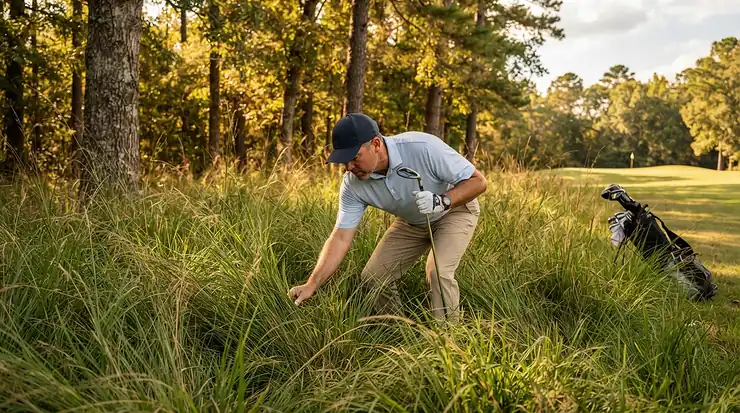
Recovered balls reach buyers through a pipeline that Golf Advisor described in 2018: divers pull them from ponds, streams and lakes, a warehouse washes and sorts them, and the largest online seller, LostGolfBalls.com, harvested from more than 2,400 courses. Recovery crews work the same courses repeatedly, so most balls spend little time underwater. The same piece says saltwater breaks balls down faster than cold freshwater and advises avoiding any ball that sat submerged for a year.
Grades come next. The retailer’s grading page defines five tiers. Pristine looks and feels new, 5A mint shows no or very little wear, and 4A near mint resembles a ball played a few holes, with slight blemishes or lost luster on a few balls. A 3A good ball is free of cuts but may carry scuffs, discoloration and smudged print, and higher-grade X-outs and practice models can be mixed in. Factory refinished balls have been stripped, repainted or clear-coated, and by law carry a small “Refinished” mark on one pole. Pen marks and logos can appear on mint, near mint and good balls, but the page guarantees none on pristine ones. It lists free returns on every grade without spelling out the terms.
Letters also drift between listings. The retailer’s own scale calls 4A near mint, yet one Amazon pack in the tracker snapshot is titled AAAAA and near mint in the same breath. Read the condition text on the exact listing, not just the A’s.
Pick
Type
Pack
Typical price
Where it fits
LostGolfBalls Titleist Pro V1 AAAA Near Mint 50-Pack
Recycled, 4A
50 balls
Around $55 to $65
Heavy ball donors who want Pro V1 spin
LostGolfBalls Titleist Pro V1 2014 AAAAA 50-Pack
Recycled, older model
50 balls
Around $55 to $65
Budget rounds, with the grade to confirm
Vice Pro Soft
New, three-piece urethane
12 balls
Around $30 to $40
Slower swings, soft short game
Vice Pro Plus
New, four-piece urethane
12 balls
Around $30 to $40
Faster swings
Titleist Prior Generation Pro V1
New, last generation
12 balls
Around $45 to $55
Titleist feel with no used-ball question
Amazon Basics Core Soft
New, two-piece ionomer
12 or 24 balls
Around $14 to $16 a dozen
Water holes and rough
The per-ball spread is the story. By my arithmetic from the tracker figures, the two 50-packs work out near $1.10 to $1.30 a ball, the Vice pair near $2.50 to $3.35, and the prior-generation Pro V1 near $3.75 to $4.60. The Amazon Basics Core Soft lands in the same $1.15 to $1.35 territory as the recycled bags, but it is a two-piece ionomer ball, a different animal from a Pro V1.
Best lost golf balls and their new-ball rivals, entry by entry
A golfer who leaves two or three balls in the water every round does the arithmetic on 50-packs quickly. In the February 2026 tracker snapshot this pack sat at roughly $1.10 to $1.30 a ball, which puts a Pro V1 close to the price of the cheapest new balls.
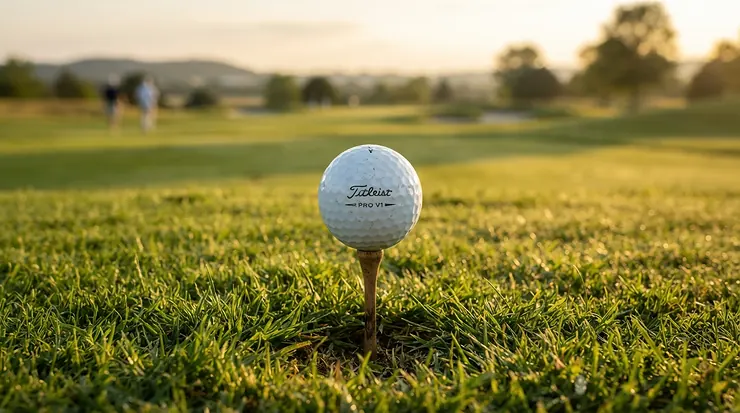
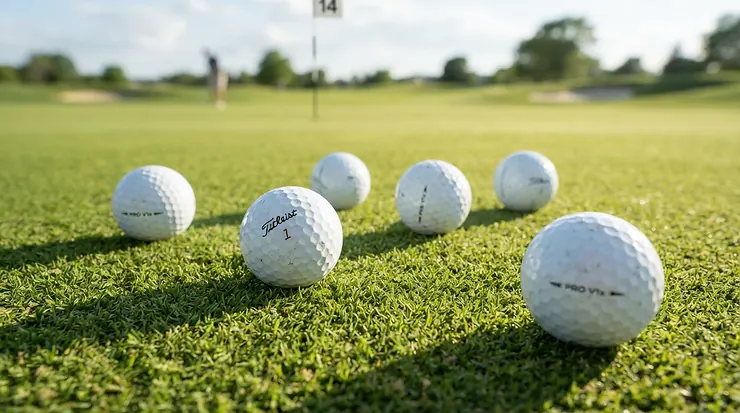
Grade AAAA, per the retailer’s grading page, means a ball that looks played for a few holes, with pen marks or logos possible. Performance is a separate question, and the independent answer is encouraging. Plugged In Golf’s test hit 50 shots per grade with Pro V1s from AAAAA down to AAA plus a refinished set, and found no consistent difference from new balls in wedge, iron or driver averages. Its only caveat was cosmetic: scuffed AAA balls could matter outdoors in wind, a concern the author said should not apply to AAAA or AAAAA.
Buyer sentiment is where this pick wobbles. The tracker showed a 2.7 out of 5 average across 1,134 ratings for this pack, and ranked it fifth among recycled balls on Amazon that day. Reviews on the retailer’s own site, collected by Verified Reviews, split the same way: some buyers say the grades match the balls received, while one 3-out-of-5 reviewer found only 5 balls acceptable and 7 not in a batch of Callaway balls, and another says an order never arrived. That is one reviewer’s batch of a different brand, so it shows the failure mode (condition below grade) and not a rate. Check current availability on Amazon.com, and inspect the first dozen before using the rest.
Pros:
✅ A Pro V1 at a per-ball cost near cheap new balls, by arithmetic from tracker figures
✅ AAAA-grade Pro V1s matched new ones in Plugged In Golf’s test, using balls from another seller
Cons:
❌ A 2.7 out of 5 average in the February 2026 snapshot
❌ Logos or pen marks may show at this grade
LostGolfBalls Titleist Pro V1 AAAA Near Mint 50-PackSee current price, sizes and reviews on Amazon.
Two details in this listing disagree. The title says AAAAA and near mint together, while the retailer’s scale reserves five A’s for mint and puts near mint at 4A, so the grade you receive is worth confirming from the listing text and the first dozen out of the box.
The tracker snapshot put it between $55 and $65 for 50 balls, about $1.15 a ball, with a 3.9 out of 5 average from 372 ratings, a better showing than the other pack’s 2.7, though both counts come from the same February 2026 snapshot. Compare the exact model year on each listing before buying: this pack names 2014 in its title, while the tracker’s detail table for the AAAA pack shows 2013 as its model year even though that title names none. Titleist has issued several Pro V1 versions since, so this is an older design and not today’s ball.
Does an older used Pro V1 still play? Reports are split. In a 2010 Sand Trap thread, one member said 4A or 5A balls from the retailer were extremely hard to tell from new, and another buys used Pro V1s and never new. A third, who tested with a launch monitor and a high-speed camera, saw different spin and compression, though he added that high handicappers need not worry, and a fourth warned about 5 to 10 yards of variation on approach shots. Those posts date from 2010, so treat them as color, not data.
LostGolfBalls Titleist Pro V1 2014 AAAAA 50-PackSee current price, sizes and reviews on Amazon.
3. Vice Pro Soft — new urethane feel for slower swings
Between $30 and $40 a dozen on Amazon puts the Vice Pro Soft under most premium urethane balls, and Golf Monthly’s Joel Tadman credits the maker’s low prices to Vice selling direct to golfers and skipping tour endorsements. Among vice golf balls it is the softest of the Pro line.
Construction is a three-piece ball with a low-compression core and an extra-thin cast urethane cover, according to Golf Monthly and Plugged In Golf. Vice aims it at driver speeds under 95 mph, or drives under 200 yards. Plugged In’s tester swings faster than that, saw lower driver ball speed than with the Vice Pro and Vice Pro Plus, and measured about 7 percent less mid- and short-iron spin than the Vice Pro Plus. He still called it a great choice for Tour-style feel without Tour swing speed, describing a blend of Tour-ball feel and marshmallow softness. Vice’s own test at 93 mph, against the Titleist AVX, claims 7 more yards of driver carry; that is a maker’s figure.
Colors matter on a lost-ball budget. Plugged In counts six colorways, and a ball you can spot in the rough is the cheapest insurance against becoming someone else’s recovered ball. Vice’s own site also discounts at five dozen and up, roughly a fifth off at that tier by arithmetic from Plugged In’s figures, though Amazon pricing may not follow.
Pros:
✅ Extra-thin cast urethane cover with a low-compression core for a soft short game
✅ Six colorways, per Plugged In Golf
Cons:
❌ Built for driver speeds under 95 mph, and a faster swinger lost ball speed in Plugged In’s test
❌ Golf Monthly saw a few yards lost on long-game shots compared with the Vice Pro Plus
Check current availability on Amazon.com, since color options change often.
Vice Pro SoftSee current price, sizes and reviews on Amazon.
4. Vice Pro Plus — four-piece Vice for faster swingers
Swing speed separates this ball from the softer end of the vice golf balls range. Golf Monthly’s review describes a four-piece build with dual casing and a cast urethane cover, a lower flight, and suitability for higher swing speeds, and says it came closest to the reviewer’s premium tour ball in ball speed, spin and carry off the tee. The same review gives the three Pro models noticeable bite on the second bounce from well-struck chips and pitches.
Vice does not publish compression. One writer at Golf Workout Program estimates the Vice Pro Plus near 95 and the Vice Pro Soft between 75 and 85, which fits the feel reports, though it is an estimate and not a spec. Plugged In Golf’s earlier review pairs the Vice Pro and the Vice Pro Plus as the balls aimed at faster swingers.
The Vice Pro Plus is also the only Vice ball on MyGolfSpy’s undated tally of Amazon’s ten best-selling golf balls by estimated monthly revenue, at around $33 a dozen; the tally gives no method for its numbers. Golf Monthly’s piece gives no spin or yardage figures for any of the three, so the ranking among them rests on the reviewer’s descriptions.
Vice Pro PlusSee current price, sizes and reviews on Amazon.
Around $45 to $55 a dozen makes this the priciest pick here, and the only Titleist with no used-ball question attached. MyGolfSpy’s undated tally of Amazon’s best sellers puts the listing second by estimated monthly revenue, at around $50 a dozen, and uses it as its example of golfers buying older models to save money.
Why pay three to four times the recycled cost per ball? Reliability of the sample is one reason. A new ball arrives uncut, without logos, pen marks or a grade to second-guess, and a Sand Trap member in that 2010 thread said he buys the previous year’s model new and prefers a urethane cover even used, since chipping and pitching show the biggest difference. Titleist golf balls in the recycled bin carry none of that certainty.
The other side is the arithmetic. By my numbers from the tracker figures, a recycled Pro V1 from the 50-packs costs roughly $13 to $16 per dozen-equivalent against around $50 here, and Practical Golf’s test found sand-wedge and driver data almost identical across new and visibly scuffed Pro V1s. If the first dozen from a recycled pack is clean, the new-ball premium is hard to justify for casual rounds.
Titleist Prior Generation Pro V1See current price, sizes and reviews on Amazon.
Some holes eat balls no matter what is in the bag. MyGolfSpy describes the Amazon Basics Core Soft as a two-piece ionomer ball made by SM Global, which also builds balls for Costco, PXG and Malbon, at around $14 a dozen or just over $24 for 24. Amazon bills it as low compression and lists medium driver spin and high short-iron spin, a greenside rating the author doubts.
The same piece calls it a functional budget beater ball for casual players that is unlikely to improve anyone’s game, and probably not the worst on the market. That is a fair job description for a ball you expect to lose.
Pros:
✅ Roughly $1.15 to $1.35 a ball, in line with recycled bulk packs
✅ Made by a maker that also supplies other brands, per MyGolfSpy
Cons:
❌ Two-piece ionomer cover, not urethane
❌ Compression not measured in the source piece
MyGolfSpy planned head-to-head tests against Callaway’s Supersoft and Tour Soft, but the piece reports no results yet.
Amazon Basics Core SoftSee current price, sizes and reviews on Amazon.
Lost golf balls reviews: what testers and buyers keep reporting
Independent tests agree at the top grades. Plugged In Golf’s blind-putting and 50-shot-per-grade test found no consistent difference between new Pro V1s and AAAAA, AAAA and AAA used ones, and a Practical Golf writer who hit three dozen Pro V1s from a used-ball seller in Eagle, Birdie and Par grades reported data that was almost identical to a new ball. The retailer’s own robot test is more specific but self-interested: at 96 mph with a driver, new balls carried slightly over 211 yards against slightly under 210 for 5A, and a 7-iron at 83 mph carried about 155 against about 153, from over 200 shots indoors. Three sources, one consensus, with the caveat that two are small and one is the seller’s.
Refinished balls split the evidence. Plugged In’s refinished set matched new, yet MyGolfSpy’s lab found a refinished brand’s drives 13 yards short at 115 mph, irons spinning considerably more, a compression range of 93 to 126, and 23 of 24 balls above the USGA’s 1.62-ounce weight limit, noting that paint over damage changes dimple shape. These conflict, and both samples are small. MyGolfSpy’s takeaway was blunt about refinished balls but pointed budget buyers to premium-grade used balls from a reputable source such as lostgolfballs.com.
Lost golf balls reviews from buyers are mixed. RetailCoupons showed 3.0 out of 5 from 20 reviews, with an AI-written summary citing short shipments and condition mismatches as recurring complaints. Verified Reviews pages for the same seller include repeat buyers saying the ratings match what arrives and one buyer who says the order never did. The Amazon packs above, at 2.7 and 3.9 on the tracker, tell the same story: grading consistency, not ball physics, is the weak point.
Used Titleist golf balls: older Pro V1s versus last year’s new one
The Pro V1 is the ball most of these sources test, and the grade question repeats for every model year. Golf Advisor reported in 2018 that high-grade older Pro V1s cost around $20 a dozen in mint condition while replacing a lost ball ran $30 to $50 a dozen, and it advised casual players that used balls are fine for casual rounds but not for serious competition. Sand Trap posters in 2010 echoed that split, with one using used premium balls for practice and new ones for tournaments.
Three habits help when you are picking the best lost golf balls. Prefer recycled over refinished, since the repainted category is where the sources conflict. Prefer a urethane-cover model even used, since short-game feel shows the gap. Check the model year, because an older Pro V1 is an older design.
Forgeway golf balls: the membership complaints to read first
Forgeway golf balls turn up in lost-ball searches because the brand sells low-priced dozens, and the sources disagree sharply on them. Plugged In Golf’s Matt Saternus found a very soft urethane-cover ball with a polymer core and no scuffing on the launch monitor or the course, plus 200 to 400 rpm more iron spin than his Tour balls. He found no support for the maker’s claims of 12 to 23 extra yards or 67 percent fewer hooks and slices, and measured the widest compression spread he had recorded: 75 to 98 across 24 balls, against 5 to 11 points for four Bridgestone Tour B models. It sells for under $2 a ball when you buy two dozen, with a 30-day money-back guarantee.
Customer reports are harsher. Trustpilot’s page for forgewaygolf.com showed 1.2 out of 5 across 267 reviews, 91 percent of them one-star, and the most common complaint was a monthly membership charge that reviewers say they never knowingly accepted. Others report late or partial deliveries. The company’s replies on that page tell customers to email its support address, after which it says the membership is cancelled. A separate firm, Forgeway Adhesives, says it has no link to the golf brand, and says some reviews meant for the golf brand landed on its page.
Forgeway sells through its own site in every source above, which is why no Forgeway product earns an entry or a link here. If you order from any direct-to-consumer ball seller, read the checkout page for membership or club tick boxes and keep the confirmation email.
Lost golf balls promo code: what the coupon pages show right now
Price checks lead straight to the lost golf balls promo code question, and the pages disagree about what exists. RetailCoupons, updated November 10, 2026, listed zero active LostGolfBalls.com codes that day and said new ones are posted as they go live. Other aggregators in the search results advertise anything from 5 to 25 percent off, which shows offers rotate but not that any one code works today.
All of that concerns the retailer’s own website. The Amazon listings in this guide check out through Amazon, where a code meant for another site’s cart is not the tool, and nothing about the links here changes a price. Shipping rules on the retailer’s site are also hazy: Golf Advisor said in 2018 that orders under $99 paid extra for shipping, while a reviewer quoted on RetailCoupons mentioned free shipping above $89, a threshold the page did not confirm. Check the cart before paying.
Recycled versus refinished, grades and water damage in plain terms
❓ Are used golf balls worth buying?
✅ For most amateurs, yes, if you stay at 4A or better and choose recycled over refinished. Plugged In Golf's launch-monitor test found no consistent difference from new Pro V1s at the top grades, though condition varies by seller, so inspect each order on arrival.
❓ What is the difference between recycled and refinished golf balls?
✅ Recycled balls are cleaned, sorted and sold as found. Refinished balls are stripped, repainted and clear-coated, and by law carry a small 'Refinished' mark on one pole. MyGolfSpy's lab test of one refinished brand found shorter drives and inconsistent compression.
❓ Where do used golf balls come from?
✅ Divers recover most of them from ponds, streams and lakes on golf courses, then companies wash and sort them by grade. Golf Advisor reported in 2018 that the largest online seller harvests from more than 2,400 courses, and that most balls spend little time underwater.
❓ Do used golf balls perform like new ones?
✅ At mint and near-mint grades, tests report differences too small to notice, and the retailer's own robot test showed about two yards at 96 mph driver speed. Heavily scuffed balls may fly differently in wind, according to Plugged In Golf.
❓ Is there a working promo code for LostGolfBalls.com?
✅ Offers rotate, and a coupon page updated November 10, 2026 listed no active codes that day. Check the retailer's newsletter and its cart before paying, and remember that a code for its own website is not meant for Amazon listings.
Buy the grade, not the story: our pick
Lost golf balls reward the buyer who reads the grade. For most golfers the pick is a recycled Titleist Pro V1 pack at 4A or better, because the tests above show no consistent penalty at the top grades and the per-ball cost sits near budget new balls. That points to the LostGolfBalls Titleist Pro V1 AAAA Near Mint 50-Pack, with the caution that its tracker rating was 2.7 out of 5, so open the first dozen, check it against the grading page and keep the packaging until you are satisfied.
Slower swingers who prefer new urethane should look at the Vice Pro Soft, faster swingers at the Vice Pro Plus, and anyone who dislikes grading roulette at the Titleist Prior Generation Pro V1. For holes that swallow balls, the Amazon Basics Core Soft is the cheap decoy. Check current availability below.
Disclaimer: This post contains affiliate links. As an Amazon Associate, I earn from qualifying purchases made through these links, at no additional cost to you.
Found your ball? Read the grade, mark it with a bright dot, and let the rough do its worst. ⛳