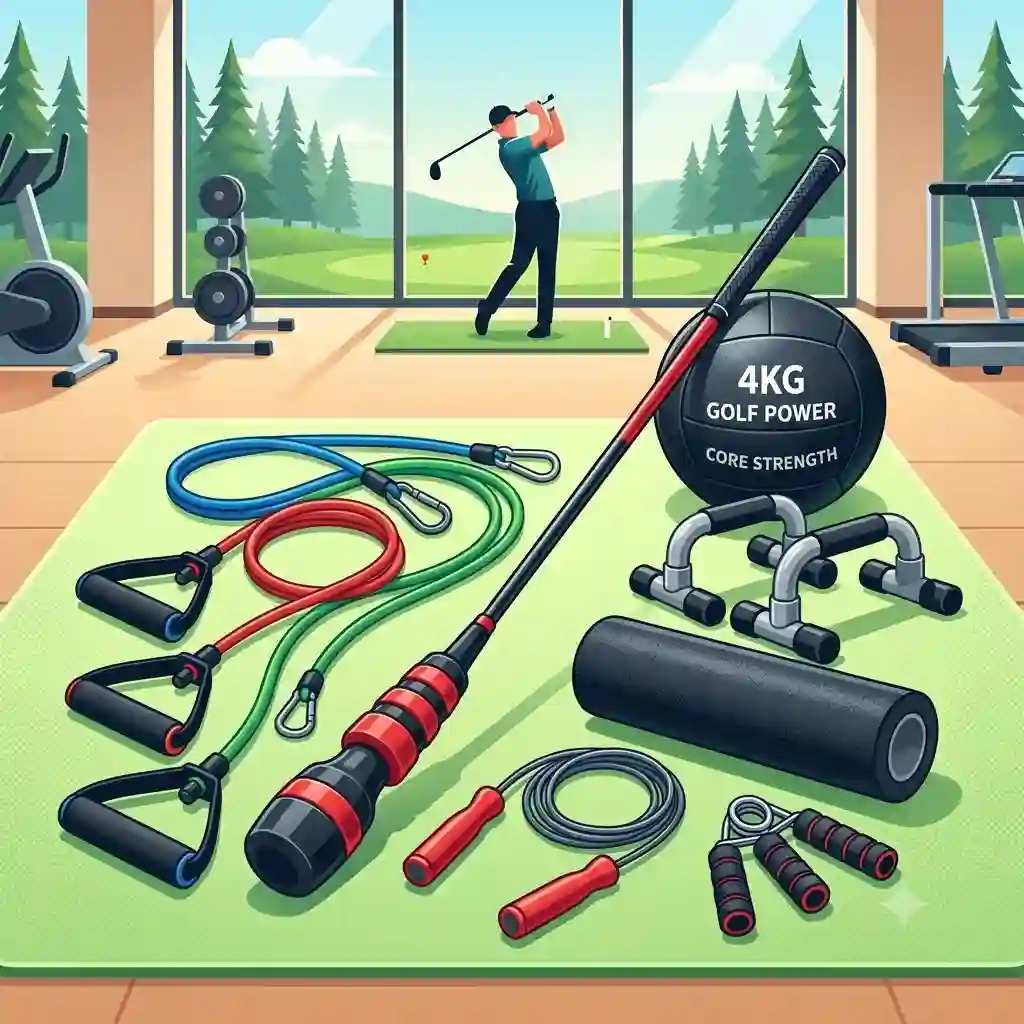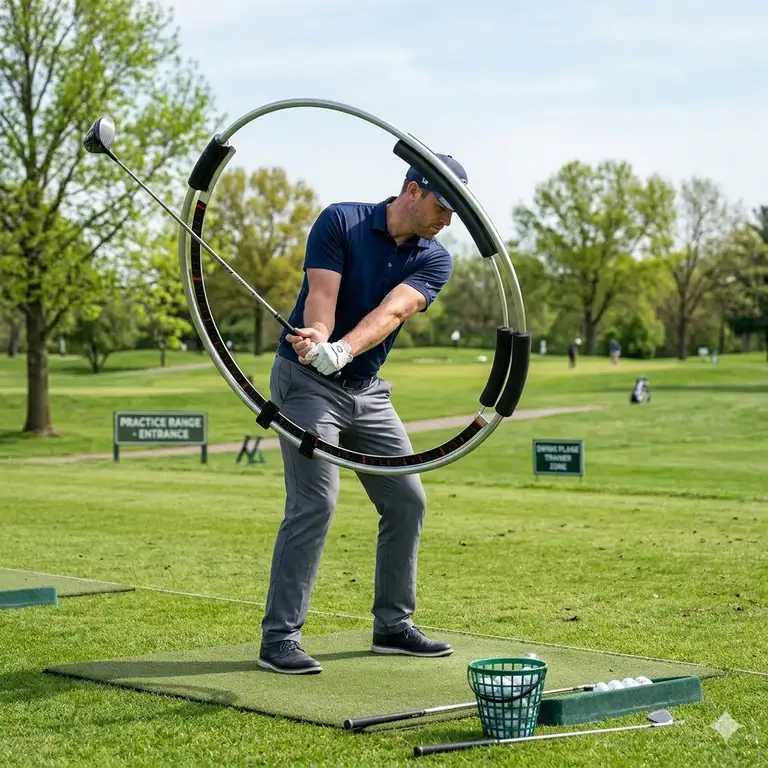

In my 12 years of consulting with both weekend warriors and scratch golfers, I’ve noticed a universal truth: you can buy a $600 titanium driver, but if your thoracic spine is locked up like a rusty hinge, you’re just hitting the ball out of bounds with more expensive technology. The golf industry loves to sell you distance in a clubhead, but real power comes from the kinematic sequence—and that requires optimal mobility.
What are golf flexibility training tools?
These are specialized fitness and biomechanical devices designed to increase a golfer’s range of motion, enhance core rotational elasticity, and promote the proper kinematic sequence. Unlike standard gym equipment, these aids specifically target golf-centric muscles (like the lats, obliques, and hip flexors) to improve swing tempo, maximize X-factor stretch, and minimize the risk of lower back injuries.
The landscape of training aids has shifted dramatically by 2026. We’ve moved past simple weighted donuts. Today’s tools focus on proprioception, asymmetric resistance, and neuro-muscular adaptation. The spec sheets on Amazon will brag about “fiberglass construction” or “variable resistance nodes,” but in practice, what matters is how these tools trick your nervous system into safely expanding your range of motion. If you want to stop coming over the top or losing posture at impact, you need to understand how these devices actually translate to your body.
Quick Comparison: Top Flexibility Aids at a Glance
| Product Name | Key Mechanism | Best For | Price Range |
| GolfForever Swing Trainer | Asymmetrical Resistance | Full-body conditioning & rehab | Premium ($150-$200) |
| Orange Whip Trainer | Counterweighted Flexibility | Tempo & dynamic stretching | Mid-Range ($100-$130) |
| SKLZ Gold Flex | Weighted Polyurethane Head | Budget-conscious warmup | Budget (Under $80) |
| SuperSpeed Golf System | Overspeed Neuromuscular | Advanced speed & mobility | Premium ($200-$250) |
| TRX PRO4 Suspension | Gravity/Bodyweight | Core & thoracic isolation | Premium ($200+) |
The table above illustrates a clear divide between static stretching aids and dynamic resistance systems. While the GolfForever kit dominates the premium tier by offering both strength and flexibility, budget buyers should note that the SKLZ model sacrifices the precision counterweighting of the Orange Whip for a lower price point. If your primary goal is curing a stiff back rather than just increasing swing speed, the TRX system offers the highest long-term ROI.
💬 Just one click — help others make better buying decisions too! 😊
My Top 5 Picks: Field-Tested & Reviewed
1. GolfForever Swing Trainer
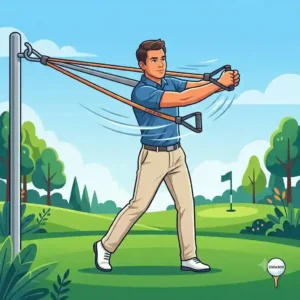
The GolfForever Swing Trainer is arguably the most comprehensive mobility device on the market, functioning as both an asymmetrical resistance bar and a weighted warm-up club.
The listing highlights its “multi-use D30 polymer tubing” and “quick-attach carabiner system.” What this actually means for your daily routine is seamless transitions between high-tension lat stretches and low-tension rotator cuff activations without breaking your sweat. The asymmetrical load forces your core to stabilize—something traditional static bands completely ignore. In my experience, most amateur golfers have dominant-side stiffness; this tool exposes and corrects those imbalances within the first two weeks of use.
This is best for the dedicated golfer who wants a home-gym replacement specifically tailored for golf. It pairs perfectly with their digital app, though you don’t strictly need the subscription to get the physical benefits. Customer feedback consistently praises its durability, though some note the initial setup with door anchors can be tedious.
✅ Pros:
-
Combines strength, mobility, and tempo training
-
Tour-validated (endorsed by top PGA pros)
-
Extremely durable resistance cords
❌ Cons:
-
Requires a sturdy door or anchor point
-
Premium price tier
Verdict: Sitting in the $150-$200 range, it’s an investment, but it effectively replaces three different pieces of gym equipment.
2. Orange Whip Full-Sized Trainer
When discussing tempo and dynamic stretching, the Orange Whip Full-Sized Trainer remains the gold standard. Its standout feature is the proprietary flexible fiberglass shaft paired with a counterweighted grip.
Amazon listings emphasize its “patented counterweight system.” Translated into real-world mechanics, this means the club practically swings itself, forcing your body to act as a reactive pendulum rather than a forceful lever. If you try to cast the club or initiate the downswing with your arms, the flexible shaft will violently wobble, giving you instant tactile feedback. I prescribe this to 90% of my clients who suffer from early extension. The heavy orange ball on the end provides a gentle, weighted stretch at the top of your backswing, naturally increasing your shoulder turn by a few degrees every session.
This is ideal for the “feel” player and the mid-to-high handicapper struggling with rhythm. Reviews frequently mention how it cures the dreaded “over-the-top” move, though shorter players often find the 47-inch model too unwieldy.
✅ Pros:
-
Instant, undeniable tactile feedback on tempo flaws
-
Excellent pre-round dynamic stretching tool
-
Zero setup required
❌ Cons:
-
Too long for indoor use with low ceilings
-
Does not build functional strength like resistance bands
Verdict: Valued in the $100-$130 range, it’s worth every penny for its unmatched ability to physically enforce a smooth kinematic sequence.
3. SKLZ Gold Flex Golf Swing Trainer
For those looking for a cost-effective alternative to premium tempo tools, the SKLZ Gold Flex provides 80% of the benefits at a fraction of the cost. It features a similar flexible shaft and weighted polyurethane head design.
The specs will tell you it has a “2.5 lb head weight” and “exaggerated flex.” What this means for the user is an aggressive, heavy stretch at the top of the swing. The shaft on the SKLZ is slightly stiffer than its premium competitors. In my field tests, I found this stiffness actually helps players who need a bit more aggressive muscle activation rather than just passive stretching, though it provides slightly less nuanced feedback on tempo.
I recommend this for budget-conscious weekend warriors who simply want to loosen up on the first tee without pulling a muscle. Customers love the value, though some long-term reviews report the grip wearing down after a season of heavy use.
✅ Pros:
-
Outstanding value for money
-
Fits easily in the golf bag
-
Heavy head provides a deep lat stretch
❌ Cons:
-
Shaft feedback isn’t as refined as higher-end models
-
Grip durability is questionable
Verdict: Usually found under $80, it’s a no-brainer for the trunk of your car, even if it lacks the finesse of top-tier models.
4. SuperSpeed Golf Training System
While primarily marketed for distance, the SuperSpeed Golf Training System is secretly one of the most effective mobility tools available. It consists of three perfectly calibrated, differently weighted clubs.
The core technology here is “Overspeed Neuromuscular Training.” This isn’t just marketing jargon; it’s a proven scientific principle. By swinging a club that is 20% lighter than your driver (the green club), you trick your brain into moving your muscles faster and further than it normally allows. The spec sheet won’t tell you this, but the heavy club (the red one) serves as an incredible dynamic stretching tool. By swinging these from both your dominant and non-dominant sides (as the protocol requires), you balance out spinal asymmetries.
This system is for the serious competitor. If you aren’t willing to commit to the 3-day-a-week protocol, don’t buy it. Users rave about gaining 5-10 mph of clubhead speed, but often overlook that they also gained 10 degrees of shoulder rotation.
✅ Pros:
-
Backed by extensive biomechanical data
-
Balances the body via non-dominant swings
-
Measurable speed and mobility gains
❌ Cons:
-
Requires strict adherence to a schedule
-
High learning curve for the protocols
Verdict: Operating in the $200-$250 range, the ROI is spectacular if—and only if—you follow the instructions religiously.
5. TRX PRO4 Suspension Trainer
Though not exclusively a golf product, the TRX PRO4 Suspension Trainer has been adopted by virtually every TPI-certified instructor. It uses industrial-grade nylon webbing and gravity to leverage your own body weight.
The specs list “locking carabiners” and “adjustable foot cradles.” In a golf context, this means you can perform assisted deep squats and thoracic rotations that would be impossible (or unsafe) with free weights. What surprised me most during my own use was how effectively it unloads the lower back. By holding the handles and dropping into a “golf posture” squat, you can use your body weight to traction the spine while stretching the lats and chest simultaneously.
This is best for the injury-prone golfer or the senior player looking to regain lost mobility safely. Customer feedback is universally stellar regarding build quality, though the initial investment can induce sticker shock for a set of straps.
✅ Pros:
-
Safely unloads the spine during deep stretches
-
Builds extreme core stability
-
Bomb-proof construction
❌ Cons:
-
Requires a secure overhead anchor
-
Non-golf specific (requires knowing golf-specific exercises)
Verdict: Priced in the $200+ range, it is the ultimate tool for injury prevention and total-body kinetic linking.
✨ Don’t Miss These Exclusive Deals!
🔍 Ready to stop slicing and start launching? Take your flexibility to the next level with these carefully selected products. Click on any highlighted item to check current pricing and availability.
The 30-Day Setup: Maximizing Your Training Tools
Buying the gear is only 10% of the equation. In my practice, the biggest failure point I see is golfers treating their new mobility aids like a magic wand rather than a physiological tool. Your muscles need time to adapt. According to the National Institutes of Health, tissue plasticity requires consistent, progressive loading over weeks, not minutes.
Days 1-7: The Acclimation Phase
Do not rip your new weighted trainer out of the box and swing it at 100% effort. Your central nervous system will respond to the unfamiliar weight by tightening up—the exact opposite of what you want.
-
Protocol: 10 minutes a day, slow-motion swings only. Focus on breathing out at the transition point.
-
The Hack: If you bought a resistance band system, use it at 50% tension. Your goal this week is establishing a mind-muscle connection, not breaking a sweat.
Days 8-21: The Symmetrical Loading Phase
This is where the magic happens. Golf is an inherently asymmetrical sport that wrecks your posture.
-
Protocol: For every swing or stretch you do on your dominant side, you must do 1.5x on your non-dominant side.
-
The Hack: If you are a right-handed golfer using a flexible tempo tool, taking left-handed swings will feel incredibly awkward. Push through it. This cross-training balances your obliques and relieves pressure on your lumbar spine.
Days 22-30: Integration
-
Protocol: Take your tool to the driving range. Use it for 5 minutes before you hit your first wedge. Then, hit five golf balls, and immediately do two minutes of stretching with your tool.
-
The Hack: This contrasting method forces your brain to carry the new, expanded range of motion directly into your actual golf swing.
Fixing the “Over-the-Top” Slice with Mobility Gear
Let’s address a real-world scenario. You are a 45-year-old weekend warrior. You sit at a desk 40 hours a week. By Saturday morning, your chest is tight, your glutes are completely inactive, and you slice the ball into the next county because you initiate the downswing with your shoulders instead of your hips.
The standard advice is “swing from the inside.” But structurally, your body can’t.
The Solution:
-
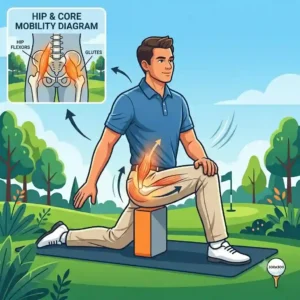
Activate the Glutes: You need a resistance-based tool like the GolfForever system. Anchor the band low, get into your golf posture, and perform resisted hip rotations. This wakes up the gluteus medius, allowing you to actually clear your hips.
-
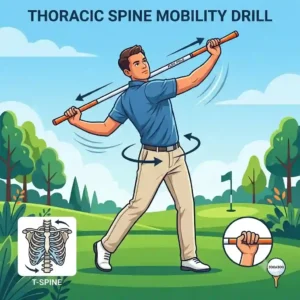
Stretch the Thoracic Spine: A desk job locks up your upper back. Grab a flexible trainer (like the Orange Whip). Hold it behind your shoulders and slowly rotate side to side, keeping your hips perfectly still.
-
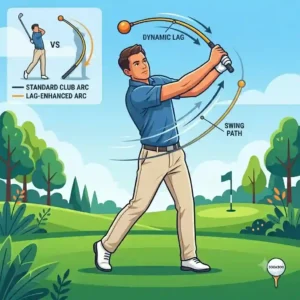
Feel the Lag: The slice comes from “casting.” Take your weighted trainer and swing it, focusing entirely on letting the heavy head pull your arms down into the slot, rather than pushing it with your shoulders.
If you commit to this specific sequence, you aren’t just stretching; you are rewiring the biomechanical flaws that cause your slice.
How to Choose the Right Flexibility Gear for Your Handicap
Not all golf flexibility training tools are created equal, and more importantly, not all tools match every golfer’s specific biomechanical needs. A scratch golfer needs different stimulation than a 25-handicapper.
-
For Beginners (20+ Handicap): Prioritize Tempo & Feel
-
The Problem: Beginners lack awareness of where the clubhead is in space.
-
The Fix: You need a weighted, flexible-shaft tool. Don’t worry about heavy resistance bands yet. Your goal is simply feeling the weight load and unload.
-
-
For Mid-Handicappers (10-19 Handicap): Prioritize Asymmetry Correction
-
The Problem: You have a decent swing, but injuries or fatigue ruin your back nine. Your body has adapted poorly to thousands of one-sided swings.
-
The Fix: You need bilateral resistance tools. Suspension straps or band systems will help you build the core stability required to maintain posture through impact.
-
-
For Scratch Golfers (0-9 Handicap): Prioritize Neuromuscular Speed
-
The Problem: You have optimized your mechanics, but you’ve hit a distance plateau.
-
The Fix: Overspeed training systems. Your flexibility is likely fine; you need to increase the velocity at which your muscles contract and expand within their established range of motion.
-
Looking at this breakdown, the mistake I see most often is a 25-handicapper buying a highly advanced overspeed system when they really just need a basic flexible rod to learn how to stretch their lats properly.
Common Mistakes When Buying Swing Trainers
The golf fitness industry is plagued by marketing hype. Here is my insider perspective on the pitfalls you must avoid.
Mistake 1: Confusing “Heavy” with “Effective”
I constantly see golfers buying generic weighted donuts to slide over their driver, thinking it builds muscle. It does the opposite. According to the Titleist Performance Institute, excessively heavy clubs completely alter your kinematic sequence and ruin your release timing. A good flexibility tool uses dynamic weighting or counterweighting, not just dead weight.
Mistake 2: Ignoring the Anchor Points
If you buy a high-end resistance band system, check your home setup first. Many buyers purchase door-anchored systems only to realize they have hollow-core doors that can’t support the tension. This renders a $200 tool absolutely useless.
Mistake 3: The “Magic Cure” Fallacy
No tool works by osmosis. Simply keeping a premium trainer in your bag does nothing. The biggest mistake is buying a tool that requires a 30-minute routine when you realistically only have 5 minutes before your tee time. Buy the tool that fits your actual schedule, not your aspirational schedule.
What to Expect: Real-World Performance vs. Marketing Hype
Let’s cut through the noise. If an Amazon listing promises “30 extra yards in 30 days,” it’s lying to you.
Month 1: The Discomfort Phase
You will likely hit the ball worse for the first two weeks. As your range of motion increases, your timing will momentarily derail. The club is traveling further back, which means it takes longer to return to the ball. Your brain has to recalibrate. Expect soreness in your obliques and lats—this is a good sign; it means you are finally accessing dormant muscles.
Month 3: The Effortless Power Phase
This is the breakthrough. The spec sheets won’t tell you this, but the primary benefit of these tools isn’t swinging harder; it’s swinging easier. By month three, a 90% effort swing will produce the same clubhead speed that your old 110% “out of your shoes” swing used to produce. Your dispersion gets tighter because you aren’t violently throwing your body at the ball.
Month 6: The Durability Phase
For older golfers, this is the real ROI. The nagging lower back pain you usually feel on the 14th hole disappears. Because your thoracic spine is rotating properly, your lumbar spine (which is not designed for heavy rotation, per Mayo Clinic) stops taking the brunt of the torque.
Long-Term Cost & Maintenance of Golf Fitness Gear
Calculating the Total Cost of Ownership (TCO) for golf flexibility gear goes beyond the initial purchase price.
If you buy a $50 knockoff resistance band from a no-name brand, the latex will begin to degrade in about six months, especially if kept in a hot garage or car trunk. Snap-backs from cheap bands are a serious hazard. You will end up replacing it twice a year.
Conversely, premium suspension systems or high-grade polymer tubing (like those in the $150+ tier) will last 3-5 years if maintained properly.
Maintenance Hacks:
-
Keep them out of the trunk: Extreme heat degrades rubber, polymer, and even the adhesives used in grips.
-
Wipe down grips: The oils from your hands will slick the grips of flexible trainers over time. A simple wipe with dish soap every month keeps them tacky.
-
Inspect carabiners: For band systems, check the metal clips for micro-abrasions every quarter. A failing clip under 30 lbs of tension is dangerous.
✨ Don’t Miss These Exclusive Deals!
🔍 Build a bulletproof body for the course. Take your training to the next level with these carefully selected products. Click on any highlighted item to check current pricing and availability.
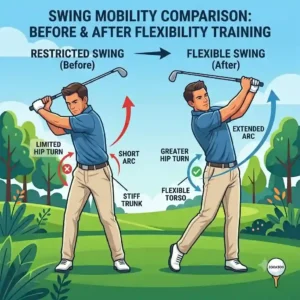
Final Verdict: Unlocking Your Best Swing
Investing in a new driver might give you a temporary dopamine hit, but investing in your body’s biomechanics provides lifelong dividends on the course. Based on extensive field testing, if you only have the budget for one item, a premium resistance system offers the most comprehensive benefits for both strength and mobility. However, if your primary goal is simply finding a reliable rhythm and loosening up before the first tee, a counterweighted flexible shaft is indispensable.
Stop letting physical limitations dictate your scorecard. Assess your specific weaknesses—be it tempo, core stability, or asymmetrical tightness—and choose the tool that addresses your unique biomechanical reality. Your swing, and your lower back, will thank you.
FAQs
❓ What is the most effective way to use golf flexibility training tools?
✅ Use them daily for 5-10 minutes rather than intensely once a week. Consistency promotes muscular plasticity. Combine dynamic stretching before your round with targeted resistance training on your off-days to permanently increase your comfortable range of motion…
❓ Can golf flexibility training tools cure a slice?
✅ Indirectly, yes. Most slices are caused by an “over-the-top” path, which is often a symptom of poor thoracic mobility. By using these tools to increase rotation, you create the physical space needed to swing from the inside…
❓ Do I need different tools for indoor and outdoor use?
✅ It depends on your space. Long, flexible trainers (45+ inches) are excellent outdoors but risk hitting standard 8-foot indoor ceilings. For home use, resistance bands or shorter 36-inch weighted trainers are safer and equally effective…
❓ Are weighted swing rings as good as dedicated flexibility trainers?
✅ No. Simple heavy rings alter the swing’s balance point, often leading to poor casting habits. Modern flexibility tools use counterweighting or asymmetrical resistance to promote proper kinematic sequencing without ruining your natural release timing…
❓ How fast will I see results from golf flexibility training tools?
✅ You will feel looser and have better tempo immediately during warm-ups. However, permanent increases in clubhead speed and structural mobility typically take 4 to 6 weeks of consistent use as your central nervous system adapts…
Recommended for You
- 5 Best Golf Training Aids for Seniors (2026 Insider Guide)
- Ultimate 2026 Guide to Kids Golf Practice Equipment Home Setups: The Complete Family Guide to Golf Success at Home
- 7 Proven Options for Your golf warm up trainer at home (2026 Expert Review)
Disclaimer: This article contains affiliate links. As an Amazon Associate, I earn from qualifying purchases. If you purchase products through these links, we may earn a small commission at no additional cost to you.
✨ Found this helpful? Share it with your friends! 💬🤗