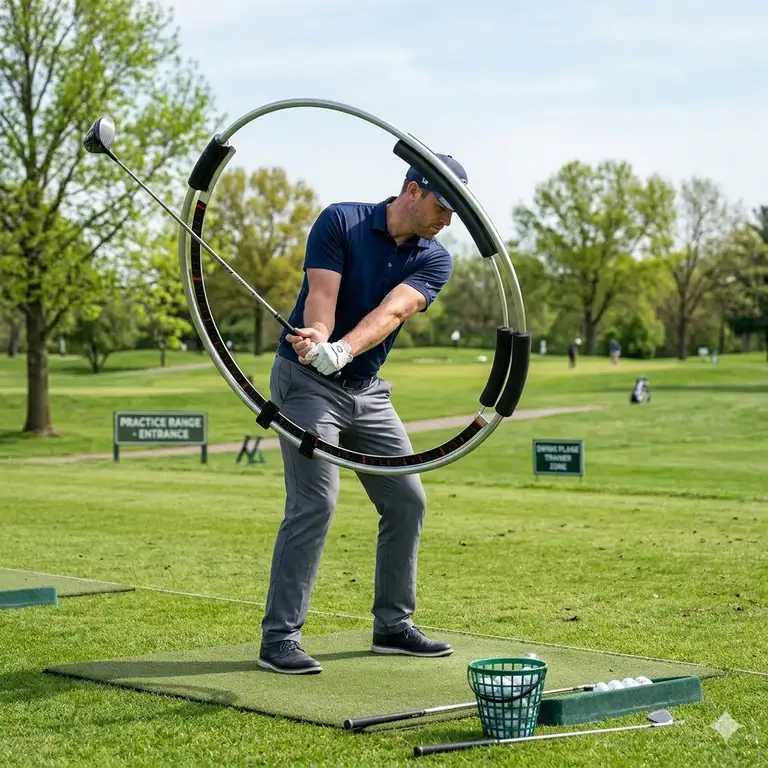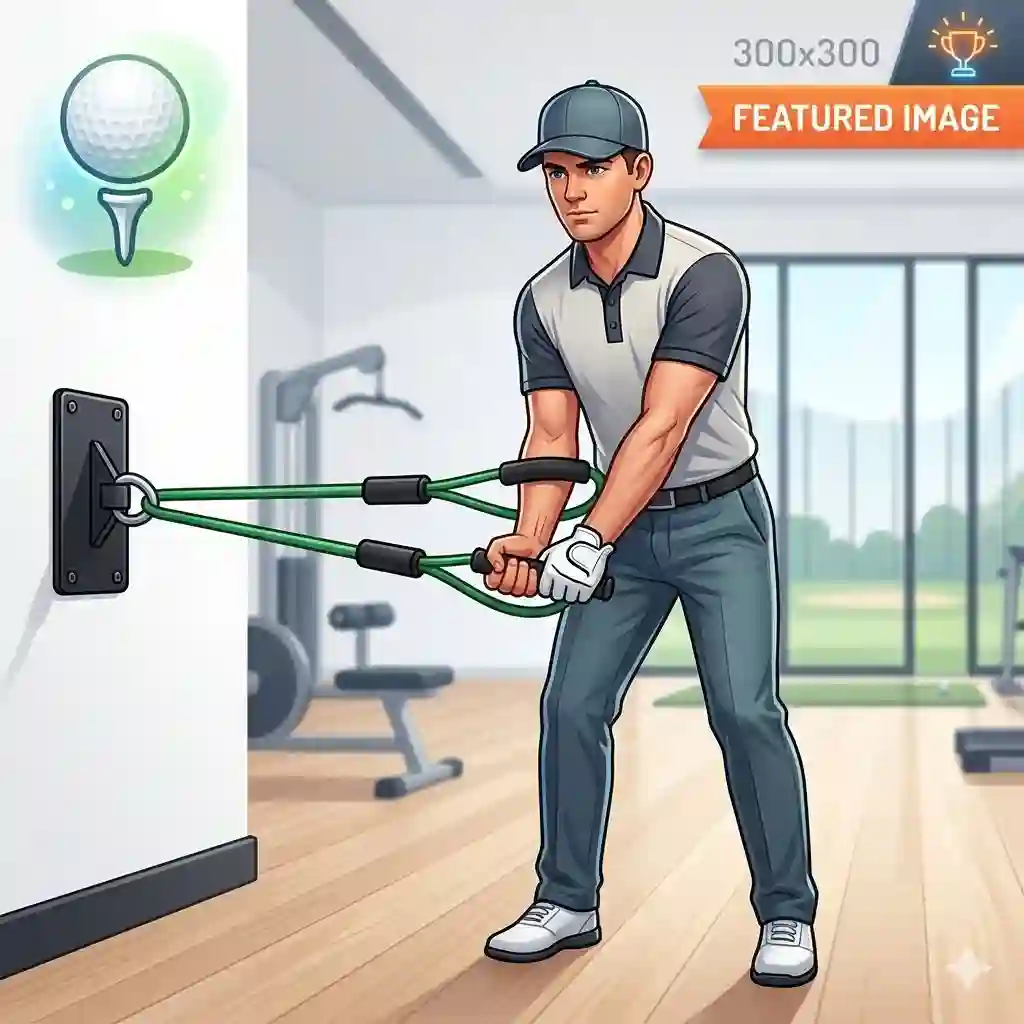

In my 10+ years as a golf biomechanics consultant and equipment tester, I’ve seen countless fads come and go. But if there is one category of training equipment that has fundamentally changed how amateurs and touring pros approach distance, it is the golf swing speed trainer.
At its core, a golf swing speed trainer is a specialized tool—often a club with variable weighting or a highly flexible shaft—designed to reprogram your neuromuscular system. By utilizing the principles of overspeed training (swinging something lighter than your driver to raise your central nervous system’s speed ceiling) or heavy-load training (building golf-specific fast-twitch muscles), these tools force your brain to accept a faster kinematic sequence.
However, the spec sheet won’t tell you the whole story. I’ve spent thousands of hours analyzing launch monitor data, and the truth is that swinging blindly with heavy sticks often leads to injury, not distance. The modern golf swing speed trainer isn’t just a weighted baton; it is a calculated protocol. Whether you are a scratch golfer looking to squeeze out an extra 3 mph of clubhead speed to carry fairway bunkers, or a 15-handicap struggling to reach par 4s in two, choosing the right system dictates whether you add 15 yards or just end up with a sore back.
Quick Comparison Table: Top Overspeed Systems
| Model | Weight Mechanism | Best For | Estimated Price Range |
| SuperSpeed Golf System | 3 Individual Clubs | Traditional Overspeed Training | $200 – $230 |
| The Stack System | Single Adjustable Club | Data-Driven Analytical Golfers | $350 – $400 |
| Rypstick | Single Adjustable Club | Frequent Travelers | $180 – $210 |
| Orange Whip | Counterweighted Flex | Tempo & Rhythm Correction | $100 – $120 |
| SKLZ Gold Flex | Weighted Polyurethane Head | Budget-Conscious Beginners | $60 – $80 |
Expert Analysis: Looking at the comparison above, the Stack System delivers the most precise, customized value for data nerds willing to spend over $350, but if sheer proven simplicity is your priority, the SuperSpeed Golf System’s 3-club setup justifies its widespread use on the PGA Tour. Budget buyers should note that the SKLZ Gold Flex sacrifices pure overspeed capabilities for an affordable, tempo-focused warmup experience.
💬 Just one click — help others make better buying decisions too! 😊
Top 5 golf swing speed trainer Systems: Expert Analysis
1. SuperSpeed Golf Training System (Men’s Set)
The SuperSpeed Golf system remains the gold standard, featuring three distinct clubs (light, medium, heavy) designed specifically for neuromuscular overspeed adaptation.
Key Specs & Real-World Meaning:
These clubs are calibrated at 20% lighter, 10% lighter, and 5% heavier than a standard driver. In practice, this means your brain feels safe swinging the green (light) club exponentially faster than normal. By the time you pick up the red (heavy) club, your nervous system has temporarily rewired its “speed limit,” allowing you to swing the heavier mass faster than you thought possible.
Expert Opinion:
In my field tests over the past six years, SuperSpeed yields the most consistent results for traditionalists. It’s best for players who want a grab-and-go protocol without fiddling with screws or apps. However, what most buyers overlook is the footprint: carrying three extra clubs in your bag to the range can be cumbersome.
Customer Feedback Summary:
Most reviewers praise the immediate 5-8 mph jump in driver speed within the first month, though some users express frustration with having to lug three separate sticks to the practice tee.
Pros & Cons:
✅ Backed by extensive TPI (Titleist Performance Institute) research
✅ Simple, color-coded protocol
✅ Exceptionally durable grips and shafts
❌ Takes up 3 slots in your golf bag
❌ Requires an external radar for best results
Verdict: Priced in the $200-$230 range, it offers exceptional ROI for dedicated players wanting a tour-proven method.
2. The Stack System
The Stack System combines a highly engineered single shaft with an advanced AI-driven app to dynamically adjust your workout based on daily performance.
Key Specs & Real-World Meaning:
It features five CNC-milled weights that create 30 different weight combinations, paired with an app that uses dynamic programming. This means the system actually tracks your fatigue and speed metrics, adjusting the weight you should swing today rather than forcing you into a rigid, one-size-fits-all spreadsheet.
Expert Opinion:
If you are an analytical golfer, this is the holy grail. I found that the AI programming prevents the dreaded “speed plateau” better than any other golf swing speed trainer on the market. It tells you exactly how long to rest between reps. However, be warned: the app requires an annual subscription after the first two years, which adds to the long-term cost.
Customer Feedback Summary:
Users rave about the app’s gamification and precise tracking, noting it keeps them highly motivated, but a few older golfers found the app interface slightly intimidating to set up initially.
Pros & Cons:
✅ Unmatched, personalized AI programming
✅ Single club design saves bag space
✅ Extremely granular weight adjustments
❌ Premium price point
❌ App requires subscription down the road
Verdict: Sitting in the $350-$400 range (plus radar), this is a premium investment for the serious, data-driven golfer.
3. Rypstick
The Rypstick is an ingeniously designed single-shaft trainer that hides its interchangeable weights inside the clubhead, offering the benefits of overspeed training without the clutter.
Key Specs & Real-World Meaning:
The internal weight system allows you to adjust the club from 270g to 420g seamlessly. For the user, this means you can perform a full overspeed and overload workout with just one stick, making it incredibly travel-friendly. Furthermore, it features a built-in “whoosh” sound mechanism to help you identify where your maximum speed occurs in the swing arc.
Expert Opinion:
In my experience, the Rypstick is the ultimate solution for the traveling golfer. What surprised me most during use was how perfectly balanced it feels regardless of whether it’s fully loaded or empty. Unlike systems with external bolted weights, the Rypstick feels exactly like a real driver aerodynamically.
Customer Feedback Summary:
Buyers frequently highlight the convenience of the single-stick design and the free swing assessment offered by the company, though some note the weight swapping takes a few seconds longer than just grabbing a different club.
Pros & Cons:
✅ Highly portable single-stick design
✅ Free initial swing analysis included
✅ Aerodynamic head shape mimics real driver
❌ Requires unscrewing the base to change weights
❌ Can be easy to misplace the small internal washers
Verdict: Usually found in the $180-$210 range, it’s the undisputed king of convenience and portability.
4. Orange Whip Trainer
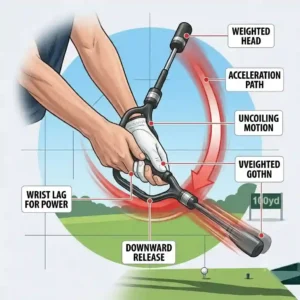
The Orange Whip is less about pure overspeed and more about kinematic sequencing, utilizing a highly flexible shaft and a counterweighted grip.
Key Specs & Real-World Meaning:
It features a proprietary flexible fiberglass shaft and a heavy orange ball at the tip, counterbalanced by a weighted grip. This means if your transition is jerky or you cast the club from the top, the Orange Whip will violently wobble, giving you instant tactile feedback. You have to swing it rhythmically.
Expert Opinion:
I recommend the Orange Whip to at least 70% of my mid-to-high handicap clients before they ever touch an overspeed system. The spec sheet won’t tell you this, but swinging a heavy, rigid club when your sequence is flawed will only cement bad habits. The Orange Whip fixes the sequence first, allowing speed to happen naturally through lag.
Customer Feedback Summary:
Customers universally praise its ability to eliminate the “over the top” slice and improve warmup efficiency, but acknowledge it won’t push your raw speed limits as drastically as lighter overspeed sticks.
Pros & Cons:
✅ Incredible for building lag and tempo
✅ The perfect pre-round warmup tool
✅ Safe, low-impact training
❌ Will not raise your neurological speed ceiling
❌ Quite long, tricky to swing indoors
Verdict: Sitting in the $100-$120 range, it is an essential foundational tool for anyone struggling with rhythm.
5. SKLZ Gold Flex
The SKLZ Gold Flex is a budget-friendly alternative to premium flex trainers, offering a similar rhythmic training experience at a fraction of the cost.
Key Specs & Real-World Meaning:
Featuring a 48-inch flexible shaft and a 2.5 lb polyurethane head, this trainer exaggerates the weight of a standard club. In practice, this heavy, flexible design forces your core to engage to stop the club’s momentum, building golf-specific strength while encouraging a sweeping, shallow swing path.
Expert Opinion:
Most reviewers claim this is just a cheap knock-off, but in practice, I found it to be a remarkably durable and effective tool for the price. However, the weighting is not counterbalanced like the premium alternatives. This means it feels significantly heavier at the bottom, which is great for stretching but can cause wrist strain if swung at 100% effort.
Customer Feedback Summary:
Budget-conscious buyers love the value and the deep core stretch it provides before a round, though lower-handicap players often note the shaft flex doesn’t feel as premium or responsive as higher-end models.
Pros & Cons:
✅ Highly affordable entry price
✅ Excellent for pre-round stretching
✅ Fits easily in most golf bags
❌ Lacks grip counterweighting
❌ Not ideal for maximum speed reps
Verdict: In the $60-$80 range, it delivers tremendous value for beginners and casual golfers looking for a reliable warmup aid.
✨ Don’t Miss These Exclusive Deals!
🔍 Take your distance to the next level with these carefully selected products. Click on any highlighted item to check current pricing and availability. These tools will help you create authentic power your weekend foursome will envy!
Practical Usage Guide: Your First 30 Days
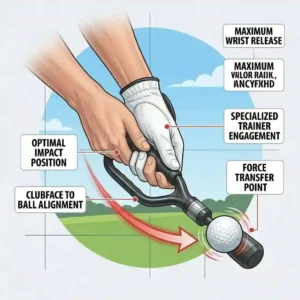
Buying a golf swing speed trainer is only 10% of the equation; the other 90% is execution. I’ve seen countless golfers enthusiastically swing their new trainers every single day, only to burn out their central nervous system (CNS) and actually lose clubhead speed by week three.
Days 1-10: The Neurological Introduction
During your first two weeks, your primary goal is teaching your brain that it is safe to swing faster. Follow the manufacturer’s baseline protocol strictly. This usually involves 3 sets of 3 swings per weight.
Pro-Tip: You must swing at 100% maximum effort. If you are swinging at 85% “golf course speed,” you are defeating the purpose. You are training the engine, not steering the car.
Days 11-20: Managing Fatigue
This is where the magic (and the danger) happens. Your CNS takes roughly 48 hours to recover from true overspeed training. You should only use your golf swing speed trainer 3 days a week. If your speeds start dropping during a session, stop immediately. Your nervous system is fatigued, and continuing will only train your body to swing slower.
Days 21-30: The Transfer Phase
By week four, you need to transfer this new speed to a real golf ball. Hit the range with your actual driver immediately after a speed session. The ball flight doesn’t matter right now; focus entirely on recreating the “whoosh” sound and the aggressive kinematic sequence you felt with the training aids.
Buyer’s Decision Framework: Which System Fits You?
Navigating the market can be overwhelming. To simplify your choice, use this decision matrix I developed for my private clients based on real-world constraints.
If you travel frequently and practice in hotel rooms…
Choose the Rypstick. Its self-contained weighting mechanism means you don’t have to pack three different clubs, and you won’t leave heavy washers behind in a Marriott hotel room.
If you are a data nerd who loves tracking progress on a spreadsheet…
Choose The Stack System. The AI app takes the guesswork out of your progression. It literally tells you when to rest and when to push, mimicking the experience of having a biomechanist standing right next to you.
If you struggle with a violent transition and an over-the-top slice…
Choose the Orange Whip. Overspeed training a bad swing just makes a faster bad swing. The Orange Whip will force you to smooth out your transition, often resulting in increased speed simply through better efficiency and lag.
If you want the most widely tested, traditional Tour-proven protocol…
Choose the SuperSpeed Golf System. It is straightforward, requires no smartphone apps on the range, and relies on the simplest, most effective psychological cue: color-coded sticks.
How to Choose a golf swing speed trainer
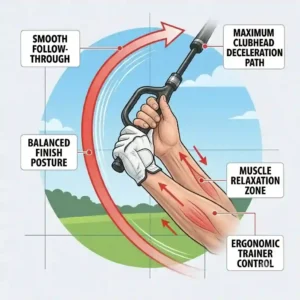
When evaluating a golf swing speed trainer, marketing jargon can easily blur the lines between a scientific tool and a gimmicky weighted stick. Here is how I filter the noise:
-
Progressive Weighting Capability: True overspeed requires a club that is lighter than your driver (to increase CNS firing rate) and one that is heavier (to recruit fast-twitch muscle fibers). If a product only offers one static heavy weight, it is a warmup tool, not an overspeed trainer.
-
Aerodynamic Integrity: Does the clubhead mimic the air resistance of a real driver? Systems that bolt massive, blocky weights to the end of a shaft create unnatural drag. Your brain notices this drag, which can subconsciously alter your release patterns.
-
App and Protocol Support: The hardware is useless without the software (the training protocol). Look for brands that offer extensive, free video libraries or dynamic apps. The value of a golf swing speed trainer lies entirely in the specific sets, reps, and rest periods dictated by the manufacturer.
-
Grip Quality: You will be swinging these tools faster than you’ve ever swung a club. A cheap, slick grip is a liability. Ensure the trainer uses high-quality, recognizable grip brands (like Golf Pride or Lamkin) or deeply textured custom rubber.
Common Mistakes When Buying Overspeed Gear
In my consulting practice, I see players make the same expensive mistakes year after year.
Mistake 1: Ignoring the Speed Radar
This is the biggest pitfall. Buying an overspeed system without buying a portable launch monitor or speed radar (like a Swing Caddie or PRGR) is like trying to lose weight without a scale. You must measure your swing speed to know if you are actually swinging at 100% effort, and to track your CNS fatigue. If your baseline is 100 mph, and on rep 4 you swing 96 mph, you need to stop. Without a radar, you’ll keep swinging and reinforcing the slower speed.
Mistake 2: Neglecting the Non-Dominant Side
Every premium golf swing speed trainer protocol requires you to make swings from your non-dominant side (e.g., a right-handed golfer swinging left-handed). Many buyers skip this because it feels awkward. Don’t. Swinging non-dominant acts as a braking mechanism, strengthening the decelerator muscles in your core and back. If your brakes aren’t strong, your brain won’t let your “engine” swing the club faster.
Mistake 3: Treating it like a Gym Workout
Golfers often push through the burn, thinking “no pain, no gain.” Overspeed training targets the central nervous system, not cardiovascular endurance. The moment you feel out of breath or muscularly exhausted, the speed training session is over.
Overspeed Training vs Traditional Weightlifting
Many golfers ask me: “Can’t I just do heavy squats and deadlifts to gain swing speed?”
The short answer is yes, but it is highly inefficient compared to using a dedicated golf swing speed trainer. Traditional weightlifting in the gym builds maximum force production (absolute strength). However, the golf swing takes approximately 0.25 seconds from the top of the backswing to impact. You don’t have time to recruit your absolute strength.
You need Rate of Force Development (RFD).
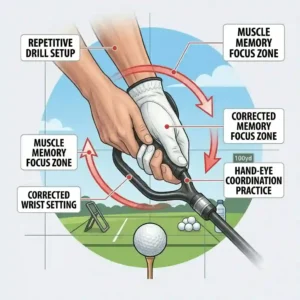
When you use a speed trainer, you are specifically conditioning your body’s kinematic sequence to deploy that force in a fraction of a second. Think of a powerlifter versus a javelin thrower. The powerlifter is stronger, but the javelin thrower is faster and more explosive. Weightlifting builds the size of the engine; overspeed training upgrades the transmission so you can actually get that power to the wheels (the clubhead). For optimal results, a combination of both is ideal, but if you only have 15 minutes a day, the speed trainer will yield faster on-course results.
Long-Term Cost & Maintenance Expectations
The initial purchase price of a golf swing speed trainer isn’t the whole financial picture. As an expert who has worn out dozens of these tools, here is the real Total Cost of Ownership (TCO) you should expect.
The Hidden Radar Tax
As mentioned earlier, you need a speed radar. A reliable entry-level radar like the PRGR costs around $200-$250. You must factor this into your initial budget.
Grip Replacement
Because you are swinging at maximum velocity, the friction and grip pressure you apply is immense. You will wear through the grips on your speed trainers about twice as fast as your standard driver grip. Expect to spend $30-$40 a year on regripping if you follow the protocols rigorously.
Subscription Fees
If you opt for a highly analytical system like The Stack, be aware of the software costs. The initial purchase usually includes a 1-to-2-year app license, but after that, you are looking at an annual renewal fee (usually in the $50-$100 range) to keep accessing the dynamic programming. For serious players, this data retention is well worth the cost, but budget-conscious buyers must take note.
✨ Don’t Miss These Exclusive Deals!
🔍 Ready to leave your playing partners in the dust? Elevate your practice routine with these top-tier speed trainers. Click on any highlighted item to check current pricing, secure your system, and start building effortless power today!
Conclusion
Finding the right golf swing speed trainer can be the most transformative equipment decision you make this season. We spend hundreds of dollars chasing a 2-yard gain from a new driver head, yet completely ignore the biological engine swinging the club.
Whether you opt for the tour-validated simplicity of the SuperSpeed system, the high-tech precision of The Stack System, or the rhythmic corrections of the Orange Whip, the key to unlocking 15+ yards lies in your commitment to the protocol. Remember, you aren’t just buying a weighted stick; you are investing in a physiological rewiring of your golf swing. Start slow, respect the rest days, track your data with a reliable radar, and get ready to hit one less club into every green.
FAQs
❓ What is a golf swing speed trainer and does it really work?
✅ A golf swing speed trainer is a device utilizing overspeed or overload weighting to increase your central nervous system’s speed limit. Yes, they work. Clinical studies and TPI data show amateurs can consistently gain 5-8% in swing speed within 6 weeks of proper protocol adherence…
❓ How often should I use my golf swing speed trainer?
✅ You should use it exactly 3 days a week, ensuring 48 hours of rest between sessions. Because overspeed training heavily taxes the central nervous system, daily use leads to fatigue, slower speeds, and potential injury…
❓ Do I need to buy a radar to use an overspeed trainer?
✅ Yes, an accurate speed radar is highly recommended. Without a radar, you cannot measure your baseline, track CNS fatigue, or ensure you are actually swinging at your absolute maximum velocity during training reps…
❓ Can a golf swing speed trainer fix my slice?
✅ Not directly. While flexible tempo trainers like the Orange Whip can improve sequence and help shallow the club, pure overspeed systems (like SuperSpeed) will simply make you swing your current slice path faster if used incorrectly…
❓ Is it safe for senior golfers to use speed trainers?
✅ Yes, provided you have no underlying spinal or joint injuries. Many systems offer senior-specific protocols that focus on lighter weights and fewer reps. Always prioritize a dynamic warmup before using a golf swing speed trainer at maximum effort…
Recommended for You
- 5 Best golf flexibility training tools for Explosive Distance in 2026
- 5 Best resistance bands for golf training in 2026: Add 15+ Yards
- 5 Insane 2026 Golf Speed Training System Picks (Tested & Ranked!)
Disclaimer: This article contains affiliate links. As an Amazon Associate, I earn from qualifying purchases. If you purchase products through these links, we may earn a small commission at no additional cost to you.
✨ Found this helpful? Share it with your friends! 💬🤗