In MyGolfSpy’s 2026 test data, the Titleist Velocity posted the longest total distance of 48 balls at a 100 mph driver speed, then ranked only 12th once carry alone was counted. That gap explains most of what goes wrong when people shop for distance golf balls in 2027: chart yards include roll, and roll depends on your fairways, your spin and the swing you actually own.
The five picks below each answer one situation: a golfer who donates balls to the pond, a 65-year-old whose driver reads about 80 mph, a slicer, a 100 mph swing on firm ground, and a mid-speed bargain hunter. Those profiles are hypothetical, built from swing-speed data rather than from anyone’s scorecard.
Behind them sit maker pages, robot and launch-monitor results from MyGolfSpy, Today’s Golfer, GolfLink and Golf Monthly, one lab report, and owner comments from forums and retailer listings. No ball was hit for this guide and no owner notes were supplied, so every opinion about flight or feel belongs to a named tester. Dozen prices are ranges from retailer pages, and the price on Amazon.com may differ.
Why the longest ball on a chart may not be your longest ball
Start with what a distance number contains. MyGolfSpy ran drivers at 115, 100 and 85 mph, and its total-distance column includes estimated rollout, which is why the site treats carry as the steadier way to compare balls. A firm, low-spin ball can win total yards on a dry fairway and lose them on a damp one, because the roll that padded the number is gone (my reasoning from that note).
Swing speed matters more than the badge on the box. At 85 mph the top of MyGolfSpy’s chart was so tight that a mix of urethane and soft ionomer models finished within a yard of each other, and all 48 balls spanned only about 11 yards. A golfer near 85 who pays tour-ball money is buying feel and wedge spin, not a meaningful yardage gain.
Spin is the trade. Every ball here leans on low spin and high launch for its yardage, and every tester who looked at the short game found the other side of that bargain: less wedge spin and more run-out. Lists of the best distance golf balls rarely say how much roll to expect, so each entry below does.
Compression is the number to trust least. Titleist and Callaway publish no figure for these balls on their own pages, and the independent readings in the review section below disagree with each other. Flight data from a launch monitor tells you more than a printed 38 or 77.
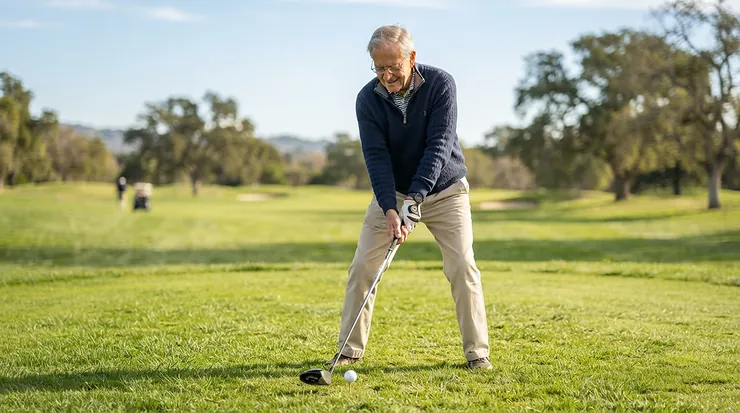
Best distance golf ball for seniors 65: what an 80 mph driver changes
Age charts do not agree on where a 65-year-old lands. HackMotion’s chart puts men in their 60s at 80 to 90 mph with the driver and men over 70 at 72 to 85 mph, while PlayBetter, citing the Titleist Performance Institute, says senior men typically swing near 90 mph and senior women near 73. A launch-monitor reading of your own swing beats any chart.
For the best golf ball for senior distance, the useful finding is how little the ball changes at moderate speeds. MyGolfSpy’s low-speed group, tested at about 86 mph, named an ionomer ball under $20 a dozen among the three fastest off a 7-iron. The best distance golf ball for seniors 65 is therefore the one that launches high, feels good off the face and holds a green well enough, not the one with the loudest marketing.
Two picks below are built for that profile, the Callaway Supersoft and the Bridgestone e6 Soft, and the Pinnacle Rush is the budget version of the same idea. One cautionary report concerns the Titleist Velocity: an older, slower-swinging reader of MyGolfSpy’s Ball Lab review found it long and fairly straight but unable to hold greens.
Best distance golf balls 2027, one swing at a time
Each entry starts from the swing and works back to the ball.
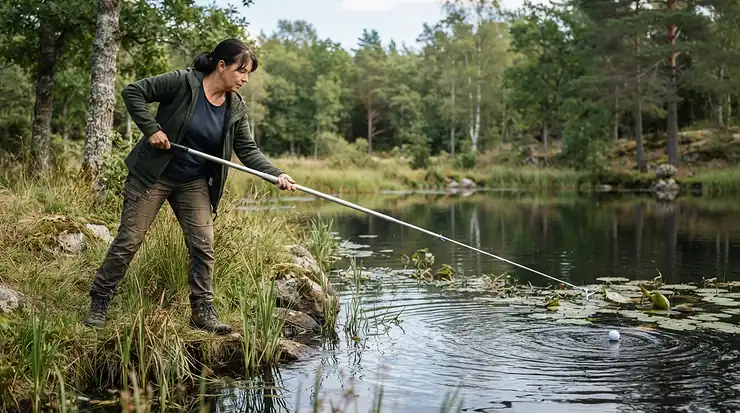
A muni course with a pond on the fourth and pines on the ninth is where a golfer who loses three balls a round does the math. A 15-ball pack of the Pinnacle Rush runs around $20 to $25 on the PGA Tour Superstore and Walmart pages, roughly $1.33 to $1.67 a ball, against about $2.25 to $2.50 a ball for a dozen of the Titleist Velocity (my arithmetic).
The Pinnacle Rush distance golf ball is a two-piece design with a high-energy core, a soft and durable cover and 332 dimples, according to the PGA Tour Superstore listing. Golf Monthly’s single-figure tester, who normally plays a premium ball, found it a good one to two clubs longer through the irons and liked a feel that was fairly firm but quiet. His complaint was greenside spin that he called nearly absent, and he advised against swapping between this ball and a premium one mid-round because club distances change.
Owner reports point the same way. One Sand Trap thread from 2016, written by a single member, says the ball matched his regular ball off 90-plus mph drives but ran out more on approaches and chips than a premium urethane ball did. On a Walmart listing rated 4.7 out of 5 from 52 ratings, a 67-year-old 10-handicap with a 70 to 85 mph swing reports more distance and a higher flight than other balls in its class, in a review the listing tags as incentivized.
One naming wrinkle: Acushnet, Titleist’s parent company, replaced the Pinnacle Rush and its sibling the Pinnacle Soft with a single Pinnacle Distance in 2025, built on the older ball’s two-piece core and 332-dimple pattern, according to Australian Golf Digest. Two retailer pages opened for this entry showed the Pinnacle Rush as out of stock or unavailable, so Amazon may list it, the Pinnacle Distance or both; match the name on the box to what you meant to buy.
Pinnacle RushSee current price, sizes and reviews on Amazon.
For a hypothetical 65-year-old whose driver reads about 80 mph, which sits inside HackMotion’s range for men in their 60s, the Callaway Supersoft is the ball most obviously built for the job. MyGolfSpy’s 2026 test found it the softest in the field and among the fastest off low-speed irons, while spinning very little. Today’s Golfer’s older robot test agreed on the low spin, giving it the lowest driver spin and the longest drives at 85 mph.
Speed is the limit. The same MyGolfSpy test found it the slowest ball off a high-speed driver, and Today’s Golfer says it does not suit driver speeds above 100 mph, so your own number decides this one.
Quality is the other flag. Ball Lab measured the 2026 ball at an average compression of 44, not the 38 that several review sites repeat, with single balls running from 40.3 to 53.8. It found 3 of 36 defective, graded the ball C and did not recommend it. Retail pages put a dozen around $25 to $30, and Callaway’s own page lists 19 variants of the ball across 2025 and 2026, with no numeric compression rating. If one ball in a sleeve flies differently from the others, retire it.
Pros:
✅ Among the fastest off low-speed irons in MyGolfSpy’s 2026 test
✅ Lowest driver spin at 85 mph in Today’s Golfer’s robot test
Cons:
❌ Slowest off a fast driver in MyGolfSpy’s 2026 test
❌ Ball Lab found 3 of 36 balls defective
Check current availability on Amazon.com.
Callaway SupersoftSee current price, sizes and reviews on Amazon.
Rough is the usual cost of a slice, and a low-spin ball goes after the cause. GolfLink’s SkyTrak testing, run with human swings on 43 balls and aimed at drivers in the mid-90s mph or below, put the Bridgestone e6 Soft among the slowest off the driver yet inside the top 10 for distance on a low-spin, high-launch flight. It also launched 50-yard wedge shots at 38.1 degrees, one of the highest figures recorded, and Bridgestone took three of the top four accuracy spots with this ball first.
Older numbers fill in the speed picture. Today’s Golfer’s 2023 robot test of the earlier Bridgestone e6 recorded 121.9 mph of ball speed and 193 yards of carry at an 85 mph swing, then 141.7 mph and 239.5 yards at 100 mph, about three yards per added mph (my arithmetic). It rated that ball 4 out of 5, named soft feel and value at moderate speeds as strengths and listed wider dispersion with a quick swing as the weakness.
Golfers Authority’s review of the Bridgestone e6 puts the best fit at roughly 80 to 90 mph and warns that the white finish may wear. Dozens run around $23 to $25 across the GolfLink and Today’s Golfer pages.
Bridgestone e6 SoftSee current price, sizes and reviews on Amazon.
Greenside stopping is the price of this ball, and MyGolfSpy’s numbers show how steep it is: the Titleist Velocity produced the least spin of 48 balls in the 35-yard wedge test, about half what the highest-spinning ball managed, even as it led total distance at 100 mph. A hypothetical 100 mph swing on firm summer fairways, played bump-and-run, is where that trade pays. On soft turf the roll behind its total-distance lead shrinks.
Reader experience matches the lab. An older golfer with a relatively slow swing, commenting under MyGolfSpy’s Ball Lab review of the 2022 model, found it long and fairly straight but said it ran off greens even on easy approaches. Titleist’s own page says a softer new core lowers long-game spin and promises stopping power into the green, a claim these testers do not echo.
Compression is where sources scatter. MyGolfSpy’s gauge read 84 on the 2022 ball and 90 in its 2026 lineup piece, which calls it among the firmest ionomer balls on the shelf, Today’s Golfer lists 101, and Titleist publishes no figure. Dozens run around $27 to $30.
Pros:
✅ Longest total distance at 100 mph in MyGolfSpy’s 2026 chart
✅ Least wedge spin of 48 balls, which suits bump-and-run play
Cons:
❌ 12th for carry in the same test
❌ Today’s Golfer calls it harder to control around the greens
See the current listing on Amazon.com.
Titleist VelocitySee current price, sizes and reviews on Amazon.
A golfer near 93 mph who chips and runs more than they pitch is the hypothetical fit for the TaylorMade Distance+, and the price helps: around $20 to $23 a dozen makes it one of the cheaper balls here per ball. Today’s Golfer’s 2026 robot test of 62 balls found it the lowest-spinning ball overall across five shots and near the top at every driver speed. At 93 mph it produced 133.4 mph of ball speed and 208.3 yards of carry, and at 78 mph it produced 113 mph and 161 yards. The same page names the cost, which is the lowest spin around the greens in the field and extra roll-out on short shots.
Golf Monthly’s tester reached a quieter verdict. Off the tee the ball matched his usual one rather than beating it, short irons launched higher and held, chips had little grab, putts took getting used to, and 18 holes with tree contact left no visible wear. He disliked the audible click and the side alignment aid, which Today’s Golfer notes cannot be bought without.
Listed compression is 77 on a PGA Tour Superstore page, yet Today’s Golfer’s 2026 table gives 95, which is why ball-speed data tells you more than either number.
TaylorMade Distance+See current price, sizes and reviews on Amazon.
Distance golf balls reviews: where the tests agree and where they split
Ball
Build
Compression readings
Standout test finding
Dozen price range
Pinnacle Rush
Two-piece, 332 dimples
No figure given
Nearly spinless on chips (Golf Monthly)
Around $20 to $25 for a 15-ball pack
Callaway Supersoft
Two-piece ionomer
44 average in Ball Lab; 38 often quoted
Softest ball in MyGolfSpy’s field
Around $25 to $30
Bridgestone e6 Soft
Two-piece ionomer
No figure given
38.1-degree launch off 50-yard wedges (GolfLink)
Around $23 to $25
Titleist Velocity
Two-piece ionomer, 350 dimples
84, 90 or 101 depending on source
Least wedge spin of 48 (MyGolfSpy)
Around $27 to $30
TaylorMade Distance+
Two-piece, soft ionomer, 342 dimples
77 on a retailer page; 95 per Today’s Golfer
Lowest overall spin of 62 (Today’s Golfer)
Around $20 to $23
The compression column is the surprise. The Titleist Velocity spans 17 points and the TaylorMade Distance+ spans 18 across sources (my subtraction), so a printed number cannot rank these balls against each other. The standout-finding column is more useful, because it names what each ball gives up.
Every tester who looked at the short game found the same trade. Golf Monthly found the Pinnacle Rush nearly spinless on chips, MyGolfSpy measured the Titleist Velocity at roughly half the wedge spin of the field’s highest spinner, and Today’s Golfer flagged extra roll-out from the TaylorMade Distance+. For the Callaway Supersoft, MyGolfSpy says it spins very little.
Where distance golf balls reviews split is speed and quality. Today’s Golfer’s 2023 robot test had the Callaway Supersoft longest off an 85 mph driver, while MyGolfSpy’s 2026 test had it slowest off a fast one and among the fastest off slow irons; different robots, years and swing speeds can all be right. Ball Lab’s graded inspection of the 2026 ball adds a quality complaint rather than a distance one. Weigh flight data above adjectives, and treat any single review as one swing.
A one-sleeve test that mirrors how the labs compare balls
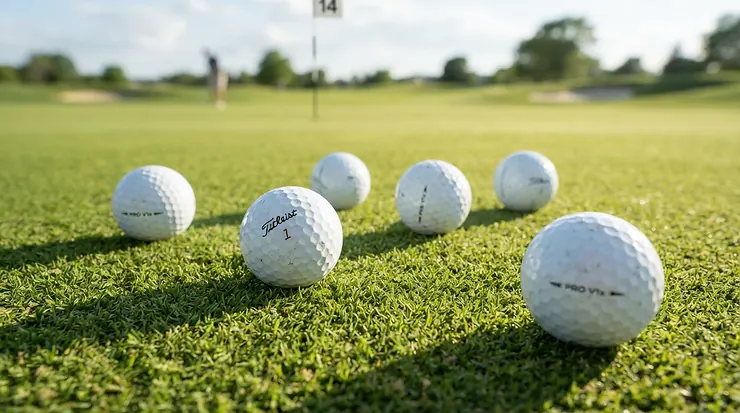
MyGolfSpy’s design has three checks, and a three-ball sleeve of each candidate lets you copy them: a handful of driver swings, a handful of 7-iron swings and a handful of 35-yard pitches. Judge by carry rather than total yards, since carry is the steadier number, and on the pitches note where the ball first lands and how far it releases. A ball that runs out twice as far as another is telling you its greenside spin. Treat a gap of a couple of yards as a tie, because a few swings cannot separate balls that close (my rule of thumb, not a tested threshold).
Keep the scale in view. The Bridgestone e6 robot figures above work out to about three yards per mph of swing speed, so five mph is worth roughly 15 yards, more than the 11-yard spread across 48 balls at 85 mph (my arithmetic). A swing-speed gain moves your drives further than most ball swaps will.
Four ways to waste money on distance, rollback worry included
Paying tour money at 85 mph is the first. With all 48 balls inside about 11 yards at that speed in MyGolfSpy’s chart, the extra money per dozen buys wedge spin and feel, which only helps if your short game can use them.
Ranking by compression is the second. The table above shows five balls and, for three of them, readings that differ by double digits depending on who measured, so sort by flight and feel.
Mixing balls inside one round is the third. Golf Monthly’s reviewer warned that a distance ball and a premium ball play to different club distances, so carry one model per round and note your 7-iron carry with it.
Worrying about the rollback is the fourth. A June 17, 2026 joint statement from the USGA, R&A, PGA Tour and DP World Tour says no change to the ball-testing approach takes effect before January 2030, and the options under study aim at elite-level distance. The standard behind the balls in this guide stays put at least until then.
Straight answers on yards, Pinnacle’s new name, rollback and fast swings
❓ Do distance balls really add yards?
✅ Mostly by launching high with low spin, not by magic. At 85 mph, MyGolfSpy's 2026 test had all 48 balls, tour models included, finishing within about 11 yards in total distance, so the gain over a decent ball is modest and shows up mainly as roll.
❓ Is the Pinnacle Rush distance golf ball the same as the Pinnacle Distance?
✅ Close. Acushnet replaced the Rush and the Pinnacle Soft with one Pinnacle Distance in 2025, keeping the Rush's two-piece high-energy core and 332-dimple pattern. It debuted that March as the official ball of World Long Drive, sold in 15-ball packs.
❓ What is the best golf ball for senior distance if my driver reads about 80 mph?
✅ No single ball wins. At 85 mph MyGolfSpy's whole field sat within 11 yards, so choose for launch, feel and greens. Soft two-piece balls such as the Callaway Supersoft or Bridgestone e6 Soft suit slower swings, and a sleeve tells you quickly.
❓ Will the golf ball rollback make my distance ball illegal?
✅ Not before 2030. A June 17, 2026 joint statement from the USGA, R&A, PGA Tour and DP World Tour says no change to the ball-testing approach takes effect before January 2030, and the options being studied target elite-level distance.
❓ Should a 100 mph swing play a distance ball?
✅ It can, with limits. At 100 mph the Titleist Velocity led MyGolfSpy's total-distance chart yet ranked 12th for carry, and Today's Golfer says the Callaway Supersoft does not suit driver speeds above 100 mph. Expect roll, not stopping power.
Which distance ball goes in the bag first
Match the ball to a driver speed you have measured, then let the short game break ties. A golfer who loses balls should start with the Pinnacle Rush. Around 80 mph, one sleeve each of the Callaway Supersoft and Bridgestone e6 Soft will settle it fast, and I would lead with the Bridgestone e6 Soft for a slicer, reasoning from GolfLink’s accuracy result. At 100 mph on firm ground the Titleist Velocity earns its roll, while the TaylorMade Distance+ is the mid-speed bargain.
Among the best distance golf balls 2027 has to offer, buy one sleeve that matches your speed and compare carry, not total yards, before you commit to a dozen. Check the sleeve and dozen listings on Amazon.com.
Disclaimer: This post contains affiliate links. As an Amazon Associate, I earn from qualifying purchases made through these links, at no additional cost to you.
Measure your driver speed first, because every other choice here follows from that one number.